Join us and act against climate change! Become a member today.
MEMBER LOG IN
DONATE
Green umbrella Logo
  • What We Do
    • Our Work
    • Our Mission
    • Our Region
    • Our Impact
  • Our Team
  • Our Programs
  • Events
  • Resources
    • Member Directory
    • Green Jobs Board
    • Get Outdoors
    • Reports & Tools
    • Stories & Announcements
  • Get Involved
  • Search

Save the Roselawn Save A Lot

June 9, 2026 by Kelly St Charles

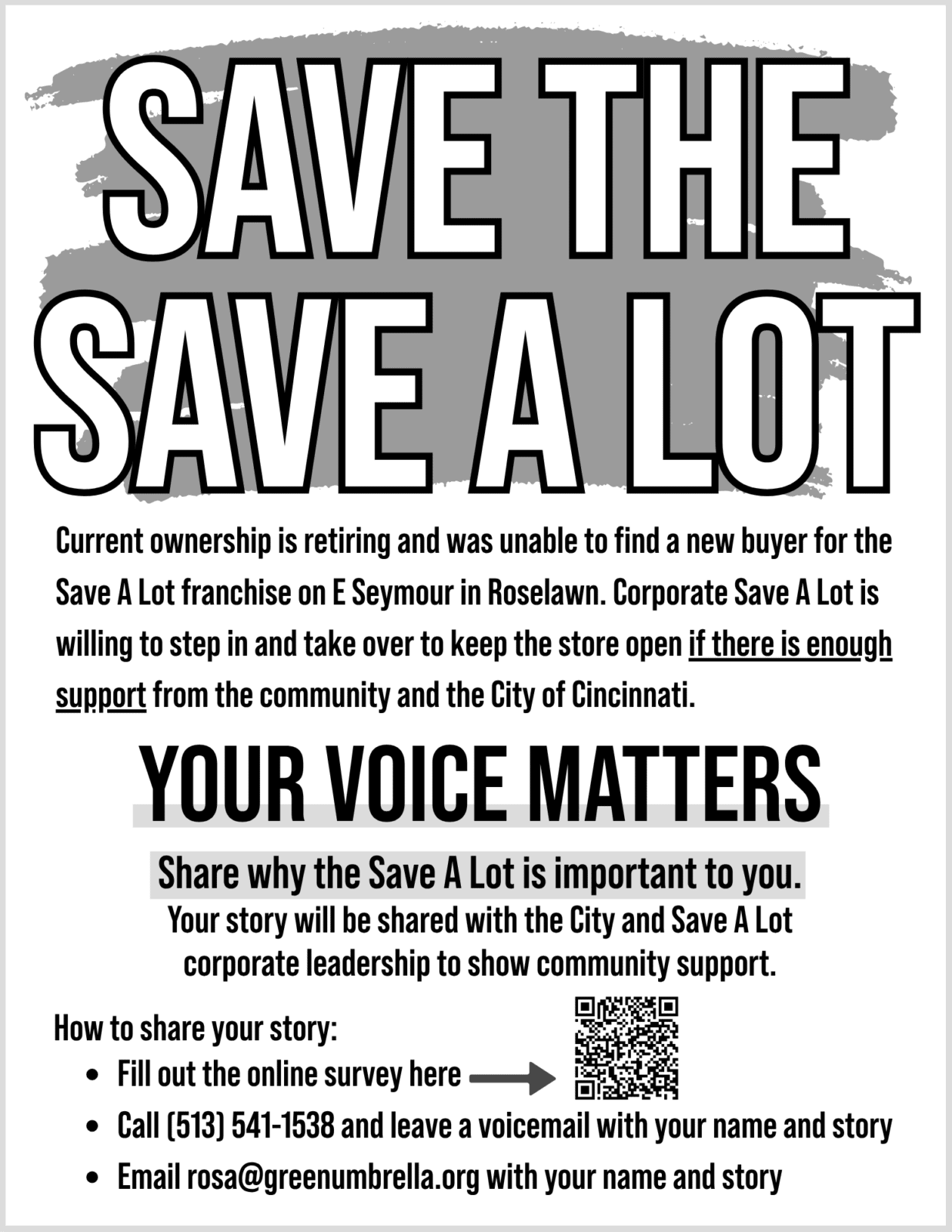
The last grocery store in Roselawn is at serious risk of closing. The current owner is retiring in June of 2026; because they were unable to find a buyer, the Save A Lot on E Seymour in Roselawn will close. 

This Save A Lot is the only grocery store for not only Roselawn, but also the neighborhoods of Golf Manor, Bond Hill, and Amberley Village. If it closes, 20,000 more people in Cincinnati will live in a food desert.

This grocery serves a large portion of the elderly and disabled community members in Roselawn. Additionally, nearly 42% of this store’s sales are through food assistance programs, such as SNAP. Saving this store serves the most vulnerable community members in Roselawn and surrounding neighborhoods. 

The City of Cincinnati, in partnership with corporate Save A Lot, can collaborate to prevent this Save A Lot franchise from closing (or a third party can purchase it). The stories below are from residents and visitors to Roselawn who need and value the Save A Lot’s existence in the neighborhood. 

Submit Your Own Story

Share your own story by filling out the form here or calling and leaving a message with Green Umbrella at 513-541-1538. 

Spread the Word

Share this blog with your networks! You can also print copies of the Save A Lot flyer at the bottom of this blog to put around Roselawn, Bond Hill, Golf Manor, and Amberley Village to drum up awareness and support. (A great resource: the Cincinnati & Hamilton County Public Library offers a limited amount of free printing every day)

Residents Respond

“It’s so convenient for our community to have access to healthy food for our families, especially our kids. A lot of residents don’t have vehicles to shop at other stores. We need it for our elderly and disabled and citizens.” –C

“When Kroger’s moved out of the neighborhood, Save A Lot was the neighborhood’s saving grace. There are 3 senior buildings in close proximity to the store. They need Save A Lot.” –A

“I believe that the community of Roselawn deserves access to food without having to travel across town. Corner stores are not viable options for community members to purchase their needs of fresh fruits, vegetables, produce, or anything else they need. It is my belief that if this door closes community members would be left without a reliable source for their everyday needs.” –L

“I am a new resident to Roselawn and do not want my neighborhood to have a lack of fresh food options. Recent City efforts have been working to improve the life of the residents of Roselawn. A food desert means a negative impact and a roll back of positive efforts for this neighborhood.” –S

“Closure of the Roselawn Save a Lot would create a food desert in this community. This is detrimental to the people of Roselawn and surrounding neighborhoods – food deserts are harmful; they restrict physical & financial access to fresh and nutritious food. This lack of access limits dietary choices, trapping lower-income or marginalized communities in cycles of chronic disease, high financial stress, and systemic inequality.” –M

“Please save the Save A Lot in Roselawn so the elderly and all can continue to shop there because there is no other grocery store that offers the services that Save A lot has.” –J

More Information & Resources

  • Food Policy Council Manager Rosa Baker’s Cincinnati Enquirer Op Ed
  • Roselawn Save-A-Lot faces possible closure as residents urge city leaders for help
  • Food Deserts: the Food Empowerment Project

Filed Under: Uncategorized

Better Compost Is Worth It

May 6, 2026 by Kelly St Charles

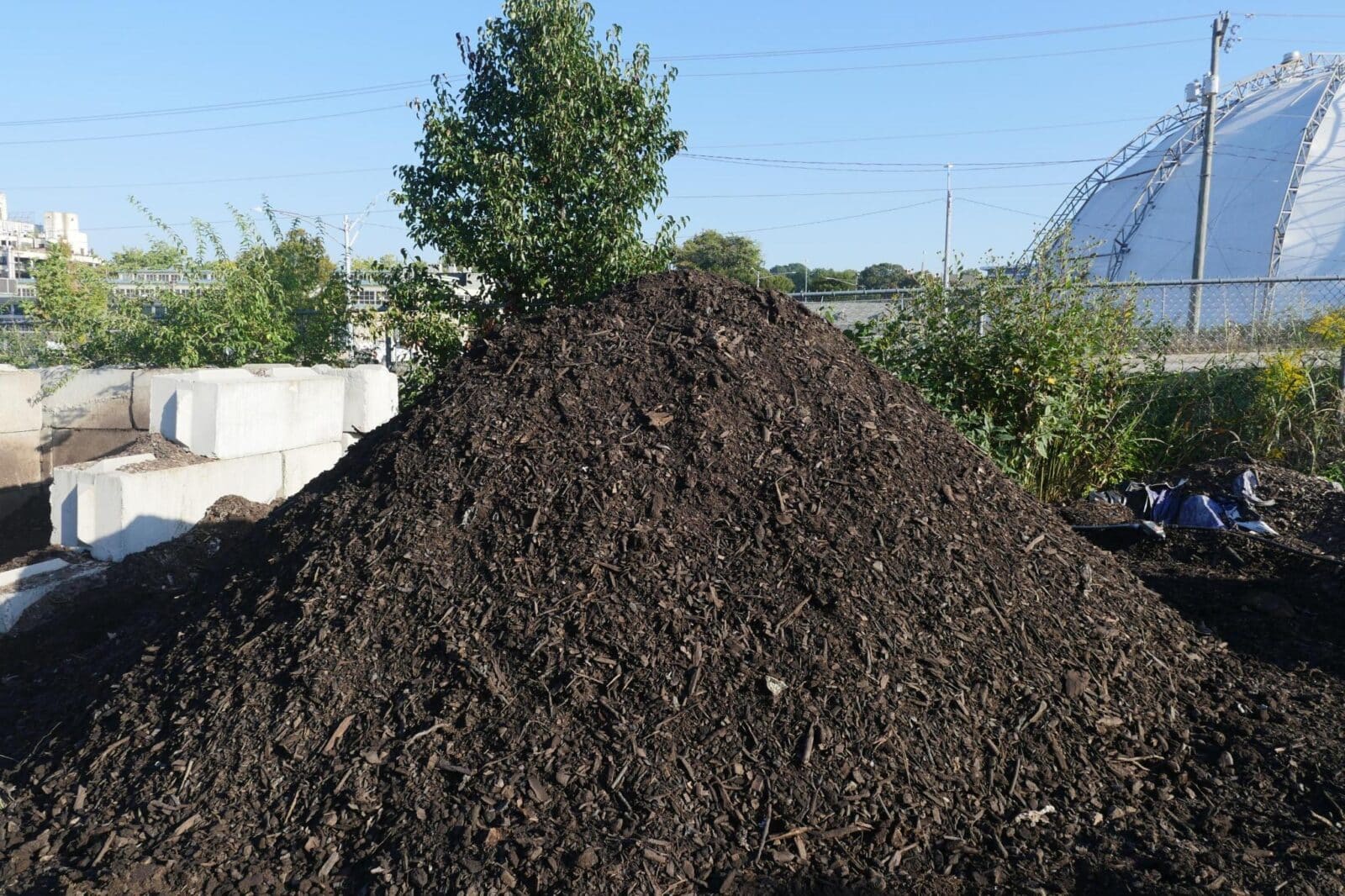
The two best times of the year to add nutrients to your garden are fall and spring. Adding supplements like compost and natural fertilizers in the fall prepare the ground for winter rest as plants and creatures enter a dormant state. Supplementing in the spring buoys plants’ natural growth cycle, jumpstarting your garden’s health for stronger, more resilient, and more lush plants. That means now (May!) is a great time to load up those beds with Compost for the Commons – high-quality, locally-produced compost from the Common Orchard Project. 

Where Does Compost for Commons Come From?

The Common Orchard Project is a program of Green Umbrella that installs free community orchards in neighborhoods around the region, prioritizing communities that have the most urgent need for the benefits that orchards provide: heat relief, fresh fruit, and accessible greenspace. 

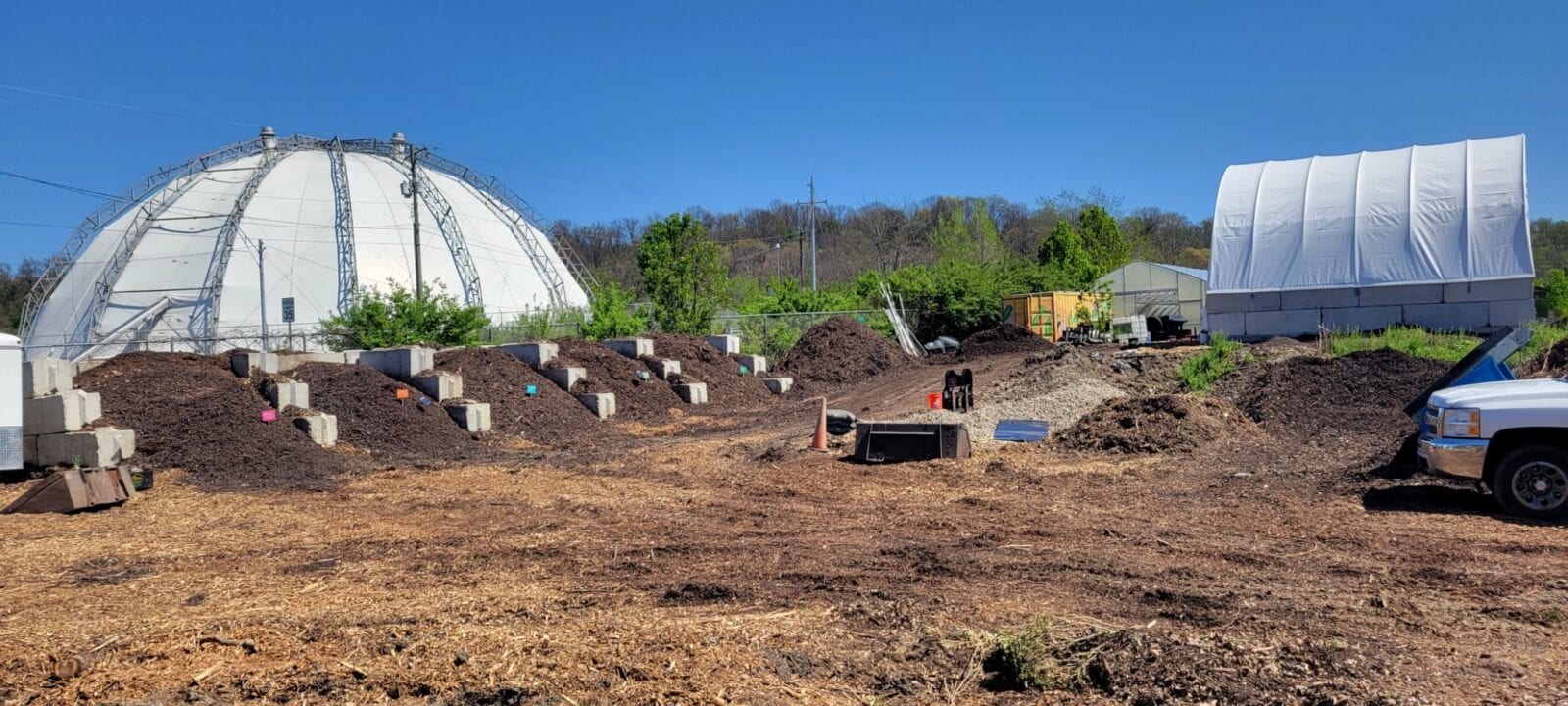
The compost demonstration site at Camp Washington Perennial Farm

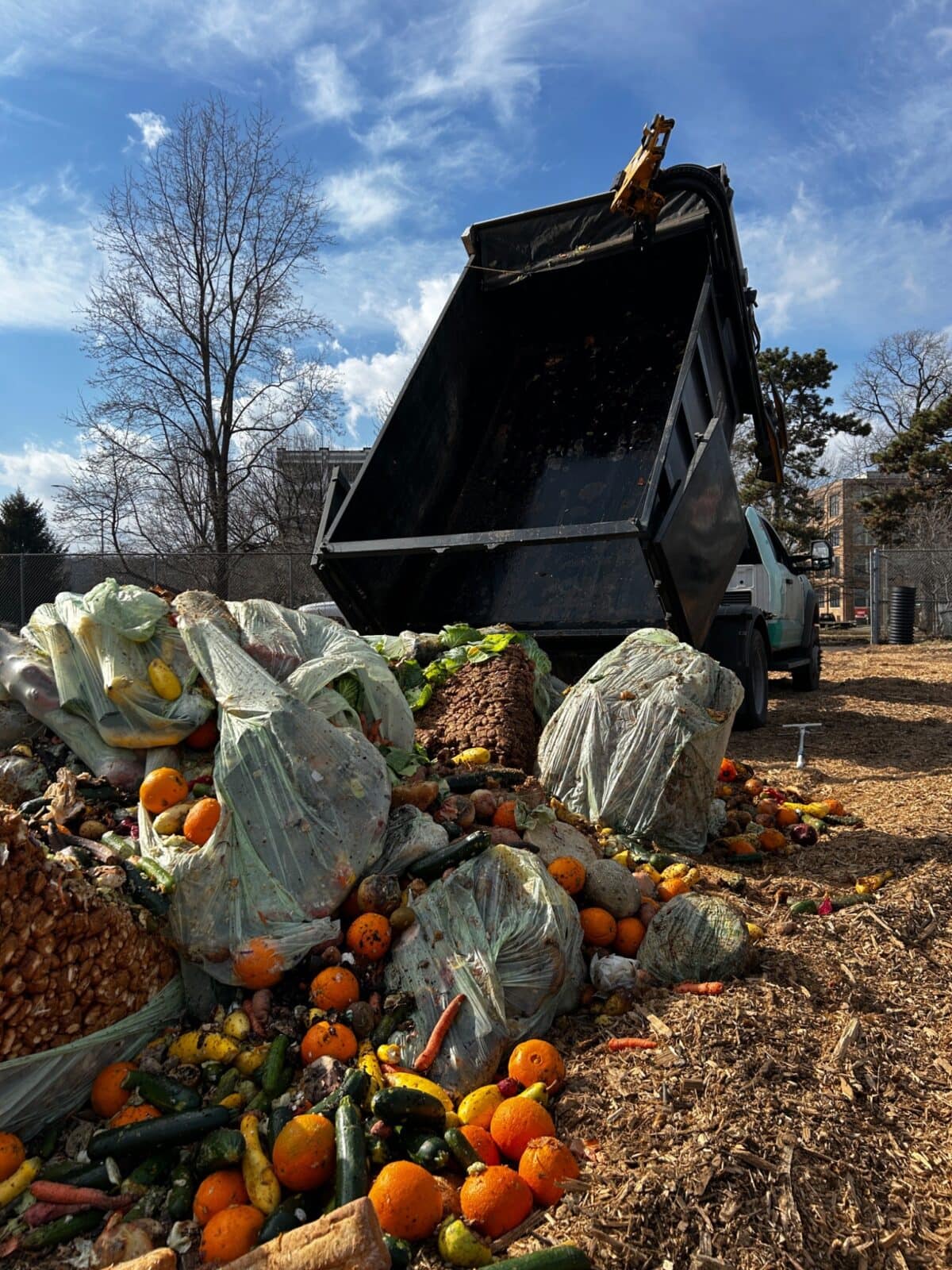
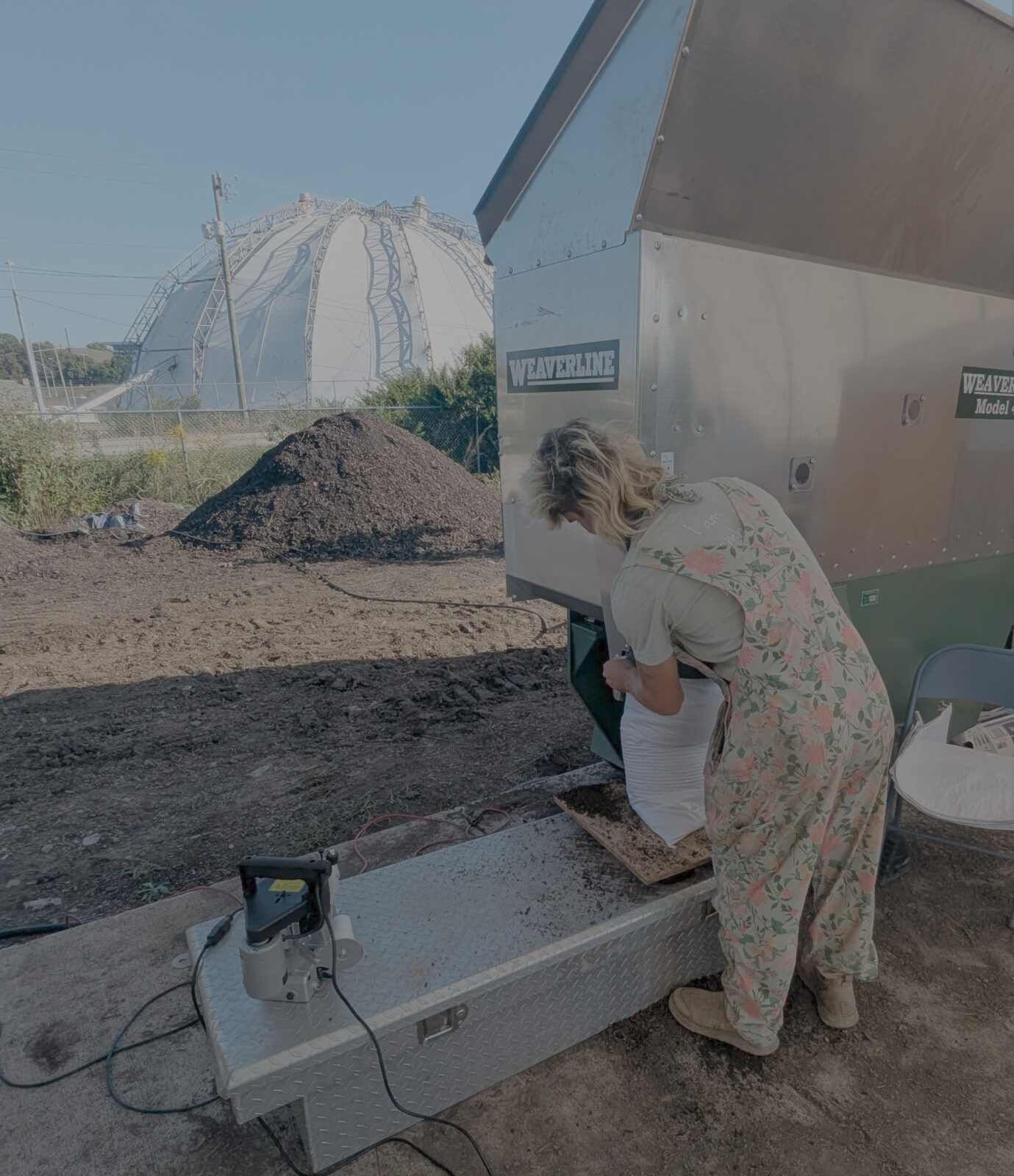
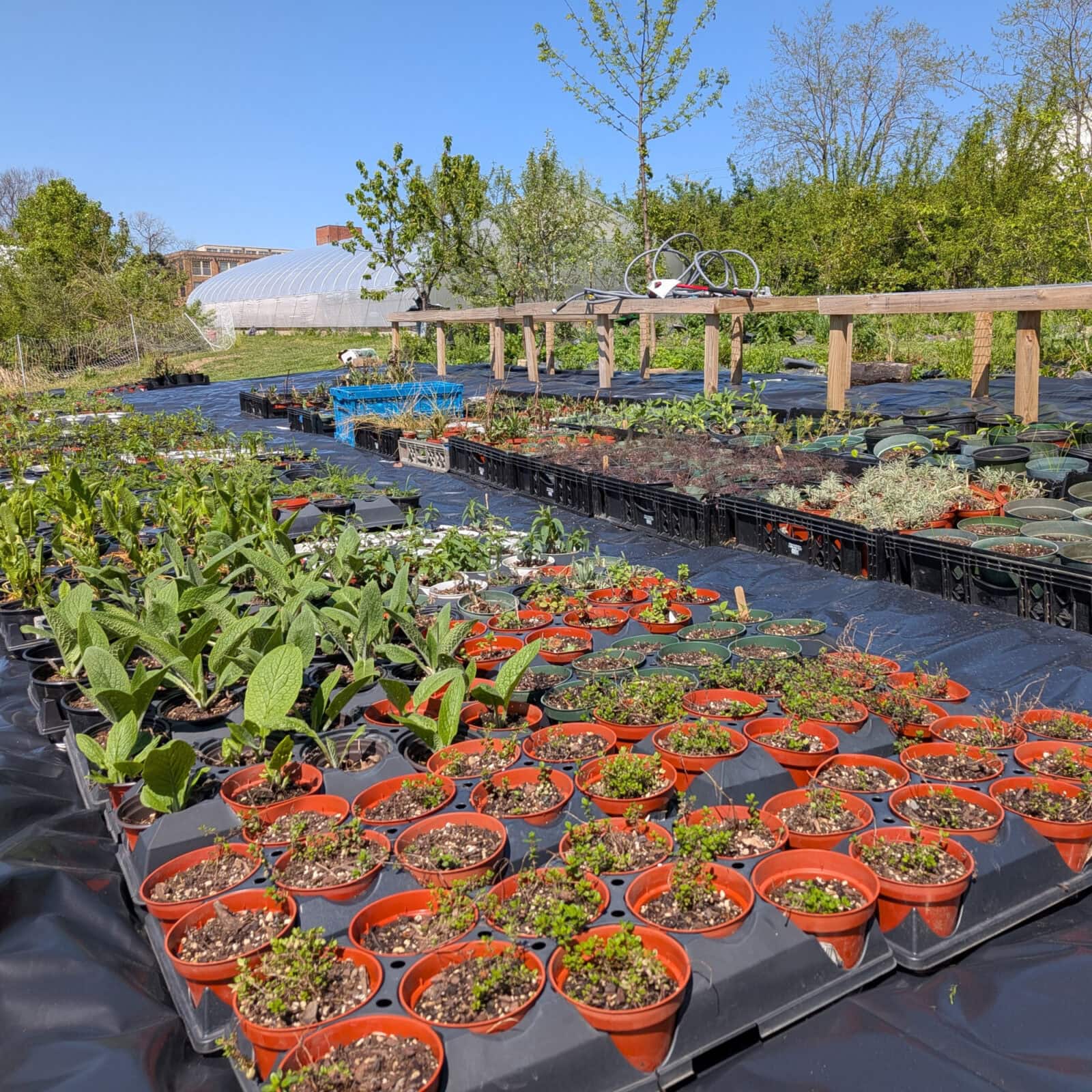
Camp Washington Perennial Farm is the home base of the Common Orchard Project. Besides being the growth hub for the trees, shrubs, and other plants for community orchards, the farm is also a demonstration site for large-scale composting. We work with local partners to collect food scraps from regular residents in neighborhoods across the city, diverting thousands of pounds of organic waste from landfill to create fresh compost that Common Orchard uses in our orchard installations. There’s plenty of compost to go around: the extra compost is available for sale in bags or in bulk as Compost for the Commons, generating revenue that helps strengthen the program. Buying Compost for the Commons supports a great local cause, but it’s not just about feeling good about your purchase. This is pretty fancy compost that you’ll be happy you bought.

How Can Compost Be Fancy?

You might think all compost is the same. Think again! Compost for the Commons is manure-free, screened, and weed-seed-less, making it miles above the basic box store compost mix.

Compost is made from decomposing organic material. It needs a combination of green mix (high in nitrogen – banana peels, apple cores, grass clippings) and brown mix (high in carbon – dry leaves, shredded paper, wood chips) to heat up and break down the material. The Common Orchard Project uses locally-collected food scraps as the primary green mix and wood chips as the primary brown. Other composts might be made with cow or horse manure as green mix (despite being brown; manure is high in nitrogen). Manure compost is functional and creates a nutrient-rich soil, but it can expose gardeners to more illnesses as opposed to manure-free compost (and it does have a distinct smell. Not necessarily bad, just distinct). 

Ever buy a bag of compost and find a hunk of wood the size of your fist? That means the producer didn’t screen the material – sifting finished compost to catch and remove those large pieces of wood that clod up your gardens. The Common Orchard Project always screens finished compost, meaning the resulting compost is a finer texture for your plants (and you get more per bag!). 

Shredded plants and weeds are common additions for commercial compost producers. It’s an effective green mix, but adding it means that seeds can linger in the compost. You never know what weeds are hiding in your compost bags until they start to sprout in your garden beds. Because we use food scraps as the primary source of green mix, rogue seeds are much less likely to pop up, giving you easier-to-manage gardens.

This Sounds Great

You’re right, it does! You can purchase Compost for the Commons in bulk or by bag. Each bag is one cubic foot (about 45 lbs) and costs $10 – a steal, since similar compost is $13-$30 per bag at big box stores. 

Order Compost for the Commons online here for pickup at Camp Washington Perennial Farm. You can also find bagged Compost for the Commons at these select places while supplies last: the Civic Garden Center, Green Living by Design, and Wildwood Flora.

Choose Common Orchard Compost when you want the best food for your plants – and the lowest-maintenance compost for you.

Filed Under: Uncategorized

An Urban Adventure in South Fairmount

April 29, 2026 by Claire Carlson

Get ready for an immersive and informative urban hiking adventure in South Fairmount! Explore the Lick Run Greenway, traverse the South Fairmount Avenue Steps, and enjoy the view from St. Clair Heights Park. Throughout the hike, learn about the history of and vision for the neighborhood. 

Join Green Umbrella’s Greenspace Alliance for the Meet A Greenspace Hike with Tri-State Trails and Mill Creek Alliance on Wednesday, May 6, from 5:30 – 7:00 PM

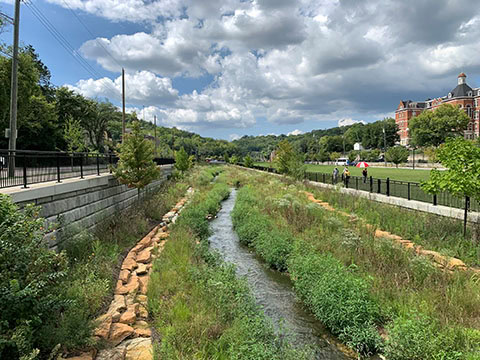
Lick Run Greenway

Graphic source: Metropolitan Sewer District

If you passed Lick Run Greenway, you might note the basketball courts, a trail system, and expansive grassy fields. You might admire the meandering creek speckled with ducks and turtles. There is even more to this greenway than meets the eye: this urban park is also a stormwater management project that helps control sewer overflows into the Mill Creek.

Started in 2013, the Lick Run Project in South Fairmount is a “green” wet weather project focusing on reducing combined sewer overflows (CSOs) into the Mill Creek, a tributary of the Ohio River. CSOs are the result of a sewer system that collects rainwater runoff, domestic sewage, and industrial waste into one pipe. Typically, this system can transport all of the wastewater to a treatment plant, but sometimes, especially during rainy seasons, the amount of runoff exceeds the capacity of the system. When this happens, both untreated wastewater and stormwater flow into nearby waterbodies – in this case, the Mill Creek and Ohio River. The hilly, steep landscape of the South Fairmount neighborhood created runoff issues for decades.

Since its construction was completed in 2021, the Lick Run Greenway has significantly improved water quality in the Mill Creek. So far, it has eliminated 800 million gallons of combined sewer overflows annually from the creek; increased fish populations; progressed recreational safety in the creek for activities like kayaking, canoeing, and fishing; and contributed to economic investments in the neighborhood, including improvements in drinking water, gas, electric, fiber optic, and transportation infrastructure.

Fairmount Avenue Steps and St. Clair Heights Park 

At the height of their use in the 19th century, Cincinnati’s hillsides sported over 30 miles of steps that connected the many neighborhoods of the area to one another. Today, there are nearly 400 sets of these stairways throughout the City, with roughly 320 of those still available for public use. On this hike, as we meander through South Fairmount, we will visit the historic Fairmount Avenue Steps, currently closed for repair. With over 300 individual stairs, this is one of the longest sets of steps in the City. Once they’re repaired, you’ll want to make that climb because the view is worth the effort – St. Clair Heights Park and its expansive view of Cincinnati’s West Side is at the top. 

Tri-State Trails is partnering with local organizations like Groundwork Ohio River Valley, Spring In Our Steps, and the City of Cincinnati Department of Transportation and Engineering to reinstate the Fairmount Avenue Steps to their former glory. Come learn about all the recent work on this South Fairmount corridor, and how it will create a future neighborhood connection from St. Clair Heights Park down to the Mill Creek Greenway Trail.

The Future of Trails

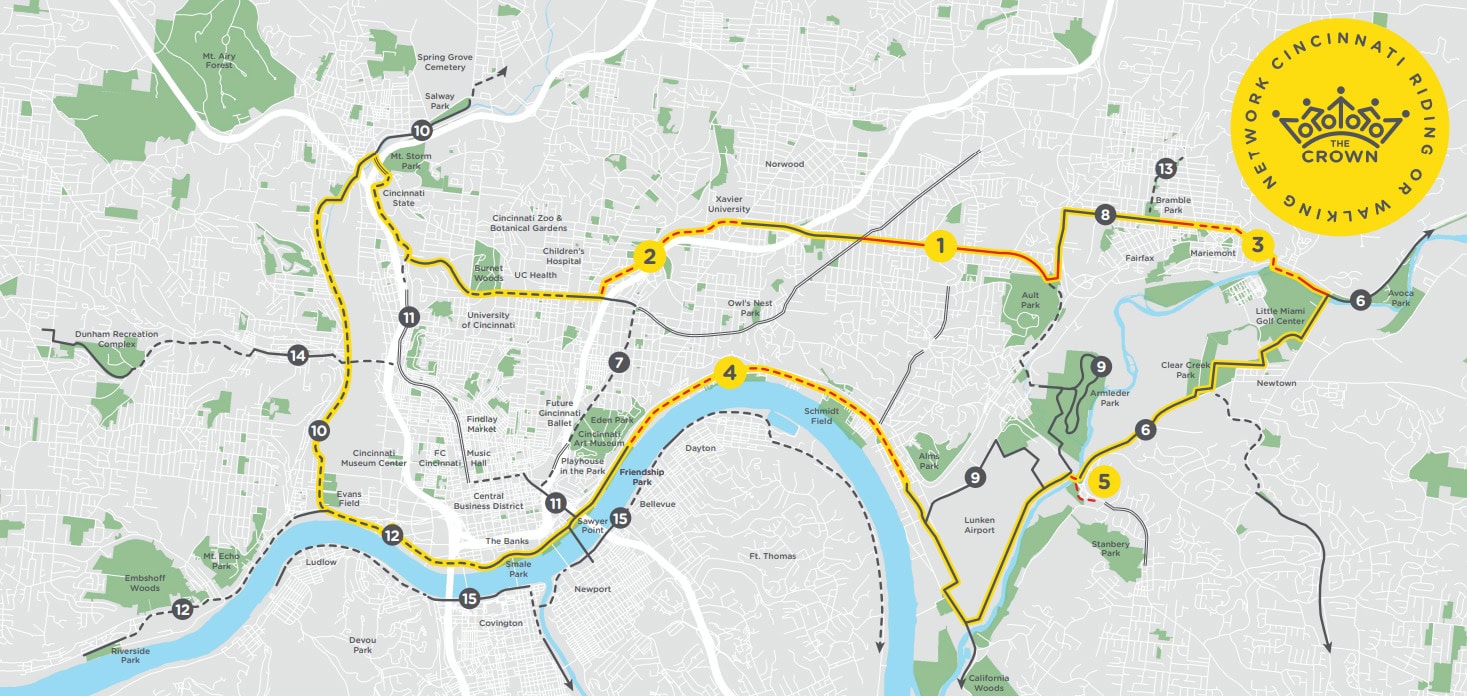
Cincinnati has an expansive regional trail network, with organizations like Tri-State Trails, working to increase the distance and connectivity of trails. This Meet A Greenspace Hike is near the future CROWN (Cincinnati Riding or Walking Network) on the Mill Creek Greenway Trail. 

The CROWN is a vision for Cincinnati’s first-ever urban trail loop: a walkable and bikeable loop completely separate from roadway traffic. The loop will feature a 34-mile, multi-use paved trail, connecting over 350,000 people in 54 communities to major destinations throughout the area including parks, schools, businesses, retail shops, restaurants, recreation, and entertainment. 

Once complete, the CROWN will form a network with other trail systems, including Wasson Way, Ohio River Trail, Little Miami Scenic Trail, and the Mill Creek Greenway Trail. This integrated trail system will transform Cincinnati – making it a leading destination to live, work, and play by linking our regional trails and reconnecting neighborhoods.

Graphic source: Uptown Cincinnati

Come Explore!

We hope you’ll join us at our upcoming Meet A Greenspace Hike with Tri-State Trails and Mill Creek Alliance on Wednesday, May 6, from 5:30-7:00 PM. We will meet at the main parking lot of the Lick Run Greenway located at 1661 Queen City Avenue. If the main lot is full, additional parking can be found along the Lick Run Greenway.  

Please note that this hike will be a moderate to strenuous out-and-back hike of approximately 2 miles. We will be traversing some steep and difficult sections. The most arduous part of the hike will be in the first half; less enthusiastic participants can leave before we embark on this portion of the event.

This hike is part of our monthly Meet a Greenspace Hiking series. We hope these hikes will provide those who join the time and space they need to reconnect with nature. If you have any questions, contact Green Umbrella’s Greenspace Alliance Manager Claire Carlson at claire@greenumbrella.org.

Filed Under: Uncategorized

A Day at Camp Washington Perennial Farm

April 16, 2026 by Kelly St Charles

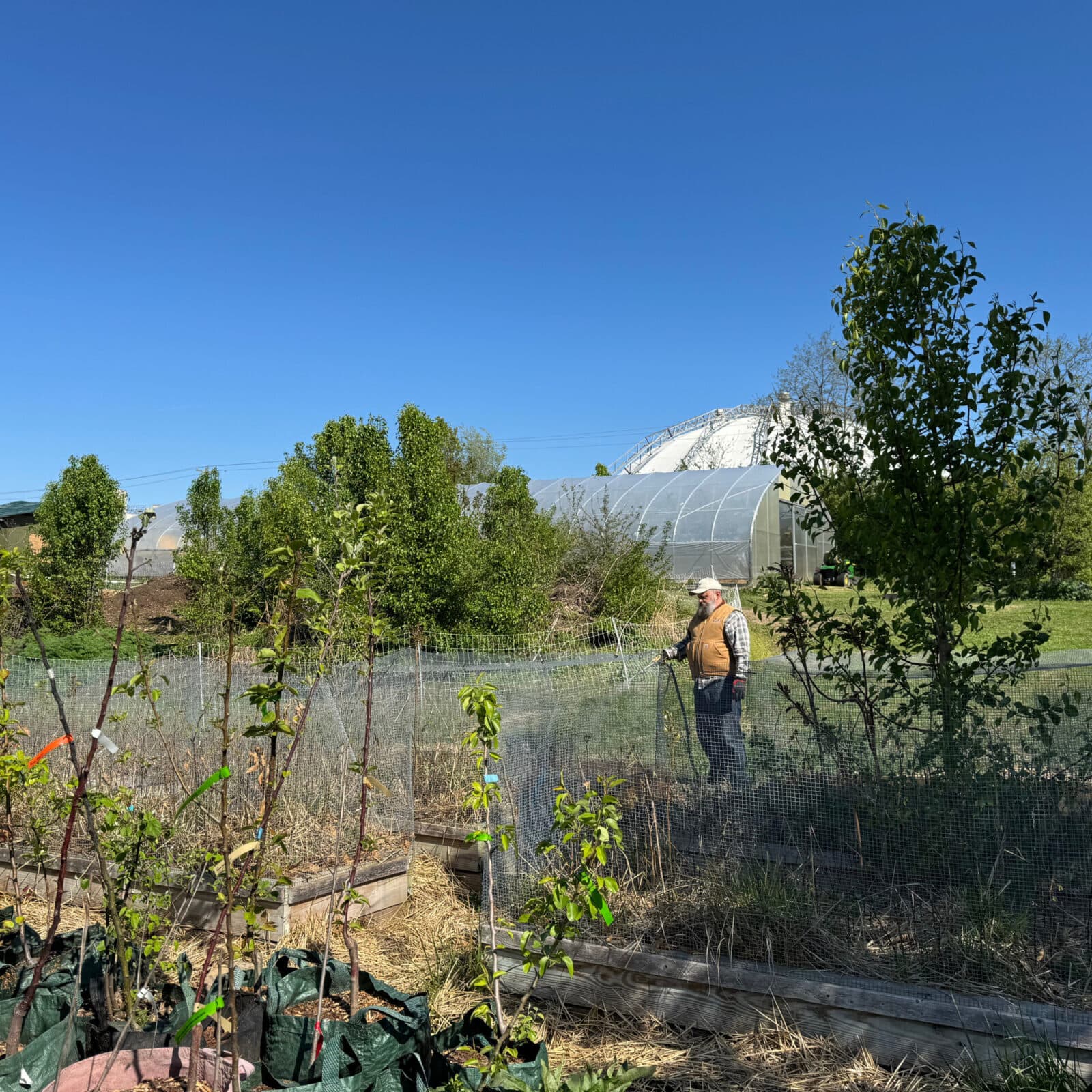
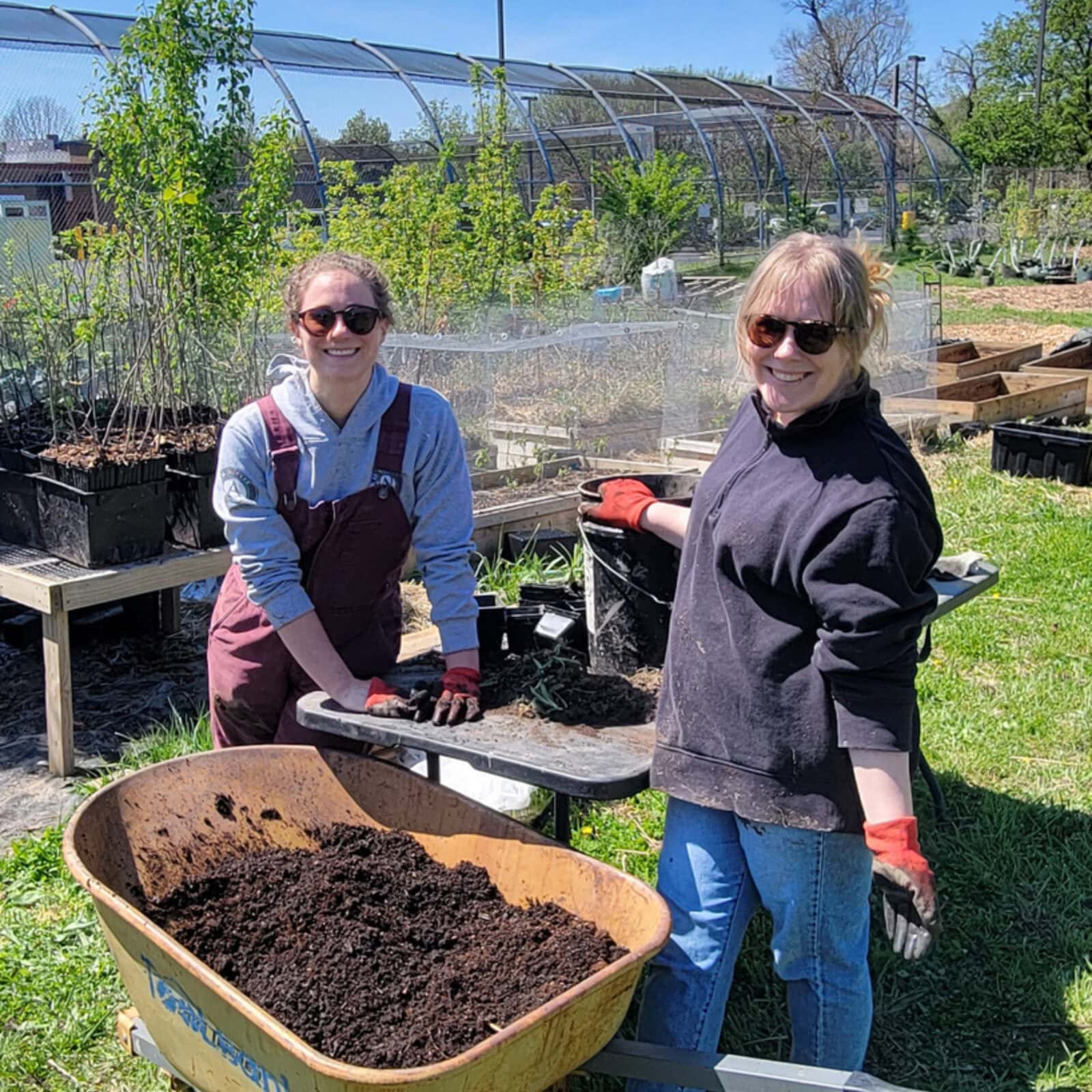
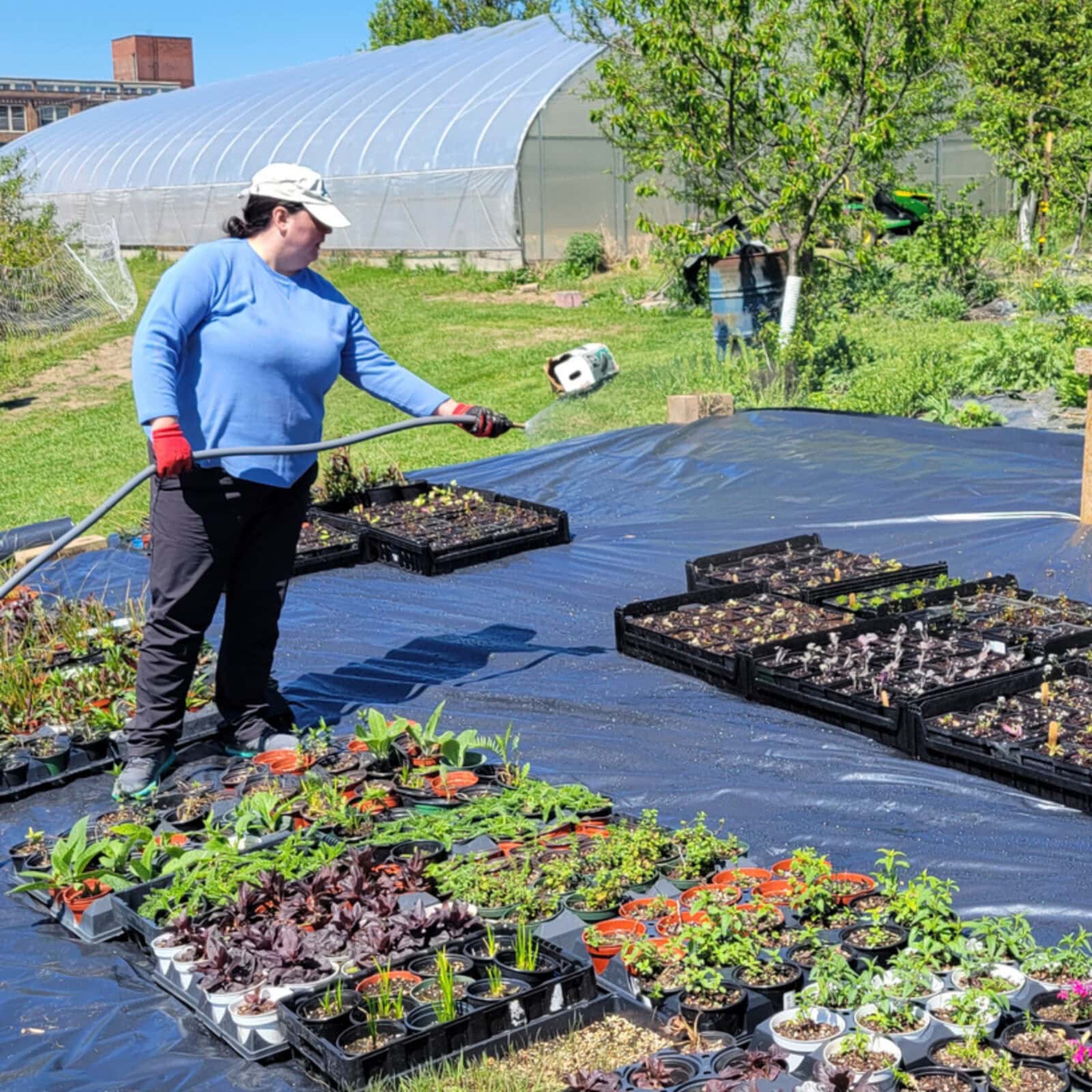
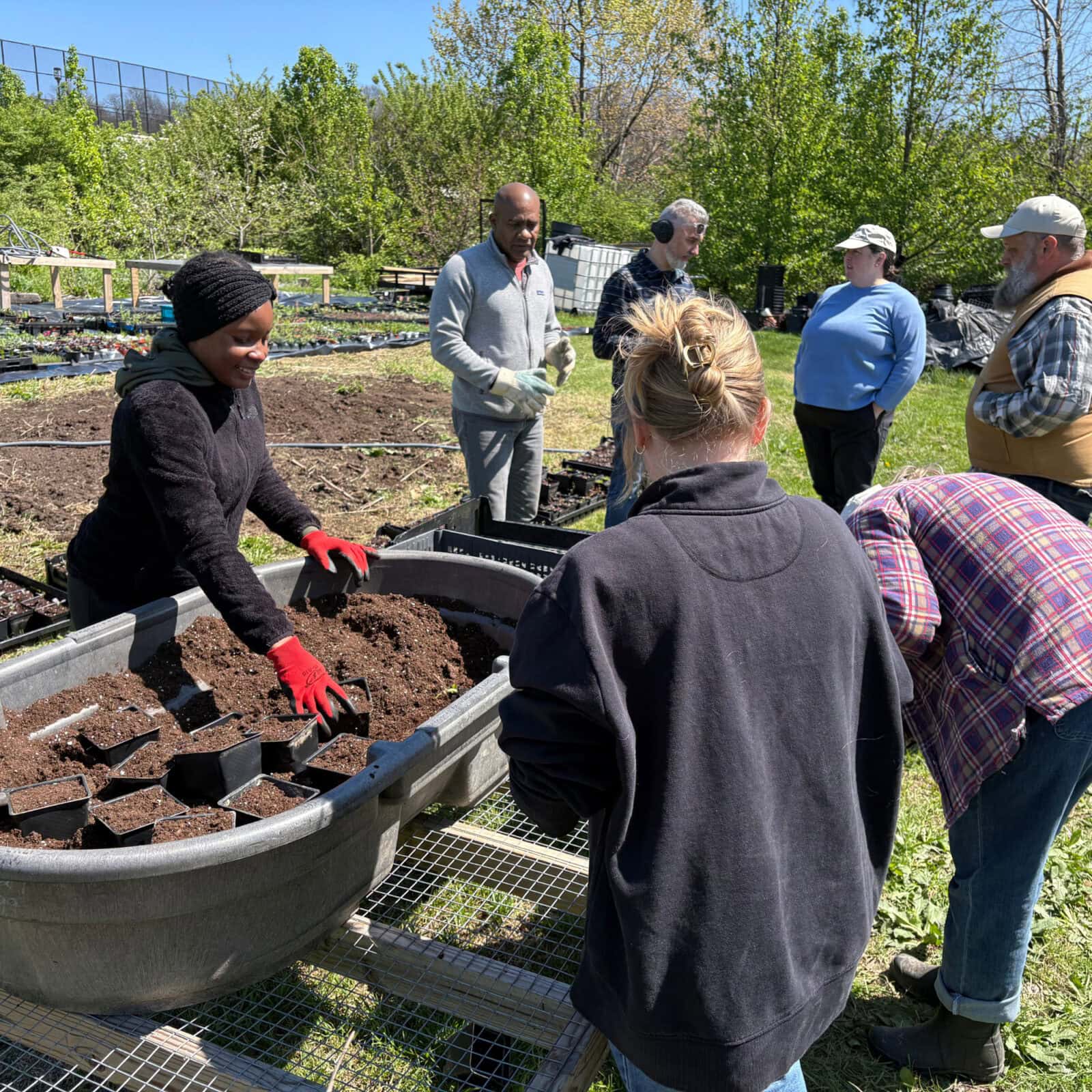
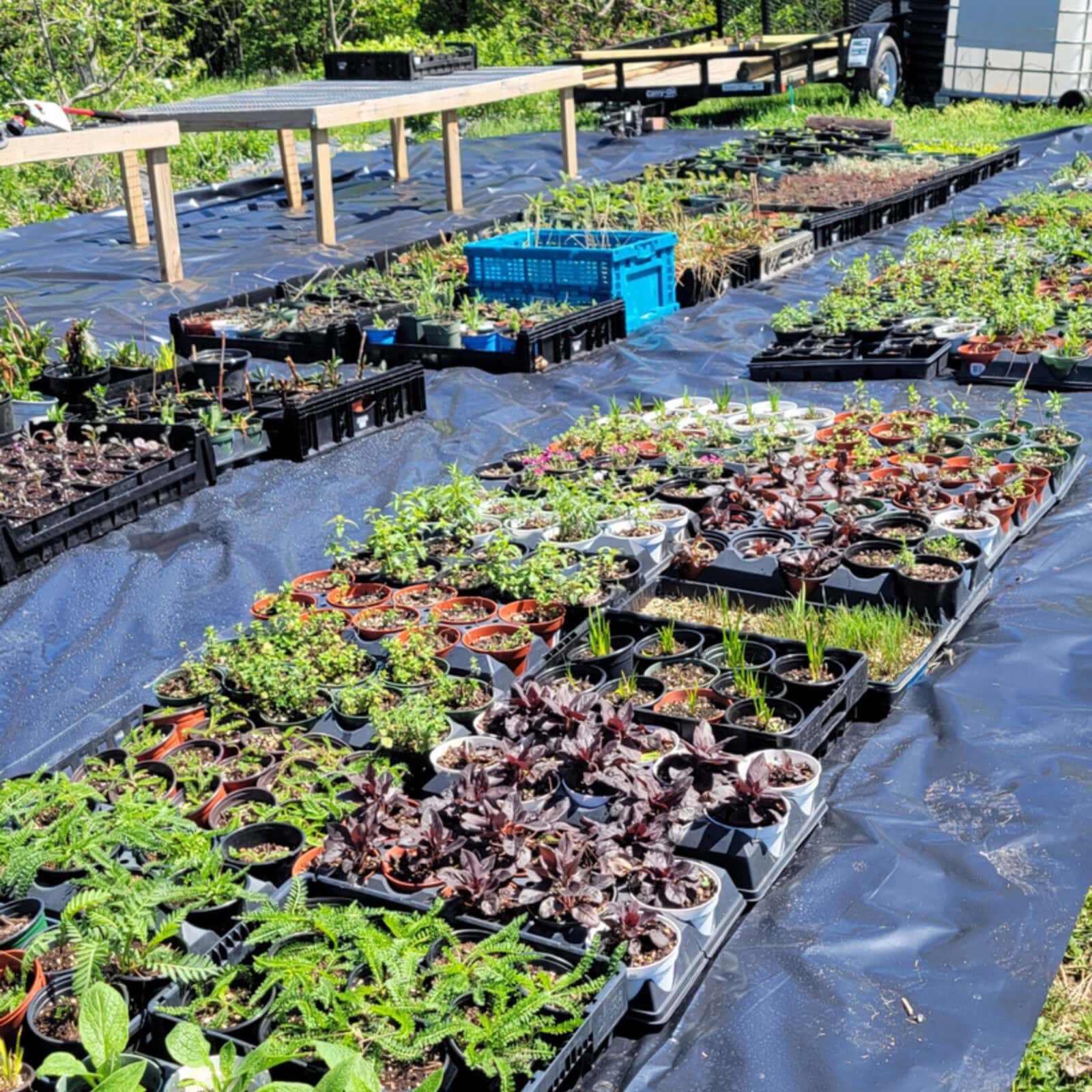
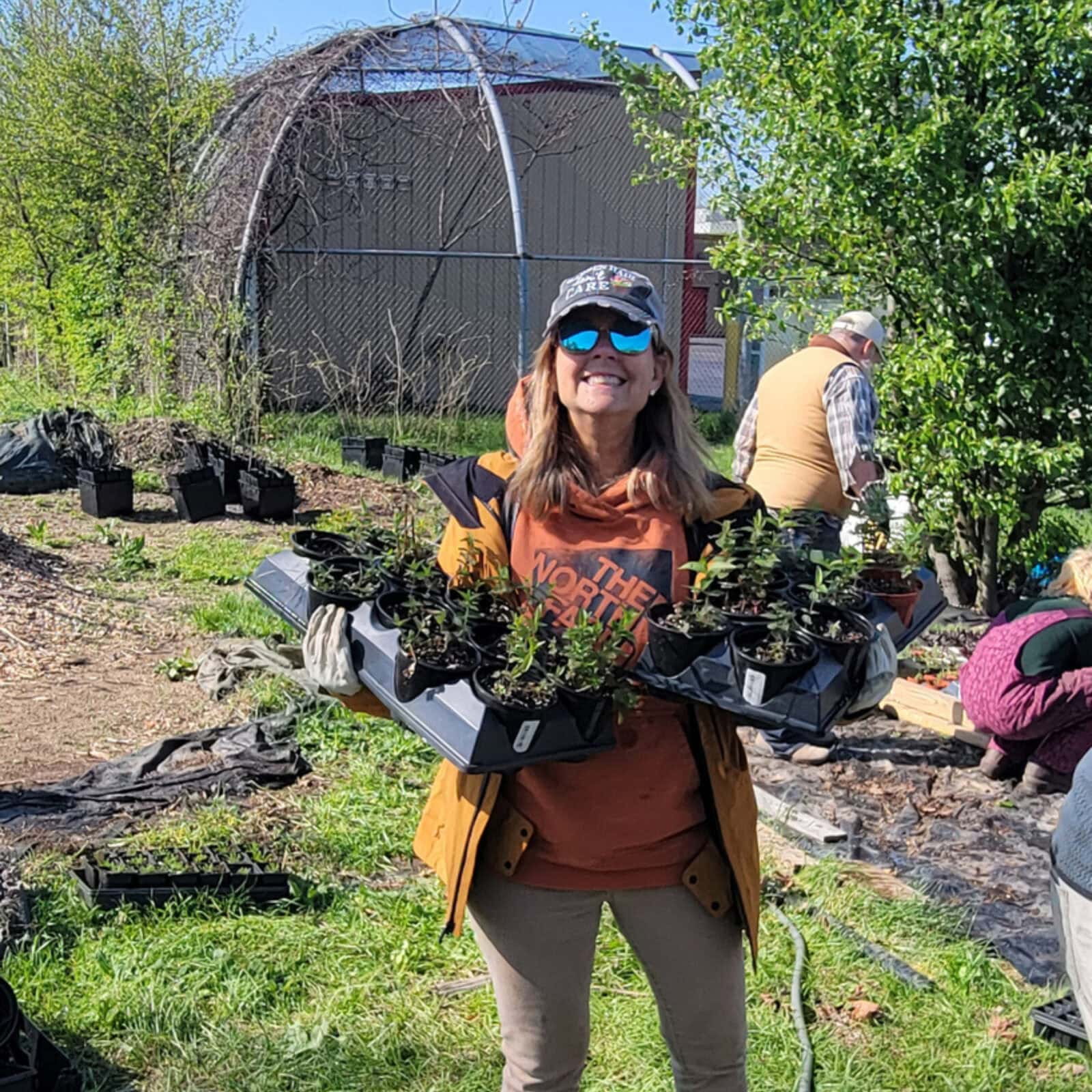
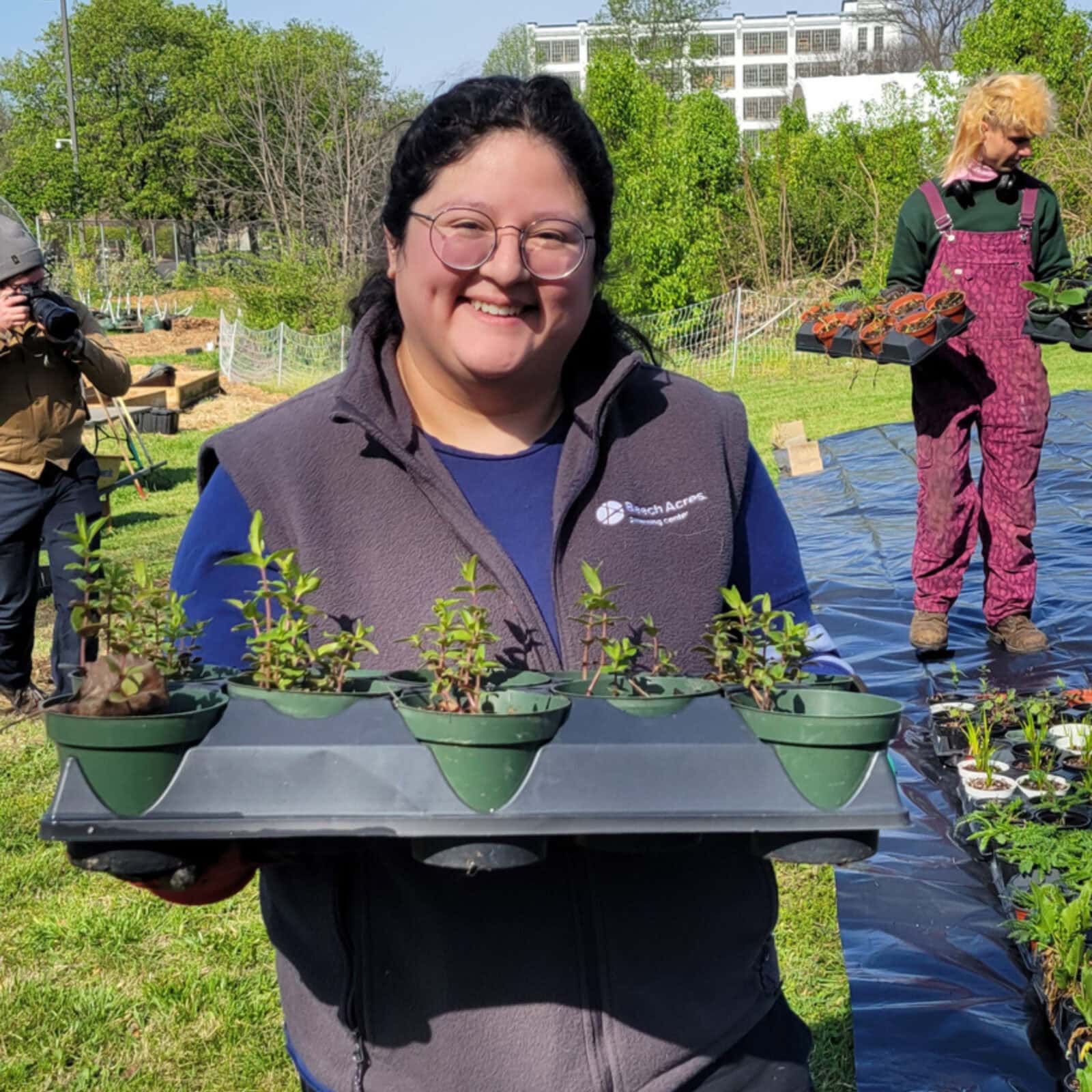
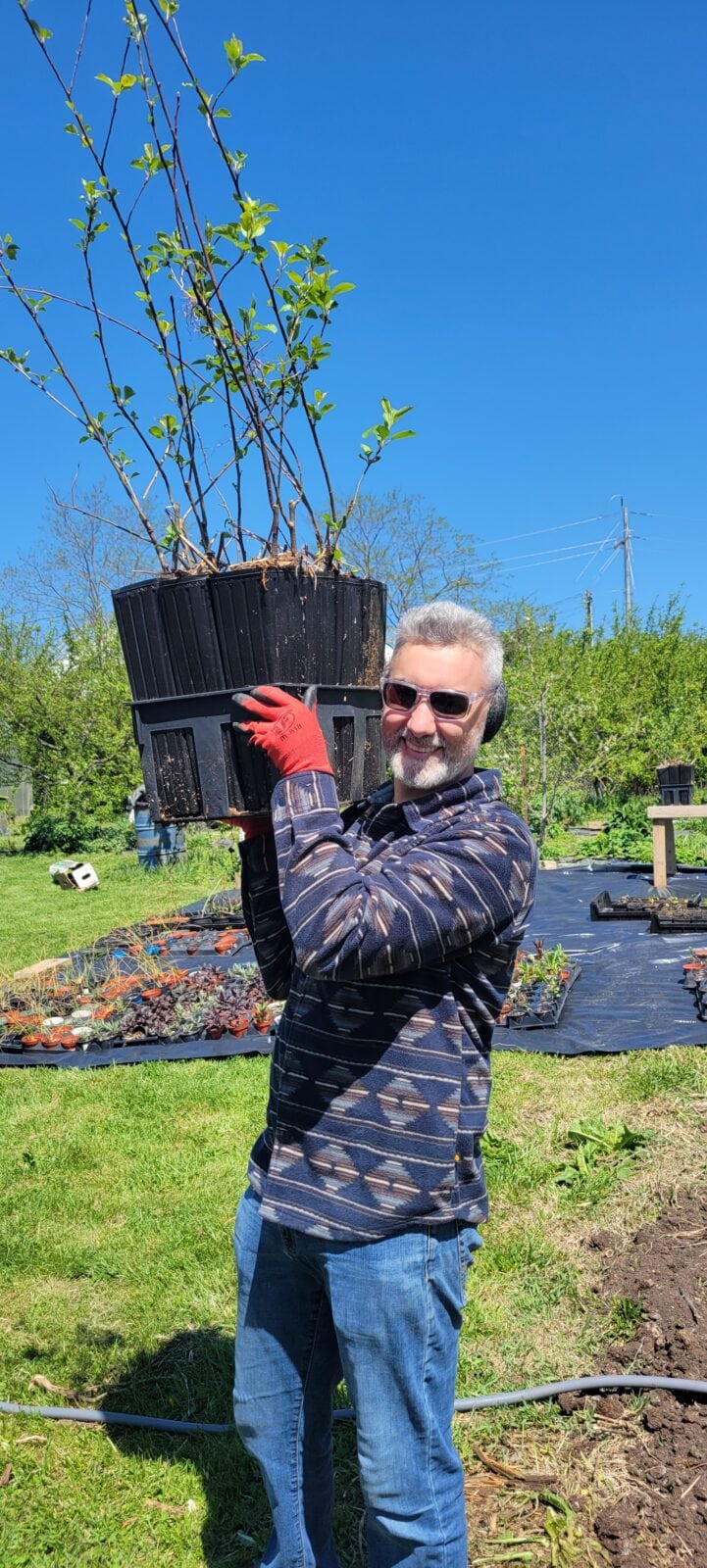
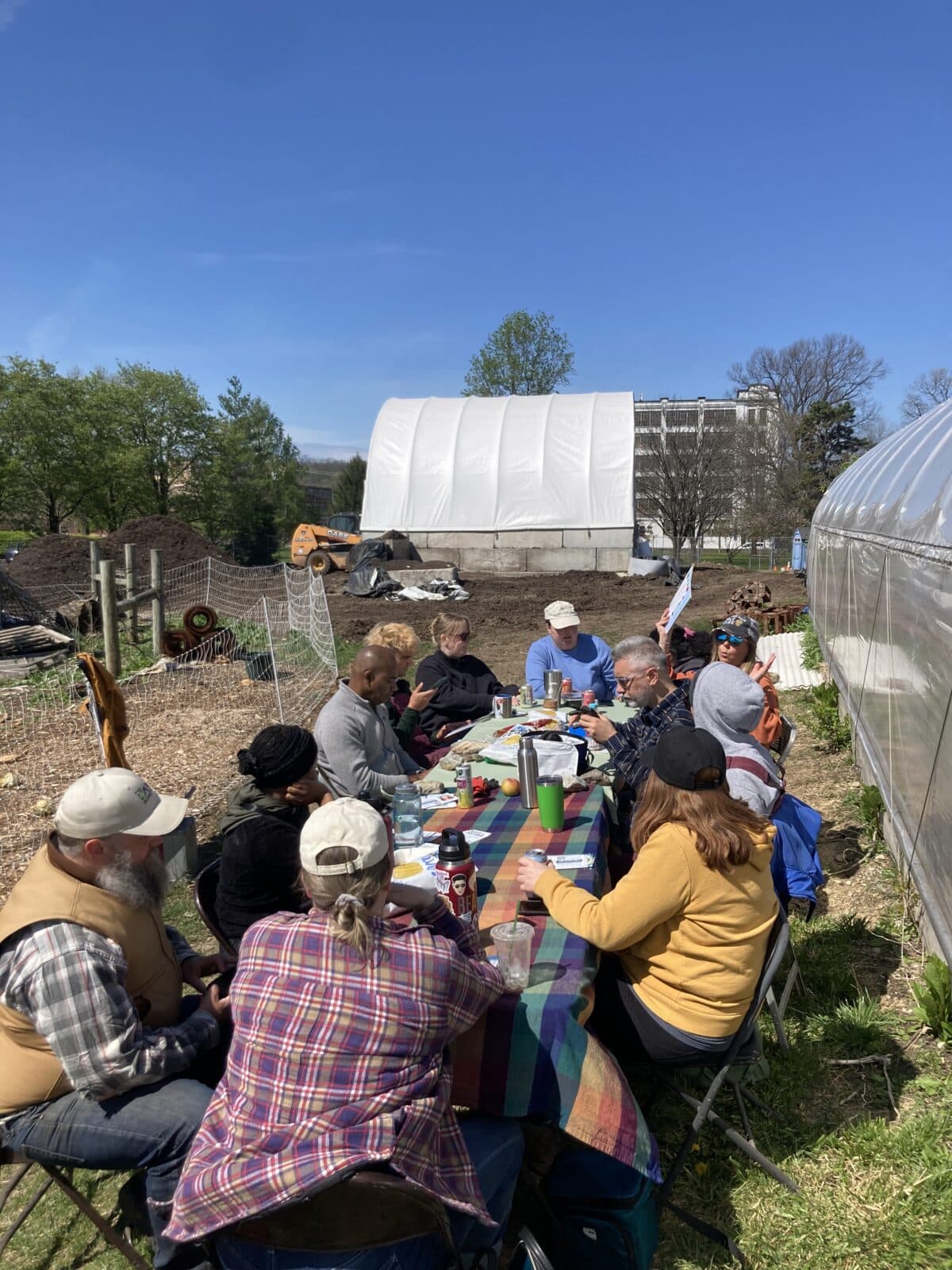
On April 7, 2026, the Green Umbrella team had a working day with the Common Orchard Project at Camp Washington Perennial Farm. We transplanted budding plants into larger pots where they’ll grow a bit larger before being added in between fruit trees at orchards around the region. We also watered potted trees and shrubs before holding our regular all-staff meeting. It was a lovely day in the sunshine.

Sound heavenly? You can get your hands dirty too at our regular volunteer days at the farm every third Saturday of the month from 9:00 am-12:00 pm. No prior experience is needed and everyone is welcome.

You can also organize a corporate volunteer day for your organization for giving back to the community and team-building activities. Contact Chris at chris@greenumbrella.org to organize your event.

A Farm? A Farm!

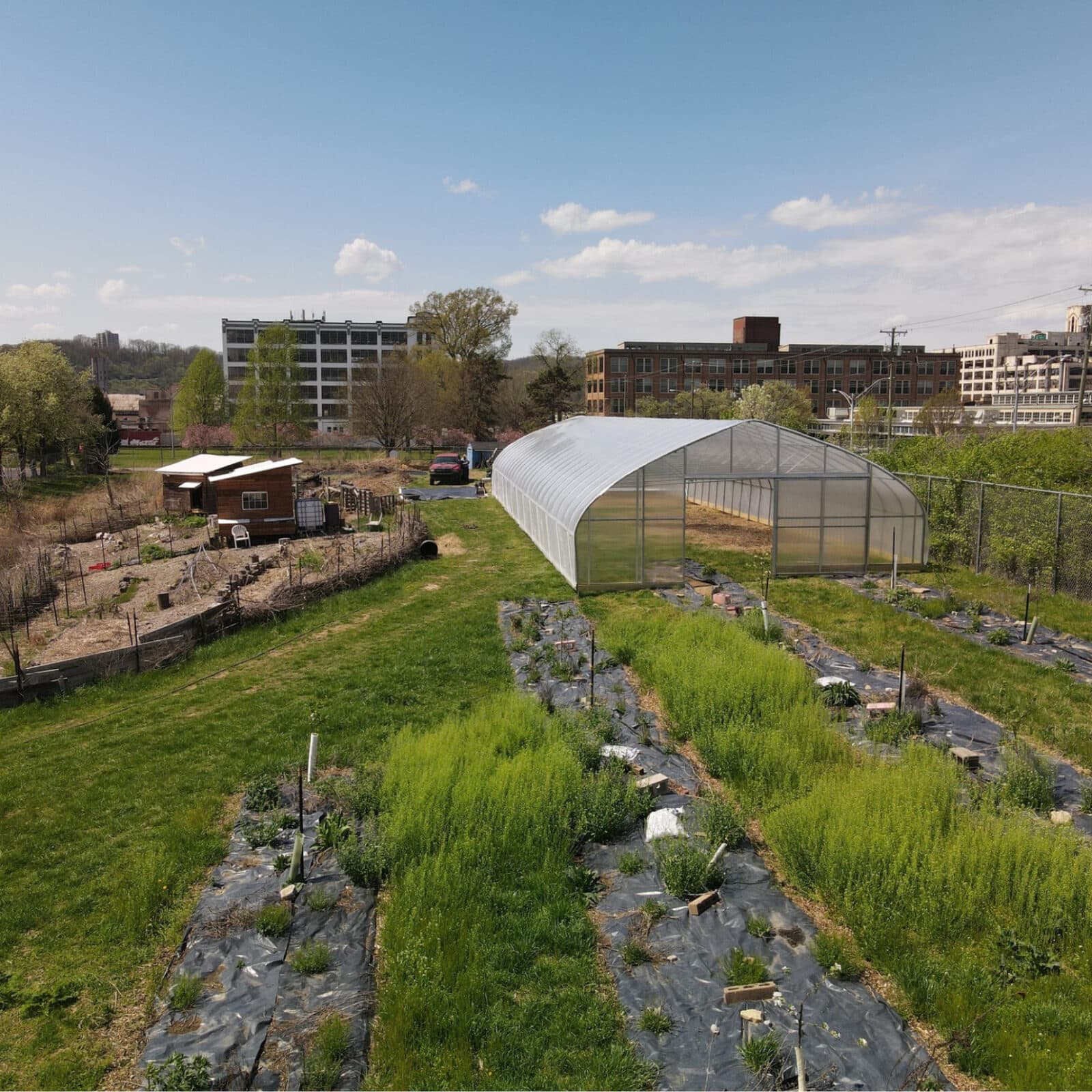
Camp Washington Perennial Farm (formerly Camp Washington Urban Farm) is a 2-acre site in the heart of Camp Washington, tucked in the southwest corner of the Monmouth overpass and 75 South Highway. Common Orchard Project took over management of the site in 2020, which now serves as Common Orchard’s central hub. 

This site is perhaps an unexpected place to build a farming community. It’s quite literally in the shadow of highways. There aren’t lush fields around it. The nearest neighbors are a correctional facility and old warehouses. But looking for huge amounts of empty space is unrealistic. We need more food access where there are lots of people – aka urban areas. A healthier way is possible even for the most concrete-laden areas, and Camp Washington Urban Farm is proof of that. 

The farm is where the Common Orchard Project stores the saplings that will be installed in community orchards around the region. It has a hoop house, a fruit tree and perennial plant nursery, chickens and their coop, and a composting program. Speaking of compost – we’re really excited about the new compost program.

Compost for the Commons

Camp Washington Perennial Farm is the demonstration site of a growing composting program that rescues food waste from landfill to cultivate rich compost for local growers. Through Hamilton County’s on-farm composting partnership, this demonstration site tests multiple methodologies for aerating piles, monitoring temperature and moisture, and accelerating the breakdown process to produce higher-quality compost in less time. When fully operational, the upgraded system will have the capacity to process up to nearly one million pounds of food scraps per year. 

More Information & Resources

  • Common Orchard Project website
  • Monthly Volunteer Days
  • Buy Compost for the Commons
  • Queen City Commons – Common Orchard Project composting partner
  • History of the Camp Washington Perennial Farm

Filed Under: Uncategorized

Reflecting on Our Progress Over the Last 8 Years

February 12, 2026 by Krystal Gallagher

As I step into my final days at Green Umbrella, I’ve been reflecting on the extraordinary journey we’ve taken together under my leadership. These past eight and a half years have been filled with bold ideas, courageous action, and a shared belief that our region can become healthier and more resilient.

I joined the organization in 2017 as the communications and program manager. Since I stepped into the executive director position in 2018, we have quadrupled our staff from 4 to 16. That was an intentional move to build out staff capacity for each of our growing program areas in order to achieve sustainable long‑term impact. Growing programs meant that we also had to invest in the communications, fundraising, membership engagement, and events staff capacity to support the work across many issue areas. We reimagined our mission by shifting from the Regional Sustainability Alliance to the Regional Climate Collaborative, aligning our work with the urgency of the moment. 

Local Governments

Picking up on work led by previous directors, we supported the City of Cincinnati through two iterations of the Green Cincinnati Plan, significantly increasing the focus on community engagement, equity, and justice as central pillars of the plan’s design, objectives and implementation. We used that expertise to support 6 additional sustainability plans now in development, including the first ever county-wide and regional plans. 17 local governments are now deeply engaged in conversations about sustainability and preparedness through our 25 Communities Project programming.

We championed the implementation of dozens of recommendations of the Green Cincinnati Plan, including the establishment of a 2030 District for Cincinnati. Green Umbrella launched the local 2030 District in 2018 and secured commitments to reduce emissions from the built environment from 54 building owners and managers. Since then, 30 million square feet of commercial buildings have been tracking their energy and water use. We have seen an average reduction of 14.5% in energy use and 20.5% in water use across participating buildings with a resulting reduction in climate warming emissions by millions of tons. We expanded this programming to the entire 10-county region and supported the development of energy benchmarking policy that is being considered by local governments. 

Our Greenspace Alliance is working with local communities as they consider how greenspace concerns can be incorporated into their comprehensive planning process. The culmination of years of listening and collaboration, this effort marries advocacy, technical assistance, and meeting communities where they are. We anticipate this work will lead to landscape-scale greenspace planning and restoration in the coming decades. We’re in it for the long game.  

Trails

We saw Tri-State Trails evolve from a fledgling initiative into a regional leader that now stands on its own. We launched the CROWN campaign and raised over $10M in private dollars to leverage $43M in public funding to build a 34 mile trail loop around Cincinnati, connecting neighborhoods and regional long distance trails. From 2018-2023, TST’s convening, technical support, and advocacy work led to over 100 additional miles of trails and bike lanes built across our region. I led the board through the process of supporting Tri-State Trails in becoming its own nonprofit organization, a move that felt risky at the time, but has led to clearer missions and messaging for both organizations. We now work hand in hand as peer organizations committed to expanding sustainable transportation options and access to recreation and opportunities. 

Food

We championed zoning reforms that expanded urban agriculture and unlocked new opportunities for climate‑aligned land use. Many of the urban farming and composting projects that have popped up across the city of Cincinnati in recent years were not allowable under previous zoning codes – our advocacy helped get local food within reach in all 52 neighborhoods. 

Thanks to USDA grants secured by Green Umbrella and partners, local food purchasing skyrocketed since 2017 with millions of dollars invested in our local farmers, processors, and distributors annually. The work we did supporting the coordination and expansion of local food hubs resulted in dramatic increases in sales of local food to institutional buyers from $21,500 (2017) to $735,000 (2020 – even with pandemic shutdowns). Those numbers have since skyrocketed as those hubs continue to expand availability of local food to large buyers. helping work towards our goal of a resilient regional food system. Cincinnati Public Schools has been the largest of those buyers, with its commitment to Good Food Purchasing (thanks to advocacy by Green Umbrella’s Food Policy Council). In 4 years (2020-2024) since the expansion project concluded they spent $6.8M on farms and vendors within a 250 mile radius, which prevented 46,000 tons of GHG emissions and supported 33 local food producers!

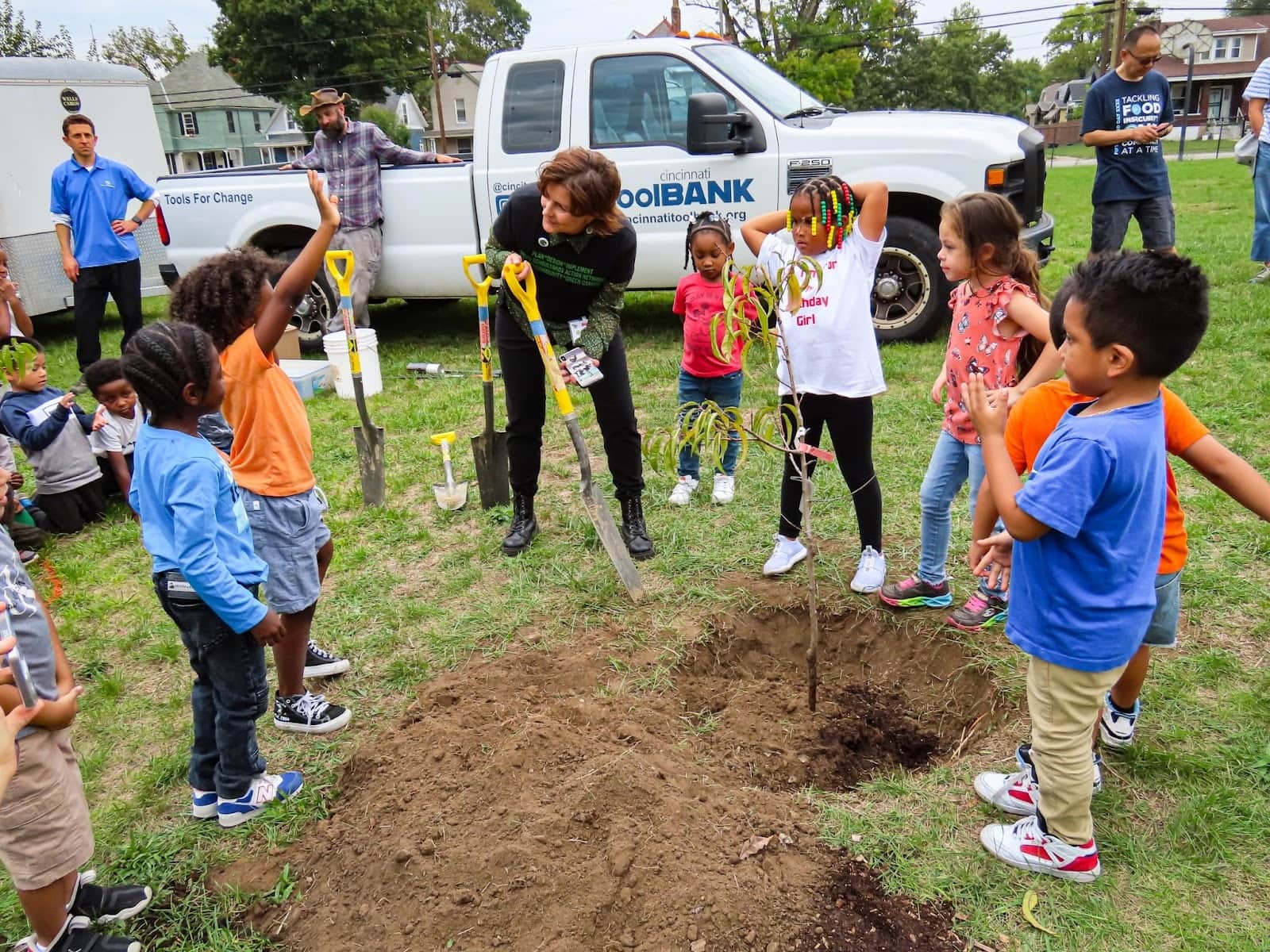
The Common Orchard Project became a program of Green Umbrella in 2020 to bring a start-up idea to scale. We now support 41 orchards and have planted 660 fruit trees and hundreds of berry brambles, herbs, flowers, and veggies on orchard sites. Once these fruit trees are mature we project they will produce 6,000 lbs of fresh fruit per year in communities that need it most, including on 12 school campuses.

We participated in multiple public campaigns designed to reduce residential food waste, and coordinated efforts to adopt food waste reduction measures in commercial kitchens. Over the past seven years, we have hosted 3 Wasted Food Summits and significantly raised awareness about the impacts of wasted food on food security, climate warming emissions, landfill capacity, and household budgets. 

Thanks to our community-scale compost operation at the Camp Washing Urban Perennial Farm (managed by the Common Orchard Project) we are creating real options for composting food scraps in the city of Cincinnati and Hamilton County. So far 155 tons of food waste have been diverted into composting, keeping 16.7 tons of CO2 equivalents out of the atmosphere, and producing 398 cubic yards of compost that is being used to improve soil, crop yields, and tree health in local projects.

Green and Healthy Schools

I had the privilege of helping launch our deep collaboration with Cincinnati Public Schools back in 2019, and am so proud of the progress we have made since then to get ALL students outside into nature as part of their school experience. What started as an effort to increase access to green schoolyards has grown into a district-wide shift in how students learn, eat, and prepare for the future. 

Today, 60 of 66 CPS campuses have outdoor learning spaces – living classrooms that spark curiosity, deepen academic engagement, and support school community wellness. This is a dramatic increase from the 21 schools that could make this claim in 2021. These campuses are now supported by district-wide maintenance and curriculum plans to ensure these sites are maintained and used regularly by teachers, visiting educators, and afterschool programs. 

CPS has expanded green workforce programs across more schools and grade levels, giving students hands-on skills for the growing green economy. The Agriculture Education Career Tech Pathway is now available to middle school students and a pilot is underway in elementary grades, to help create pipelines of students ready to pursue formal green career training in high school and graduate ready for jobs or further education in the green economy. The District made a commitment to electrifying its buildings and transportation fleet and is now creating its first sustainability plan. 

Green Umbrella’s stellar Green and Healthy Schools Director Cynthia Walters is bringing her expertise to districts across the country through the Local Schools Policy Wellness Toolkit. This resource uses policy levers that all schools have to embed time outside, access to nature, nutrition education and more into how schools operate.

Cultivating Local Climate Leaders

Climate leaders can take many forms – employees of businesses who form green teams or advocate for zero waste or emissions reductions targets, people of faith who share their passion for creation with their spiritual communities, residents who see the impacts of pollution and heat stress on their neighbors and show up to meetings to voice their concerns, researchers and scientists who dedicate their life’s work to solving environmental challenges, elected officials who make bold decisions, students who advocate for change at their schools. I am so proud that the movement we have built together over the last 8.5 years has led to so many more voices participating in the work and advocating for change in their communities. I’m going to share some final numbers with you, but they do not even scratch the surface when it comes to how our movement for local climate action has expanded who is showing up for these conversations in Greater Cincinnati.

  • 83 religious congregations connected with Faith Communities Go Green
  • 20 congregations pursuing energy efficiency and other sustainable campus improvements
  • 55 former Green Umbrella staff and interns making waves in organizations across the country
  • 500 frontline community members engaged in climate action planning or orchard care
  • 21 neighborhoods with resilience plans
  • 55 households in Over-the-Rhine participating in an energy efficiency research study
  • Hundreds of people participating in our collaborative teams

The Work Continues

It has been an honor to work alongside so many passionate partners, community leaders, and staff who believe in a healthier, more resilient future for all of us and the natural world we are a part of. We have built something truly special together, and because it is collaborative I know will continue to evolve and improve. I am particularly thankful for the trust that the Green Umbrella trustees and members placed in me as I mapped out how our organization might grow to respond to needs and opportunities as they emerged. And for the dozens of staff and interns who have come in and out of Green Umbrella over the last 8 years and taught me how to lead through so many different types of circumstances. As I move into my new role at Gorman Heritage Farm, I am taking with me the conviction that showing up with love, kindness, mutual respect, and deep listening is the most significant contribution I can bring. I know that Van Sullivan, Green Umbrella’s interim executive director, will bring that with them every day and that the organization is in great hands. I will be cheering you on from my viewpoint as a member organization and collaborator in the work!  

You can make a contribution to support the next chapter of Green Umbrella by donating to our Leadership Legacy Campaign by March 3, 2026!

Filed Under: Uncategorized

Scientists in the Wild

August 5, 2025 by Claire Carlson

Have you ever dreamed of meeting a scientist in real life? How about exploring a hidden greenspace? If either of these statements rings true to you, join the Greenspace Alliance, Cincinnati Parks, and the Center for Collaboration on Climate and Community for Health (C4H) for their Meet A Greenspace Hike at Badgley Run!

Join the Greenspace Alliance and C4H for this month’s Meet A Greenspace Hike on Friday, August 29, from 3:00-4:30 pm at Badgley Run in Cincinnati’s Northside Neighborhood.

Hidden Gems

Once slated for development as part of the I-74 expansion, Badgley Run is a 16-acre property owned and operated by the Cincinnati Park Board (CPB). Local community members successfully advocated for its protection. Initial funding acquired the original two parcels of land, and a comprehensive restoration initiative remediated extensive dumping, erosion, and invasive species on the site. The park is currently managed by Cincinnati Parks, along with Northside Greenspace Inc. and other regional stakeholders who are committed to improving the site.

To further highlight the success of this property, Badgley Run serves as an important greenspace corridor for both wildlife and residents. At the time of its initial purchase, Badgley Run aligned with the City of Cincinnati’s goal to link the Northside communities with nearby Mt. Airy Forest. Additionally, a property owned by The Hillside Trust, a non-profit dedicated to protecting the region’s hillsides, borders Badgley Run, further emphasizing its importance as a greenspace corridor.

C4H: Connecting Climate and Health in Cincinnati

The Cincinnati Center for Collaboration on Climate and Community for Health is a new research center under development at the University of Cincinnati. Often referred to as C4H, the Center will focus on understanding and reducing the health impacts of climate change on vulnerable populations, including first responders, outdoor workers, pregnant women, children, and senior citizens living in economically disadvantaged urban areas. As climate change continues to worsen, cities and the urban and suburban sprawl that forms around them will be subject to its impacts at higher levels. These communities often lack natural features like forests and native greenspaces that help mitigate the impacts from heat, air pollution, and storm events that are becoming more prevalent and extreme.

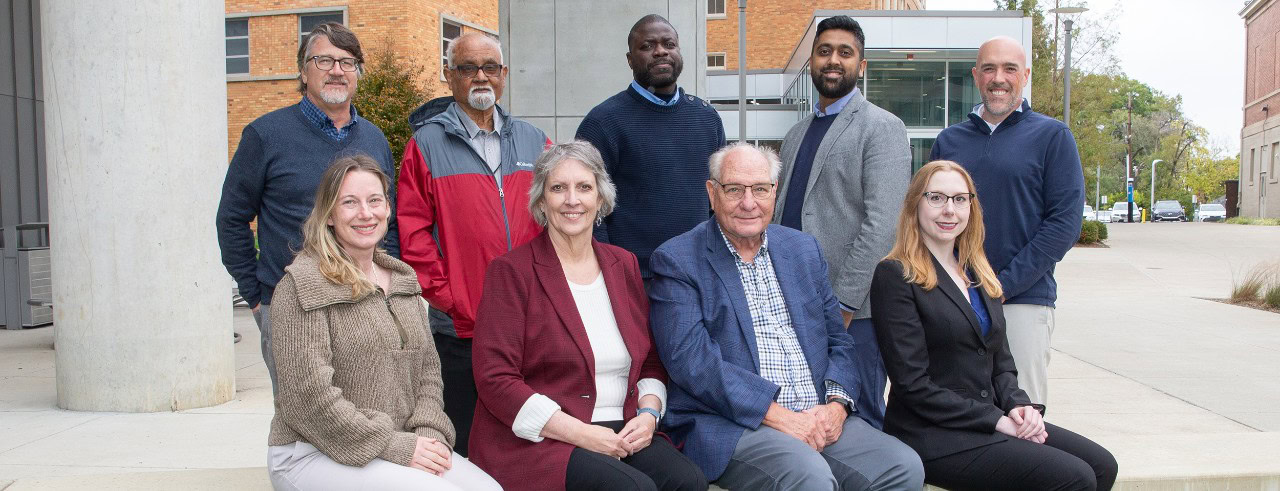
Leadership of the new Cincinnati Center for Climate and Health. Photo/Andrew Higley/UC Marketing + Brand. Seated from left to right: Kelly Brunst, PhD, Ardythe Morrow, PhD, MSc, George Leikauf, PhD, Michelle Burbage, PhD. Standing from left to right: David Stradling, PhD, Amit Bhattacharya, PhD, Angelico Mendy, MD, PhD, Shaunak Sastry, PhD, Patrick Ryan, PhD, MS.

This Meet A Greenspace Hike will connect participants with scientists working to protect human health in a changing climate. Representatives from C4H will share how their work impacts individuals on both regional and national scales. This hike will also offer hikers the opportunity to communicate concerns they have about the intersection of health and climate change.

Explore Badgley Run!

We hope you’ll join us at our upcoming hike with Cincinnati Parks and C4H! The hike will take place on Friday, August 29 from 3:00-4:30 pm. It will be guided by staff from Cincinnati Parks along with members of C4H. We will meet at the Badgley Rd. entrance, located at 4300 Badgley Rd., Cincinnati, OH 45223.

This hike is part of our monthly Meet a Greenspace Hiking series. We hope these hikes will provide the time and space they need to reconnect with nature. If you have any questions, contact Green Umbrella’s Greenspace Alliance Manager Claire Carlson at claire@greenumbrella.org.

Filed Under: Greenspace Alliance, Meet A Greenspace Hike Series, Uncategorized

“Don’t Drink the Cancer Water”: Forever Chemicals and Cover-Ups Coming to the Surface

July 23, 2025 by Kelly St Charles

Contributors: Kelly St Charles

Tap water. Organic tomatoes. Your – yes, your – blood and tissue. What do these all have in common? 

They’re places where PFAS – aka “forever chemicals” – can be found. And that’s just the beginning. From the soil in your garden to the deepest parts of the ocean, from the polar ice caps to human placenta, PFAS have polluted the entire – yes, entire – planet. 

But what are PFAS, really? How did they get everywhere without us noticing? And what does this mean for our health?

Forever Chemicals Are Forever

PFAS is short for per- and/or polyfluoroalkyl chemicals1. There are thousands of substances in this family of chemicals, but they all have a carbon-fluorine bond in common. Carbon-fluorine bonds are among the strongest chemical bonds known to exist. They do not degrade at all in the natural environment, so they move and linger throughout the world in water, wind, soil, and living organisms (like humans), accumulating over time.

Carbon-fluorine bonds are extremely rare in nature; however, they are extremely common in the man-made chemical industry because they have a huge commercial value: they resist grease, oil, water, and heat. Take a moment to look around you – look at the furniture, a snack or drink you’re enjoying, even the clothes you’re wearing – is anything waterproof or fire-resistant? Plastic? Polyester? You’re sitting on, drinking from, maybe even wearing PFAS.

Your Health & PFAS

Studies about the impacts of PFAS exposure/ingestion are ongoing, but they have been linked to an enormous amount of health conditions, including but not limited to:

  • Cancers (kidney, testicular, breast, prostrate, bladder, ovarian, thyroid, blood, and more)
  • Childhood leukemia 
  • Decreased fertility, lower sperm count, lower testosterone, hormonal disruption, menstruation irregularities, and endometriosis
  • Pregnancy-induced hypertension (preeclampsia), lower birth weights, and birth defects
  • Development impairment, behavioral changes, and delayed puberty in children
  • High cholesterol levels
  • Liver damage
  • Weakened immune systems

The more PFAS you accumulate in the body, the more at risk you are. Because children drink more water, eat more food, and breathe more air per pound of body weight than adults, they have a higher risk of ingesting PFAS than adults. This includes newborn babies, who can ingest PFAS through formula or breast milk. Even fetuses are exposed to PFAS, which can travel through the body and have been found in the placenta.

People who work in industries that manufacture, develop, or utilize PFAS are at a significantly higher risk of health impacts associated with PFAS. For example, inhaling polymer fumes can cause “Teflon fever”, flu-like symptoms that can last for a few hours or even days in only one incident2. It may sound like something that only shows up in industrial plants or factories, but it can occur anywhere people work closely with plastics and other petroleum products. For example, a 2010 study of professional ski technicians in Norway revealed that the ski waxes they used, many of which contained PFAS, were exposing the employees to high levels of PFAS3.

Even if you don’t work in an industry that regularly handles PFAS, you are at an increased risk of exposure if you reside near someplace that does. That’s how the public started to find out about PFAS – people who lived in areas where PFAS were developed and disposed of improperly started to get sick, and it was traced back to devastating PFAS contamination in water supplies. That’s how the public started to find out PFAS were dangerous. But the manufacturers of PFAS already knew.

From the Manhattan Project to West Virginia4

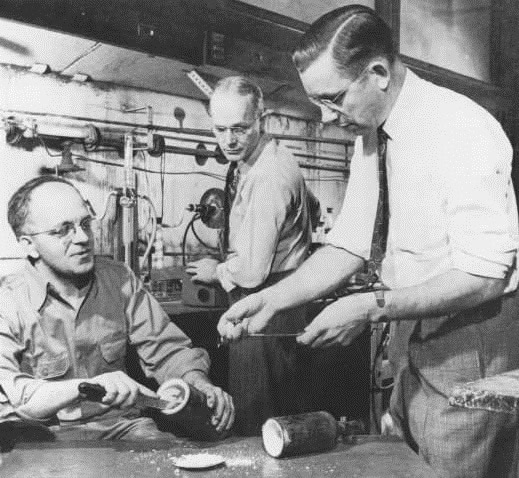
Reenactment of the 1938 discovery of Teflon. Roy Plunkett is on the far right.

Teflon was accidentally invented in 1938 by chemist Roy Plunkett at a DuPont laboratory in Deepwater, New Jersey. DuPont is a chemical manufacturing company that first began as a gunpowder manufacturer in the 1800’s. Over the years, they worked on explosives, lacquers, and artificial textiles like Rayon before concentrating on chemical development, which led to things like artificial rubber (Neoprene), synthetic ammonia, and Freon, a refrigerant.

Plunkett was working with Freon when he noticed a white buildup in one of his gas canisters. The material didn’t melt, dissolve, or react to anything chemically, and it was extremely slippery. DuPont patented it as Teflon. It was used during World War II by the military for nose cones for bombs and canister lining, and it was instrumental in the Manhattan Project – the successful production of the hydrogen bomb.

During Manhattan Project development, the areas where DuPont processed fluorocarbons – the building blocks of Teflon and all PFAS – were known to cause health issues to workers. In the Deepwater plant, two people died after Teflon by-products were emptied into a ventilating hood. Around DuPont’s Chamber Works Plant in southeastern New Jersey, farms were devastated by an unknown contagion that bewildered the farmers. Crops failed, animals sickened, and farm workers were sick. This was in 1943.

After the war, DuPont and other chemical manufacturers found commercial ways to profit from the inventions they developed for violence. Poison gases became pesticides, explosives became chemical fertilizers, vinyl became medical equipment, flooring, and Saran wrap. Teflon was used for things like fishing gear and waterproofing raincoats, but DuPont hadn’t started marketing it for food products yet because their safety testing was yielding concerning results. Workers who inhaled Teflon fumes developed flu-like symptoms. Lab animals that were exposed to heated Teflon died within minutes. While at-home cooking wasn’t likely to heat the Teflon to the point where fumes would fill a kitchen, the possible liability made DuPont nervous.

In the 1950s, a French engineer coated his wife’s baking tins with Teflon to prevent food from sticking to the sides. It worked so well that he started a non-stick pan company, which did extremely well in France. Meanwhile, in America, people outside the chemical manufacturing industry were starting to notice the impacts of chemical waste around production sites, even if they didn’t know what specifically was causing the destruction. Lawyers, scientists, and government officials put pressure on Congress to regulate synthetic chemicals and food additives entering the consumer market. The pressure worked, sort of – Congress passed a law that required testing for all new chemicals that might wind up in food. New chemicals – meaning the chemicals that were already in commercial use, like Teflon and other PFAS, were to be presumed “safe” and exempted from required testing5.

The original Teflon-coated saucepan was called the “Happy Pan”.

When an American entrepreneur encountered the French Teflon-lined pans, he approached DuPont to import the pans to the United States. Despite DuPont’s earlier reluctance to use Teflon directly with food, by this point the new food additives bill had passed through Congress, and no additional testing of their chemicals would be required6. DuPont moved forward with marketing Teflon as a cooking miracle.

Teflon was an instant consumer hit, but DuPont still didn’t know why it made workers sick. As its non-stick properties made kitchen tools fly off the shelves, DuPont continued internal safety testing, and discovered that a specific chemical in Teflon, PFOA7, was toxic, causing abnormally large livers and kidneys in lab animals. There was no recall, no public announcement, no change to the product. And there was still waste created from Teflon production, which DuPont dumped into the Ohio River and unlined pits around its plant in Parkersburg, West Virginia.

The Secret Poisoning of a Town

Robert Bilott was a corporate defense lawyer based in Cincinnati, often working on the side of chemical companies, when Wilbur Tennant came to him for help. The Tennants were from Parkersburg, West Virginia, where they owned a small farm that had sustained their family for generations. In 1983, they sold some acreage to the local DuPont plant for a landfill. The Tennants were reluctant at first, but DuPont promised only to dump nontoxic materials, and the family needed the money.

Robert Bilott on the Tennant family farm. Source: The New York Times

By 1990, the farm was dying. The once-clear creek turned black and foamy. Cattle started growing tumors, going blind, and throwing up blood. Members of the Tennant family had chemical burns and breathing problems. The Tennants alerted the West Virginia Department of Environmental Protection, which found that DuPont was improperly disposing of waste on the landfill acreage next to the Tennants’ farm. The agency fined DuPont and moved on. As the years passed, animals kept dying, and the Tennants decided to sue DuPont. On the advice of a neighbor, they contacted Robert Bilott, the grandson of an acquaintance.

Bilott was so disturbed by the material Wilbur showed him – including images of foamy creeks, lesion-covered cows with deformed hooves, a dead calf with chemical-blue eyes – that he decided to take the case. Bilott’s work uncovered intentional concealment on the part of DuPont to both silence the Tennant family’s complaints and hide the dangers they knew came with PFOA, which was found in Parkersburg’s and neighboring towns’ drinking water supply. 70,000 people were drinking contaminated water for decades.

PFAS on the Big Screen

Bilott’s work with the Tennant family and the case against DuPont are dramatized in the 2019 film Dark Waters, which starred Mark Ruffalo as Robert Bilott and Anne Hathaway as Bilott’s wife, Sarah. Mark Ruffalo is himself an environmental activist, and he joined Bilott in the award-winning documentary How to Poison a Planet, which premiered in the United States in 2025. How to Poison a Planet includes sworn testimony from industry scientists and employees discussing what chemical company 3M knew about the dangers of PFAS, even as 3M continued to sell them around the world. “This documentary exposes one of the biggest environmental disasters in human history. Without a concerted effort from all levels of business and government, ongoing contamination will continue to endanger the environment and our health,” says Ruffalo.

Green Umbrella’s post-film discussion at Cincinnati World Cinema

Green Umbrella hosted a screening of How to Poison a Planet on July 15, 2025, at Cincinnati World Cinema. Following the screening, Robert Bilott was in conversation with Chris Lorentz, Ohio River Basin Alliance chair, and Jeff Swertfeger, Greater Cincinnati Water Works Superintendent of the Water Quality and Treatment Division. This event was sponsored by Taft Law (special thanks to Cincinnati World Cinema for donating ticket sales to Green Umbrella).

While it touches on PFAS in general, How to Poison a Planet focuses on two specific instances of PFAS contamination that have decimated communities: the First Nations Community of Wreck Bay in Australia and the town of Oakdale, Minnesota.

Wreck Bay resident Aunty Jean Carter appears in How to Poison a Planet to speak out about the cancer in her community. Her granddaughter, Peggy Carter, died of cancer at 39. Source: The Sydney Morning Herald

Firefighting foams are made from and packed with PFAS. For more than three decades, Australia’s Department of Defence used 3M’s firefighting foams on their HMAS Creswell naval base and the Jervis Bay Range Facility, which neighbor Wreck Bay. The PFAS in the foam contaminated the waters of Wreck Bay, causing cancer clusters and destroying the Indigenous residents’ relationship to the land. Indigenous Senator Lidia Thorpe, chair of an Australian Senate inquiry into the Wreck Bay contamination, said many members of the Wreck Bay community have “some type of illness related to PFAS, or they’ve lost family members to PFAS … We’re talking about children with rare cancers, we’re talking about eye cancers, we’re talking about breast cancers, and the community is completely devastated.” In How to Poison a Planet, a Wreck Bay resident said that people in the community don’t grow old. A January 2025 article from Australia’s ABC News quoted Wreck Bay resident Henry Simms as saying “I haven’t got one mate out there my age left – a lot of them men died in their early 40s.”

Minnesota Mining and Manufacturing – the original name of 3M – started dumping PFAS waste in Oakdale, Minnesota decades ago. The waste leached into the area’s groundwater, contaminating the drinking water for over 140,000 residents. In 2005, state health officials announced publicly that 3M had contaminated the water. Tartan High School is located in one of the toxic groundwater zones. So many students had cancer, the students joked about the school water fountains to each other: “Don’t drink the 3M cancer water”. Oakdale residents recruited Rob Bilott to help with a lawsuit against 3M, but Minnesota’s laws are different than West Virginia’s, and 3M is extremely influential in Minnesota; lawyers weren’t permitted to discuss whether or not 3M chemicals are harmful, and a jury ruled in 3M’s favor in 2009. In 2010, the state of Minnesota sued 3M for polluting the state’s natural resources. 3M settled the state’s lawsuit in 2018 for $850 million.

What Now?

In 2004, DuPont settled Bilott’s class-action lawsuit in Parkersburg – which grew to include 80,000 plaintiffs across 6 water districts – for $343 million. Wilbur Tennant and his wife both died before the lawsuit was settled, as did other plaintiffs. Lawsuits continue to bubble up against DuPont and its fellow chemical companies, both for sickening people and covering up the damage they’ve done.

Amara Strande testifies before the House Environment and Natural Resources Finance and Policy Committee in support of a bill that would prohibit PFAS in children’s products. Source: Minnesota Reformer

The Oakdale community in Minnesota – in particular a Tartan High School student, Amara Strande – lobbied hard for the laws to be changed to regulate 3M’s chemicals more effectively. Amara’s Law, which takes effect in stages between 2025 and 2032, prohibits the sales of products containing intentionally added PFAS in Minnesota, except for those determined to involve currently unavoidable uses of PFAS. Amara died of cancer in 2023, before she got to see the law named after her enacted. She was 20 years old.

While chemicals companies across the globe are phasing out certain PFAS that have been specifically identified as toxic (such as PFOA), these companies – and industry regulations – are not changing the development methods of carbon-fluorine bonded chemicals: as in, “create first, find out if it’s dangerous later”. For example, short-chain PFAS were developed as an alternative to the original PFAS substances. Short-chain PFAS have fewer fluorinated carbons and so were thought to accumulate less in the environment and living things. However, because they are shorter, they’re highly mobile in soil and water, making it easier for them to spread and contaminate drinking water, and they linger just like the original, long-chain PFAS do.

The New House Bill Targeting the Clean Water Act

On June 11, 2025, the House of Representatives’ Committee on Transportation & Infrastructure introduced the H.R.3898 Promoting Efficient Review for Modern Infrastructure Today (PERMIT) Act, which is described as “cutting red tape” and “increasing Clean Water Act permitting efficiency”. In practice, the bill would limit the scope of the Clean Water Act by redefining “navigable” waters to exclude waste treatment systems, areas where waters overflow because of precipitation, converted croplands, groundwater, or any other body of water determined to be excluded by the U.S. Army Corps of Engineers. In other words, the Clean Water Act – which requires regulation of dumping into and polluting of water sources – would no longer apply to any of the above water systems. This means that any company, entity, or person could dump how much of whatever pollutant they wanted into those water systems and not only would they not be fined, the public might never know.

The Committee on Transportation & Infrastructure released a statement listing several industry leaders as supporters of the PERMIT Act. These entities include pesticide companies, building and manufacturing associations, the National Mining Association, and the Fertilizer Institute.

Mike Collins, a Republican from Georgia’s 10th Congressional District, is the Primary Sponsor, with 8 fellow Republicans as Co-Sponsors:

  • Sam Graves (Committee Chairman), Missouri’s 6th District
  • Eric “Rick” Crawford, Arkansas’s 1st District
  • Doug LaMalfa, California’s 1st District
  • Jeff Hurd, Colorado’s 3rd District
  • David Taylor, Ohio’s 2nd District
  • David Rouzer, North Carolina’s 7th District
  • Clarence “Burgess” Owens, Utah’s 4th District
  • Pete Stauber, Minnesota’s 8th District

History Is Now

It’s been less than a hundred years since chemical companies began developing PFAS for the commercial market. Yet we’re still learning how damaging PFAS are to the environment and human health. We’re still uncovering the cover-ups within DuPont, 3M, and other chemical companies on how deep their knowledge of the danger ran. And we still don’t know how to effectively get PFAS out of the environment or our bodies. Thanks to the courage of victims like the Tennant family, the Wreck Bay community, and Amara Strande; the tenacity of lawyers like Rob Bilott; and the veracity of journalists like Carrie Fellner, Michael Hawthorne, Sharon Lerner, and Mariah Blake, the lawsuits aren’t going away.

More Information & Resources

Change for Yourself

Because there are thousands of PFAS chemicals, and because they have been found everywhere in the world, it can feel like an overwhelming problem to address, especially as an individual trying to protect themselves and their loved ones. First, stay calm – don’t let yourself be daunted by the scope and scale of the problem. Start with small things that reduce your PFAS exposure, things that feel manageable for your family. You can add more changes as your habits adjust. Since PFAS accumulate, any change you make, however small, can be impactful over time.

Steps you can take to reduce PFAS exposure for yourself and your household:

  • Dust more. PFAS accumulates easily in dust around the home.
  • Check your closet for non-natural or water-resistant fabrics. When buying new clothes, choose all-natural fabrics like cotton, linen, and wool.
  • When purchasing new furniture, curtains, or pillows, avoid fire-treated and water-resistant fabrics. Performance fabrics are almost always treated with PFAS. Choose natural materials like leather, cotton velvet, canvas, linen, and cotton.
  • Check your kitchen for Teflon, non-stick, and plastic cookware and bakeware. Throw out any non-stick tools, pans, and tins that are chipped, scratched, or damaged; these leach PFAS directly into food, especially when heated. When purchasing new cooking tools, choose carbon or stainless steel, cast iron, ceramic, and wooden materials.
  • Avoid single-use plastic packaging for food including water- and grease-proof wrappings, casings, and containers. Replace saran wrap with natural beeswax wraps and plastic water bottles with glass or stainless steel. 
  • Avoid food designed to be heated or cooked in the container it is sold in. Microwave popcorn bags, frozen meals served or covered in plastic, even “steamable” frozen vegetable bags are all made with and from PFAS.
  • Check product labels of your home cleaning and personal care products. Whenever you can, avoid products that have ingredients with “-fluoro-” somewhere in its name; those are PFAS. Some products that include PFAS may come as a surprise, including:
    • Dishwasher and laundry detergent pods (the plastic that holds the pods together are designed to melt in water are PFAS that linger in the water supply and on dishes or clothes)
    • Waterproof mascara and other waterproof cosmetics
    • Pads, tampons, and menstrual cups
    • Dental floss
  • Learn more about your home’s water supply. Have well water tested; check with your water provider on the results of their water quality testing, which should happen regularly. Most water providers post water quality results on their websites. If you’re not satisfied with your water quality, you can install water filtration systems. These range from full-supply filtration systems for your entire house to simple filtered water pitchers that can sit in your refrigerator.

Changing the System

The influence and resources of powerful chemical and manufacturing companies meant that they could – and did – stack the deck in their favor, for decades. The regulatory, legal, and political systems set up now are ones that the companies helped build, but that doesn’t mean they can’t be changed. The changes made already have been because ordinary people spoke up and stood out. If you want systems change in regards to PFAS laws and regulation, you can engage with your elected officials at local, state, and national levels to make sure they know it’s an issue that you, a constituent, care deeply about. 

You can also engage with the National Environmental Protection Agency directly. The EPA publishes regulation proposals in the Federal Register (the U.S. government’s daily journal) and you can provide comments before they are enacted. You can comment on existing EPA regulations as well at Regulations.gov. Learn more about interacting directly with the EPA here.

Engage with your local soil and water conservation districts. Many municipalities have specific entities dedicated to the health and safety of the community’s earth and waters. Green Umbrella’s Greenspace Alliance recently released a guide to contacting your representatives that also includes a section on soil and water conservation districts in Greater Cincinnati. Learn more and access the guide here.

Talk to your friends, family, neighbors, and network about your concerns about PFAS. Despite the proliferation of PFAS, many people are still unfamiliar with them. The more your community knows about PFAS and its potential for harm, the more prepared you’ll be to protect yourself from existing PFAS contamination, recognize if it happens even further, and speak up to defend your waters, health, and home.

Sources

  • They Poisoned the World: Life and Death in the Age of Forever Chemicals by Mariah Blake
  • How to Poison a Planet directed by Katrina McGowan
  • Per- and Polyfluoroalkyl Substances (PFAS), U.S. Food & Drug Administration 
  • Yale Experts Explain PFAS ‘Forever Chemicals’, Yale Office of Sustainability
  • Study shows higher risk of childhood leukemia tied to PFAS exposure from household dust, Berkeley Public Health
  • Teflon Flu, poison.org 
  • Polymer Fume Fever, National Library of Medicine 
  • The Lawyer Who Became DuPont’s Worst Nightmare, New York Times 
  • Short-chain perfluoroalkyl acids: environmental concerns and a regulatory strategy under REACH, National Library of Medicine
  • H.R. 3898 PERMIT Act
  • Clean Water Act (1972)
  • Mark Ruffalo on the ‘evil’ company that poisoned every person on the planet – then kept it secret, The Sydney Morning Herald
  • Social and cultural impacts: Wreck Bay case study, Parliament of Australia 
  • Wreck Bay: NSW Indigenous community secures $22m Pfas contamination settlement, The Guardian 
  • Paradise poisoned? Behind the deaths at Wreck Bay, The Age via Gale Academic Onefile
  • Firefighting Foams: PFAS vs. Fluorine-Free Foams, FEMA 
  • “It’s literally killing people”: Thorpe attacks government inaction on forever chemicals in waterways, National Indigenous Times 
  • There must be something in the water, Minnesota Reformer 
  • Outspoken PFAS critic Amara Strande dies from cancer, Minnesota Reformer 
  • She died fighting ‘forever chemicals.’ They still linger in her town, Washington Post 
  • All The Stuff in Your Home That Might Contain PFAS ‘Forever Chemicals’, Time
  • Meaningful and Achievable Steps You Can Take to Reduce Your Risk, U.S. Environmental Protection Agency

1 PFAS tends to be a catch-all term for this category of chemicals, but they may also be referred to as PFOA, PFOS, PFNA, and more. This is a sort of square vs. rectangle scenario – as in, a rectangle is always a square, but a square is not necessarily a rectangle. A PFOA may be a PFAS, but a PFAS is not necessarily a PFOA.

2 It’s sometimes called “Teflon fever” because Teflon is a material that is often used for non-stick purposes in heated conditions – like a non-stick frying pan. This is one of the reasons that, if you have any non-stick cookware, it is recommended that you don’t preheat it; the fumes are toxic. “Teflon fever” can refer to illness caused by inhaling fumes from any heated polymer, not just Teflon.

3 In 2020, the International Ski Federation banned waxes containing PFAS in professional races. However, waxes containing PFAS still exist outside of professional skiing, and recreational skiers and snowboarders that use those waxes have a higher risk of PFAS exposure.

4 The primary source of the information in this and the following sections is They Poisoned the World: Life and Death in the Age of Forever Chemicals by investigative journalist Mariah Blake, published by Penguin Random House in 2025.

5 Pressure from chemical industry lobbyists worked on Congress too. Even today, over eighty thousand chemicals circulating in the United States today have never undergone any form of safety testing.

6 Teflon would not have passed safety requirements.

7 PFOA is a type of PFAS.

Filed Under: Uncategorized

“Disposable”: How Waste Impacts Our Health

March 17, 2025 by Nobi Kennedy

Contributors: Nobi Kennedy, Bamidele Osamika, Leah Ross, Mitch Singstock, Kelly St Charles, Van Sullivan, and Viviana Saldarriaga
This piece is a part of Green Umbrella’s 2024 PSA Campaign on climate health impacts, highlighting a recent report completed with Scioto Analysis which was supported in part by bi3, HealthPath, and the Interact for Health Data for Equity grant.

In Greater Cincinnati alone, we send approximately 9,000 tons of trash to the landfill each day. What we discard and how we dispose of it make a big impact on both the climate and community health impacts.

Down in the Dump: Sanitary Landfills in the US

Cross-section of a Rumpke sanitary landfill

In the United States, the most common type of landfill is called a sanitary landfill. These are waste sites designed to accommodate trash with the intention of preventing hazardous materials byproducts from impacting the surrounding environment. They include containment methods like plastic liners, compacted clay, liquid waste runoff (known as leachate) management, and landfill gas recovery systems.

Although modern landfill design makes intentional effort to limit leaks of leachate and landfill gas, leaks do occur. Poor waste management practices can lead to increased risk of respiratory illnesses, heart disease, stroke, adverse birth effects, infectious disease, and asthma attacks. And because landfills are most often constructed near low-income neighborhoods and communities of color, these are the communities that are hit the hardest by the health impacts of poor waste management.
Health Impacts:

Air Quality

Landfill gas, a byproduct of organic matter decomposition in anaerobic (non-oxygenated) conditions, is extremely dangerous to humans. Landfill gas is composed mostly of two greenhouse gases, methane and carbon dioxide, with varying amounts of nitrogen, ammonia, sulfides, and more. If inhaled, it can cause nausea, coughing, and breathing problems immediately and increase respiratory illness and lung cancer over time.

Recent studies have shown that landfill gas can also contain high levels of Per- and Polyfluoroalkyl Substances, or PFAS. PFAS are synthetic, human-made “forever” chemicals, called such because they do not degrade, but instead build up over time. Exposure to PFAS has been linked to increases in cancer, developmental and birth defects, hormone and endocrine disruption, low fertility rates, asthma and respiratory illnesses, suppressed immunity, and more.

Leachate Contamination

Leachate is a byproduct of the landfill system, created as water (such as rainfall, snowmelt, or runoff) filters through waste in the landfill. The exact composition of leachate varies depending on the landfill contents, but it contains pollutants like heavy metals, pharmaceuticals, “forever chemicals” like PFAS, and ammonia nitrogen compounds. When improperly managed, leachate can contaminate soil, groundwater, and surface water like rivers and lakes. When humans come into contact with these pollutants, they can experience a wide array of negative health outcomes, ranging from skin irritation to antibiotic resistance to cancer and more.

Plastics Everywhere

In landfill conditions, the chemicals in plastics are absorbed into leachate and landfill gas. Across the globe, more than 82 million tons of plastic waste is mismanaged or littered annually, meaning that is not stored in secure landfills, recycled, or incinerated. Of this, 19 million tons of plastic waste escapes into the environment, where it can break down into microplastics that seep into water, soil, and air, to eventually wind up in plants, animals, and humans. Studies have shown that chemicals found in plastics can have major impacts on cancer, diabetes, cardiac health, reproductive health, and the health of newborns and fetuses.

Breaking the Trash Cycle – the Four R’s

Proper and effective waste management practices start with the Four R waste hierarchy: Reduce, Reuse, Recycle, and Refuse.

Reducing waste has some significant environmental impacts, including pollution prevention, reusing existing items, among others. By refusing to create or consume wasteful products, reusing existing items, and viewing our “waste” as valuable resources, our region could radically change our ecological footprint and overall community health.

What YOU Can Do

Compost Food Scraps

An astounding 32% of what goes to Hamilton County’s landfill could be composted. Whether you are able to compost in your own living space or you take advantage of the region’s growing composting infrastructure, composting is a powerful way to make a difference.

Greater Cincinnati is building robust composting infrastructure through community-scale initiatives. Green Umbrella’s The Common Orchard Project, through a USDA Community Composting grant, has established multiple composting sites, including their Camp Washington Perennial Farm facility that can process up to 6,000 pounds of food scraps weekly. The impact is significant—their program’s CO2 reduction equals removing 626 gasoline-powered vehicles from the road annually. Residents can access 24/7 drop-off bins for composting common items like fruits, vegetables, grains, and coffee grounds, turning waste into valuable resources for urban farming.

Practice Safe Disposal

Some items (such as batteries, electronics, light bulbs, needles, paint, and tires) are especially dangerous to throw away. When you need to dispose of these items, research what places and organizations near you accept them for proper disposal. Great resources for local hazardous material disposal include Hamilton County ReSource, Rumpke, and the Indiana Department of Environmental Management (IDEM).

More Actions

  • Replace “disposable” items with reusables (washable cloths instead of paper towels and napkins, cutlery and storage containers instead of plastic to-go & take-out items)
  • Avoid impulse shopping, fast fashion trends, and single-purpose decor
  • Take care to properly recycle glass and metal, which do not break down in landfill conditions but can be easily and effectively recycled

What WE Can Do

While individual actions make communities healthier and safer, the biggest impact comes from the collective action of community leadership, businesses, organizations, and institutions.

Better Waste & Recycling Resources for Your Organization

Organizations like Indiana Recycling Alliance offer education and support for waste reduction initiatives. Northern Kentucky Solid Waste Management Area (NKSWMA) provides resources for proper waste disposal and recycling. The Circular Indiana Initiative promotes sustainable practices and connects residents with reuse opportunities. For electronic waste, Indiana’s IDEM maintains an updated list of certified e-waste collectors to ensure proper recycling of hazardous materials. Hamilton County ReSource offers a Trim Our Waste program to help organizations, institutions and property owners in Hamilton County waste less, recycle properly, and conserve resources.

Fundamental Changes in Policy

Community leadership is imperative to lessen the impacts of excessive waste on our regional climate. Successful waste reduction requires both infrastructure and communication. Communities should ensure convenient access to recycling and composting services, especially in multi-family buildings and public spaces. Local governments can support this through zoning codes that require adequate space for recycling and waste management in new developments.

Several current policy initiatives can drive change at the state and federal levels, such as:

  • Right-to-Repair Laws that encourage product longevity, with options to repair the product instead of purchasing a new one
  • Product Stewardship Policies that shifts responsibility of a product’s environmental impact to the manufacturer
  • The COMPOST Act and Zero Food Waste Act, which prioritizes composting and food waste reduction policies at the federal level
  • Pay-As-You-Throw programs that incentivize waste reduction by charging according to the amount of garbage thrown away

Food System Resilience: The Four R’s in Action

According to Maddie Chera, Local Food Specialist for What Chefs Want! and former Director of the Greater Cincinnati Regional Food Policy Council, creating a resilient regional food system requires addressing social, environmental, and economic factors through policy and systems change. Food waste reduction exemplifies how following the waste hierarchy – Reduce, Reuse, Recycle, and Refuse – creates positive ripple effects throughout our community.

The Food Policy Council follows these Four R’s in their work:

  • REDUCE: By strengthening local food supply chains to minimize waste during harvest/production and transportation, as well as prevent food spoilage 
  • REUSE: Through food rescue programs that redirect surplus food to those in need
  • RECYCLE: Supporting composting initiatives that turn food waste into valuable soil nutrients
  • REFUSE: Unlike metals, plastics, and glass, at every stage of its existence, food can be used for something. Whether conserved, consumed, or composted, food always has a use and should not end up in landfill as refuse.

The Council supports local institutions in adopting policies that prioritize community nutrition while benefiting area businesses. This approach reduces emissions by shortening supply chains and keeps resources within Greater Cincinnati—supporting local farmers, improving food access, and reducing environmental impact.

By integrating these local initiatives and expert perspectives, we can see how waste reduction connects to broader community benefits—from soil health to food security to economic resilience. Whether you choose to start composting, change your own waste habits, or advocate for policy change, every action guided by the Four R’s contributes to a healthier, more sustainable region.

Learn More

Learn more about Waste and climate change by viewing a recording of our latest Climate Health Webinar.

Resources

Infographics – download and share!

Filed Under: Uncategorized

Request for Proposals: Green Umbrella Is Seeking Services

February 4, 2025 by Krystal Gallagher

RFP alert!

Green Umbrella is seeking professional services to engage in four areas of planning to help the organization sustain and grow its impact into the coming decade. Please see the linked RFPs to learn more about each area of work and how your firm can submit a proposal. All proposals are due at 10:00 am on Monday, February 24, 2025.

  • Strategic Planning
  • Communications Planning 
  • Development Planning
  • Audit Readiness and Indirect Rate Support, desired completion by December 15, 2025.

For questions or additional information, reach out to Beth Cundiff, Grants Manager at beth.cundiff@greenumbrella.

Strategic Planning – anticipated to begin in July 2025

We are seeking proposals from experienced consultants or firms to lead a strategic planning process that uses our vision, mission, and values, along with current opportunities and challenges, to define our highest potential impact goals and objectives and the strategies and tactics needed to achieve them over the coming years.

The resulting strategic plan will provide a roadmap for our sustainability and impact over the next 5 years, enabling us to maximize resources, strengthen partnerships, and achieve measurable outcomes as we work towards a resilient, thriving and equitable Region.

Green Umbrella will use the new strategic plan as a foundation for Communications and Development Planning RFPs later in the year (more information below).

Firms bidding on this RFP may submit proposals that respond to multiple RFPs.

View file here

Communications Planning – anticipated to begin in November 2025 (following strategic planning process completion)

To ensure the long-term sustainability of our work, we seek a qualified consultant to help develop a comprehensive and actionable communications strategy. The strategic communications plan developed through this process will align with our organizational goals and support us in effectively engaging stakeholders. The selected firm will guide us in addressing critical questions related to audience engagement, storytelling, and communication Systems. The communications plan will use the strategic plan as a foundation.

View file here

Development Planning – anticipated to begin in November 2025 (following strategic planning process completion)

Green Umbrella is seeking assistance in answering critical strategic questions related to financial sustainability, fundraising, and development staffing. The selected firm will guide the organization in creating a robust strategy that ensures we are financially and operationally equipped to achieve our mission effectively. The development plan will use the new strategic plan as a foundation.

View file here

Audit Readiness & Indirect Rate Support – desired completion by December 15, 2025

Green Umbrella is an active federal grant recipient and we anticipate reaching the threshold to be required to perform a Single Audit of our 2025 financials. We have not previously conducted an audit yet and are seeking services to prepare and plan for our first audit so it can be successful and convey integrity and efficiency to our funders.

The scope of work covers two projects: 

  • Project 1: Ensure compliance with federal grant award expectations 
  • Project 2: Indirect and Fringe rate calculations

View file here

About Green Umbrella

Green Umbrella is a member organization that advances environmental sustainability in the Greater Cincinnati region through collaboration, policy advocacy, and systems-change initiatives. As the Regional Climate Collaborative, Green Umbrella is dedicated to addressing the urgent need for climate action and resilience by building partnerships, leveraging diverse resources, and advancing equitable solutions.

Filed Under: Uncategorized

How Climate Change Impacts Healthy Food Systems

January 9, 2025 by Nobi Kennedy

Contributors: Nobi Kennedy, Bamidele Osamika, Leah Ross, Mitch Singstock, Maddie Chera, Kelly St Charles, Van Sullivan, and Viviana Saldarriaga
This piece is a part of Green Umbrella’s 2024 PSA Campaign on climate health impacts, highlighting a recent report completed with Scioto Analysis which was supported in part by bi3, HealthPath, and the Interact for Health Data for Equity grant.

Food is life. Although the USDA recommends a diet rich in fruits, vegetables, grains, and lean proteins to reduce disease risk, the food systems that support these recommendations face unprecedented challenges that threaten both our health and the environment.

In our consumer-driven world, the connection between food and the land is often lost. What we eat and how we cultivate food directly influence climate change, which in turn affects crop yield and health. Recognizing this intricate relationship is essential to developing solutions for a sustainable future for all.

Climate Change’s Impacts on Global Food Systems

According to the CDC, “climate change is likely to threaten food production, quality, prices, and distribution systems on a global scale.” Changes in rainfall patterns, erratic and severe weather, and increased weeds and pests reduce crop yields. Farmers and food producers face rising production costs due to greater reliance on pesticides and fertilizers, leading to higher prices. Distributors and retailers, impacted by increased wholesale costs and expanded cold storage needs, also raise prices. All parties along the food supply chain are expected to struggle to secure affordable insurance and other services in the face of unpredictable and extreme weather.

Increases in food cost may worsen the quality of dietary intakes, exacerbating health inequities. Rises in overall global temperatures caused by greenhouse gasses further exacerbate the strains on our food safety and nutrition. Although higher levels of CO2 can stimulate growth and carbohydrate production in some plants, they also often reduce the level of proteins and minerals in crops, making food less nutritious. Warm environments provide perfect conditions for bacterial growth, leading to higher risks of foodborne illnesses through pathogens like E. coli and Salmonella.    

More than 3 billion people depend on ocean waters for a significant source of their protein. Climate change means more than just warmer temperatures, which is damaging enough – causing melting ice, coastal erosion, aquatic habitat destruction, deoxygenation, and more. Higher temperatures concentrate harmful chemicals in both land and water, such as mercury levels in seafood. Ocean acidification, which is the reduction of ocean water pH levels and driven by increased atmospheric CO2, stresses marine ecosystems and threatens aquatic life. Climate events put people at risk of becoming environmental refugees – those who are forced to leave their homes or communities because of climate change. The changing climate may cause populations to migrate. Climate migrants bring unique dietary habits and food cultures, creating new challenges for local food systems to adapt to dietary preferences and needs.

Closer to Home: Impacts on Local and Regional Food Systems

Food insecurity is a growing concern fueled by climate events like droughts and floods. According to the Food and Agriculture Organization of the United Nations, “variations in water supply and extreme temperatures are two of the biggest factors that directly and indirectly impact agricultural production.” Increasingly difficult to predict and growing in frequency, extreme weather patterns disrupt crop production and lead to food shortages. In 2024, Ohio and surrounding regions experienced a historic drought, with the Hocking River in Athens recording its lowest flow since 1930. Rising temperatures, particularly in winter, disrupt the freeze-thaw cycle critical for agriculture, leading to flooding, increased weeds and pests, and other challenges.

The impacts of extreme weather swings are complex. For example, heavy rainfalls can delay planting, increase soil compaction, deplete oxygen levels, and cause root disease. Conversely heavy rains can benefit local ecosystems, restore water levels in reservoirs, and support agriculture. Agricultural interventions are necessary to adapt to environmental conditions because weather variability is a major cause of crop failure.

As crop yields decline, food insecurity and food inequity will worsen, disproportionately impacting vulnerable populations. According to Feeding America, a 2023 study concluded that “children in Hamilton County under the age of 18 years were more likely to be food insecure (16.9%) compared to the general population (10.9%), as were Black (25%) and Hispanic (17%) residents compared to White (9%) residents.” Neighboring states such as Indiana and Kentucky have similar rates of food insecurity, averaging 13.9% and 15.7% respectively. Declines in food production, coupled with rising costs, can prompt consumers toward cheaper food items, which are often highly processed and less nutritious, exacerbating health issues and inequities.

Food Systems Driving Climate Change

What we eat and how our food is produced has a significant impact on the environment. In 1860, Cincinnati was a pork production powerhouse, notoriously known as Porkopolis. Residents grew frustrated with the pollutants released by the slaughterhouse industry, noting, “Deer Creek, often running red with slaughter, was a stinking cesspool”. Complaints about slaughterhouse odors led to the relocation of many abattoirs to Brighton and the Mill Creek Valley.

Today, food production accounts for about 25% of all global greenhouse gas emissions. Across the country, cattle and other meat farming contributes most significantly to greenhouse gas production and global deforestation among food production. Research suggests that if Americans were to replace beef with beans as a source of protein, we would meet Paris climate goals. Recognizing that space can and should be held for culturally significant foods that are made with animal products, times they can be replaced effectively with a plant-based alternative make a difference. A plant-based diet is not only environmentally smart, but studies have shown that plant-based diets are better for your heart and your brain, and they lower the risk of cardiovascular disease and dementia, particularly in older individuals. By transitioning to a plant-based diet, you can lower your carbon footprint from food by 70%.

Reducing food waste is another impactful way to lower food-related emissions. Food waste accounts for 8-10% of global greenhouse gas emissions. You can cut your food waste by saving leftovers, composting organic materials, and buying food that does not perish as quickly, like frozen vegetables. You can also reduce the distance your food travels and the need for extra packaging and cold storage by buying food at farmers markets. Buying local food has the additional benefit of supporting local farmers and food producers. Becoming involved in a community garden or shopping at local farmers’ markets are excellent ways to ensure that the food you eat is nutritious and low-emission while building relationships, food access, and greenspace in your neighborhood.

Making Necessary Changes

Institutions, businesses, and organizations can all support healthy food choices and sustainable food systems in our communities. For example, the City of Cincinnati currently has a goal to reduce wasted food by 50% by 2030 while eliminating all food deserts across Cincinnati, an ambitious and exciting goal that will benefit city residents and can serve as a blueprint for other governments to follow.

By encouraging healthier choices with sustainability in mind, institutions can support food systems that are better for people and the planet. They can increase access to alternative sources of protein such as soy, beans, and meat substitutes to accommodate more dietary preferences.  The Greater Cincinnati Regional Food Policy Council, hosted by Green Umbrella, works with partners like the Kentucky Food Action Network (KFAN), National Farm to School Network (NSFN), Hamilton County Public Health, and more to provide guidance and resources for policies, guidelines, and programs your institution can adopt.

An easy and excellent way to shrink an organization’s carbon footprint is reducing waste. Methods include finding ways to minimize excess food by being conscientious of food ordering and having a plan for leftovers; donating extra food or ingredients to local food kitchens (like La Soupe or Last Mile Food Rescue); and composting food waste instead of sending it to landfill (our Common Orchard Project and Queen City Commons are both excellent composting resources). The Greater Cincinnati Regional Food Policy Council and partners at Hamilton County R3Source recently discussed ways to measure, track, and divert your food waste in our “Food Systems Circularity Series” for Green Umbrella and Food Policy Council members.

Learn More

Learn more about Food Access and climate change by viewing a recording of our latest Climate Health Webinar.

Resources

  • Shaping Policy For a Shifting Climate: The Role of Food Policy Councils
  • Climate Changes Health: Food and Agriculture
  • The Impacts Of Climate Change On Human Health In The United States
  • Climate Change and Food Security: Health Impacts in Developed Countries
  • The impact of climate change on food systems, diet quality, nutrition, and health outcomes: A narrative review
  • Center for Climate, Health, and the Global Environment
  • Climate Impacts on Human Health
  • Food and Waterborne Diarrheal Disease
  • Food Security
  • Climate change and nutrition-associated diseases

Infographics – download and share!

Filed Under: Uncategorized

I’m Thirsty! Climate Change and its Effects on Water Quality

November 21, 2024 by Nobi Kennedy

Contributors: Nobi Kennedy, Bamidele Osamika, Leah Ross, Mitch Singstock, Anna Parnigoni, Van Sullivan, and Viviana Saldarriaga 
This piece is a part of Green Umbrella’s 2024 PSA Campaign on climate health impacts, highlighting a recent report completed with Scioto Analysis which was supported in part by bi3, HealthPath, and the Interact for Health Data for Equity grant.

Water is the most vital part of human life, making up 60-75% of a human body’s weight. A loss of just 4% of total water leads to dehydration, and a loss of 15% can be fatal. Because clean, safe, and accessible water is vital, polluted water is a threat to community health. 

The Toxic Truth

In Ohio, only 86% of its rivers meet the state water quality standards. The Ohio River is the main source of water for more than five million people in the Greater Cincinnati region alone, but in 2020, the EPA considered the Ohio River Basin one of the most toxic watersheds in the nation. The Ohio River has significant water pollution issues due to a combination of industrial activities, agricultural runoff, and inadequate waste management. Discharge of industrial waste has moved into the Ohio River watershed from other states, causing the highest burden of toxic discharges than any other watershed in the country. Many of these discharges are permitted by law and the impact of the pollutants are widespread.
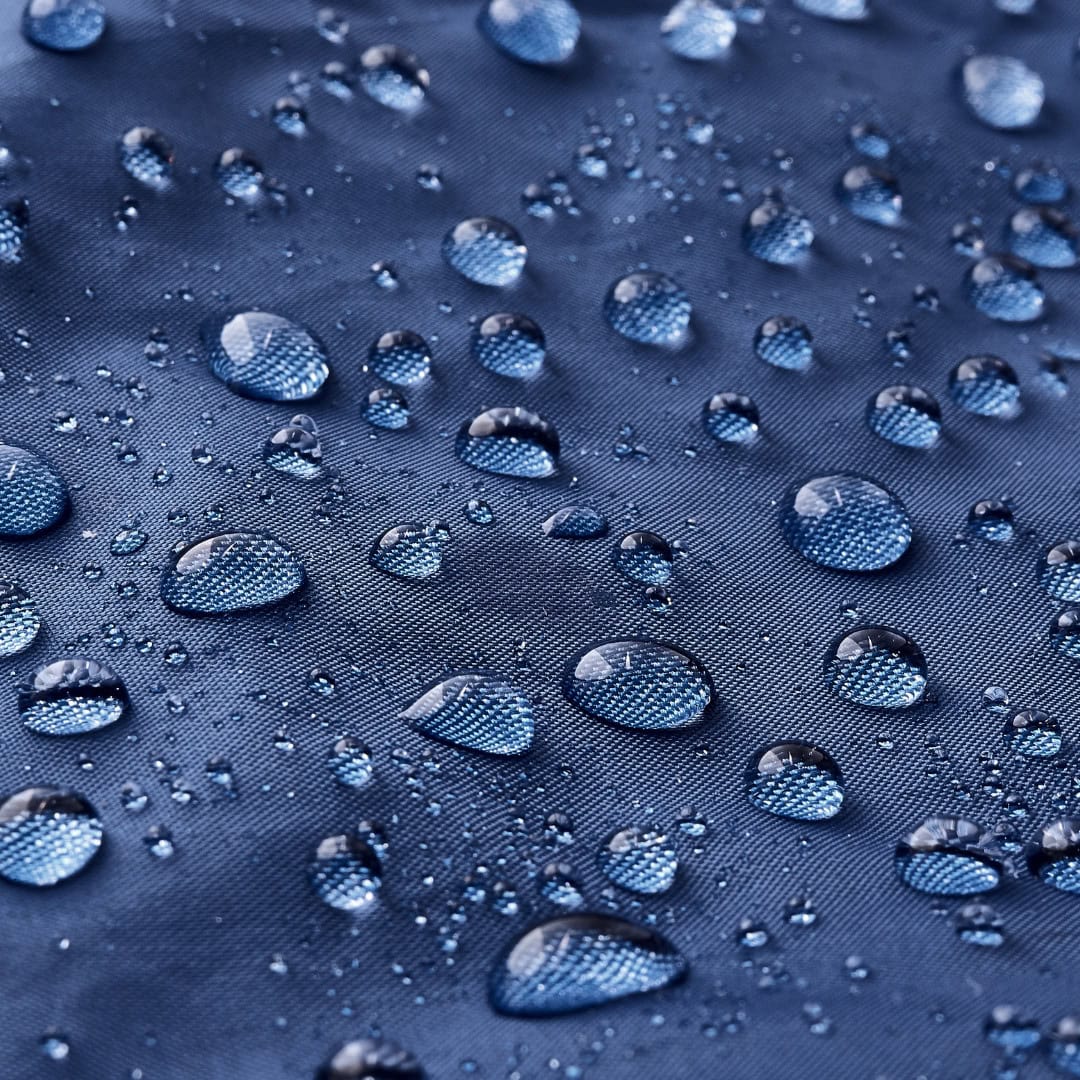
Navigating Water Pollution, From Source to Waterway

Water pollution occurs when contaminants such as chemicals, pathogens, and organic or  inorganic substances get into water sources, rendering it unfit for consumption. Water pollution can occur in a number of ways, and because of the physical nature of water, pollution affects more than the area where it is released.

Point source pollution can be pinned to origins like factories, power plants, and other industries. This type of pollution is subject to federal regulations, unlike nonpoint source pollution. Nonpoint source pollution is released at a specific point and carried by stormwater runoff, precipitation, atmospheric deposition, drainage, and/or seepage to other locations. It can present as sediment, litter, bacteria, nutrients, metals, oils, grease, or chemicals that enter lakes and streams. Also known as “pollution runoff,” nonpoint source pollution is difficult to control as it stems from unregulated origins, such as flooding or runoff.

Agriculture and Water Health

Agricultural operations have a significant impact on water quality due to nonpoint source pollution. Management of animal waste, soil erosion, and soil nutrient loss; proper disposal of chemical pesticides; and working with local conservation partners ensure nonpoint source pollution can be monitored. Extreme climate events and poor agricultural management practices can lead to runoff carrying fertilizers, pesticides, and animal waste. This further degrades water quality, prompting algal blooms and harming aquatic life. 

Urban Impacts on Water Quality

Paved surfaces are impervious to water, making urban environments more susceptible to nonpoint source pollution. Pavement makes it easier for stormwater to pick up, absorb, and carry pollutants. Debris from construction, landscaping chemicals, and sewer overflow can contaminate natural waterways and city drinking water sources. Exacerbated by climate change, intense and more frequent downpours can overwhelm stormwater management systems and allow for contaminants to enter local water supplies.

Warmer Planet, Dirtier Waters

The rise in global overall temperatures contributes to higher levels of bacteria and toxins in our waterways, posing serious threats to public health. Increased water temperature can result in:

  • Surges in bacteria like E. coli
  • Increased concentrations of metals and other toxins in water
  • Decreased oxygen available to aquatic life
  • Algal blooms

Warming, along with more frequent and severe weather events, is deteriorating the quality of our water supplies and the ecological life that inhabit our waterways.

What You Can Do for Cleaner Water

Taking steps at home to secure clean water is essential for safeguarding against contaminants often found in tap water, particularly after an extreme weather event, such as flooding which could compromise drinking water. Utilizing water filters, whether installed at the faucet or within your refrigerator, can significantly reduce the presence of harmful substances. Additionally, boiling water is an effective method for eliminating many pathogens. Maintaining a clean watershed is a crucial component of community health. By preventing trash, medications, non-degradable items, and chemicals from entering our drainage systems, we help limit pollution and protect water quality. Citizens can take part by keeping litter and debris from collection in street drains and by throwing out medications instead of flushing them. Participating in local river cleanups and advocating for improved water quality standards can further contribute to the health and safety of our community.

Prioritizing Clean Water

Access to clean drinking water is fundamental to creating a livable, healthy environment and it is at the center of the climate crisis globally. Understanding both point source and non point source pollutants, cities can mitigate the effects of urban runoff by installing permeable surfaces, rain gardens or bioswales which can help absorb rain water. For urban areas where there is less natural landscape to filter contaminated waters, underground tanks and separation units with hydraulic buffers, physicochemical filtration and adsorption systems can offer innovative and realistic solutions to urban runoff challenges. The EPA issues drinking water standards to ensure that the tap water we consume is safe. Better management of industrial waste is also necessary to minimize water contamination. Corporations should be held accountable, as improper disposal of waste into our rivers threatens our ecosystem. As extreme weather, precipitation, and flooding become more prevalent, strategies to address climate impacts on water and investing in robust sewage and water treatment infrastructure is crucial. Advancements will not only mitigate the risk of disease but also enhance our capacity to cope with future environmental challenges. For further details, review these environmental insights and actions aimed at sustainable community practices.

Learn More

Learn more about Water Quality and climate change by viewing a recording of our latest Climate Health Webinar.

Resources

  • EWG Tap Water Database

Federal assistance programs

  • One Water Council
  • Clean Water Act
  • Water Quality Improvement grants (OH)
  • Water and Wastewater Infrastructure Grant Program (OH)
  • Brownfield Grants
  • Emergency Watershed Protection

Infographics – download and share!

Filed Under: Uncategorized

Empowering Communities: Climate Resilience in Northern Kentucky

October 2, 2024 by Nobi Kennedy

Contributors: Nobi Kennedy, Anna Parnigoni

Resident Engagement, Neighborhood by Neighborhood

Addressing the need to engage residents living in climate vulnerable areas in climate resilience planning, Green Umbrella and Groundwork Ohio River Valley hosted three climate workshops across three Northern Kentucky neighborhoods in 2024, reaching over 3 dozen total community members interested in taking local action on climate. The workshops are part of a larger initiative called Climate Safe Neighborhoods, a program co-led by Green Umbrella and Groundwork where local neighborhoods are given the tools and resources to reshape how climate and equity are integrated into urban planning.

Collaboration, Climate, and Community

Climate Safe Neighborhoods is a national effort through Groundwork USA to identify climate vulnerable neighborhoods, spread awareness of historical racial and social injustices that have contributed to modern environmental inequity, and teach residents to create neighborhood-level climate resiliency plans. Since the inception of the Climate Safe Neighborhoods program locally, Groundwork, Green Umbrella, and the City of Cincinnati’s Office of Environment and Sustainability have conducted workshop training and engagement sessions in the communities of Avondale, Norwood, Bond Hill, Roselawn, Beekman Corridor, and Lower Price Hill.

Climate Safe Lite – Planting the Seed

In late 2023, Green Umbrella and Groundwork launched the Climate Safe Neighborhoods (Lite) initiative. This program offers single evening workshops aimed at providing climate education and engagement opportunities to at-risk neighborhoods in our region, with the first programming centered on the Northern Kentucky communities of Newport, Covington, and Dayton. Materials and flyers for these workshops were created in collaboration with Northern Kentucky University professor Kristy Hopfensperger’s students. Materials were made available in both English and Spanish.

As the lead in the project, Groundwork Ohio River Valley developed equitable community engagement processes that centered community voices and ignited actionable plans. Through the use of geospatial technology, Climate Safe Neighborhoods’ Resilience Hub effectively tells not only the neighborhood histories in compelling visualizations and maps but also illustrates the projected future impacts of climate change in our neighborhoods. Green Umbrella’s role in these workshops focused on educating residents about specific climate impacts in their communities and climate strategies to mitigate neighborhood-level harm. Green Umbrella also engaged local government staff, elected officials, and stakeholders to integrate climate strategies and resident feedback into community planning and utilized their tri-state service area (Ohio, Indiana, Kentucky) to provide climate policy guidance. 

Workshop Highlights

Newport, Kentucky – March 26, 2024

The Newport Climate Safe (Lite) workshop brought together community members, local organizations, and experts to address climate vulnerability in specific neighborhoods, including Two Rivers I, Two Rivers II, and Buena Vista. Key activities included: an analysis of climate change risks (flooding, air quality, tree canopy), geographical representations to educate residents, and an interactive mapping exercise where residents suggested green infrastructure improvements.

Covington, Kentucky – June 4, 2024

The Covington workshop focused on educating and empowering residents to take action on environmental justice and climate resiliency. Target neighborhoods included Eastside, Austinburg, and Helentown, which are particularly vulnerable to issues like flash floods and extreme heat. The workshop featured: partnerships with local organizations and officials, participation from the Green Umbrella’s Climate Action Fellowship (Covington), vibrant geographical representations, and interactive mapping activities for suggesting green infrastructure improvements.

Dayton, Kentucky – July 25, 2024

Dayton, Kentucky hosted its workshop in the community center located along the Ohio River. Boasting a population of just under 6,000, the workshop focused on Dayton as a whole, highlighting the city’s extreme flood risk, poor air quality, low tree cover, and the economic burdens the community has faced as a result of historical redlining and divestment. The workshop featured presentations from the Dayton Park Board, Tri-State Trails, and a tour of the Dayton Traffic Garden, a space created in partnership with the Kentucky Office of Highway Safety, Governors Highway Safety Association, National Road Safety Foundation, and the City of Dayton to educate the public on pedestrian and bike safety.
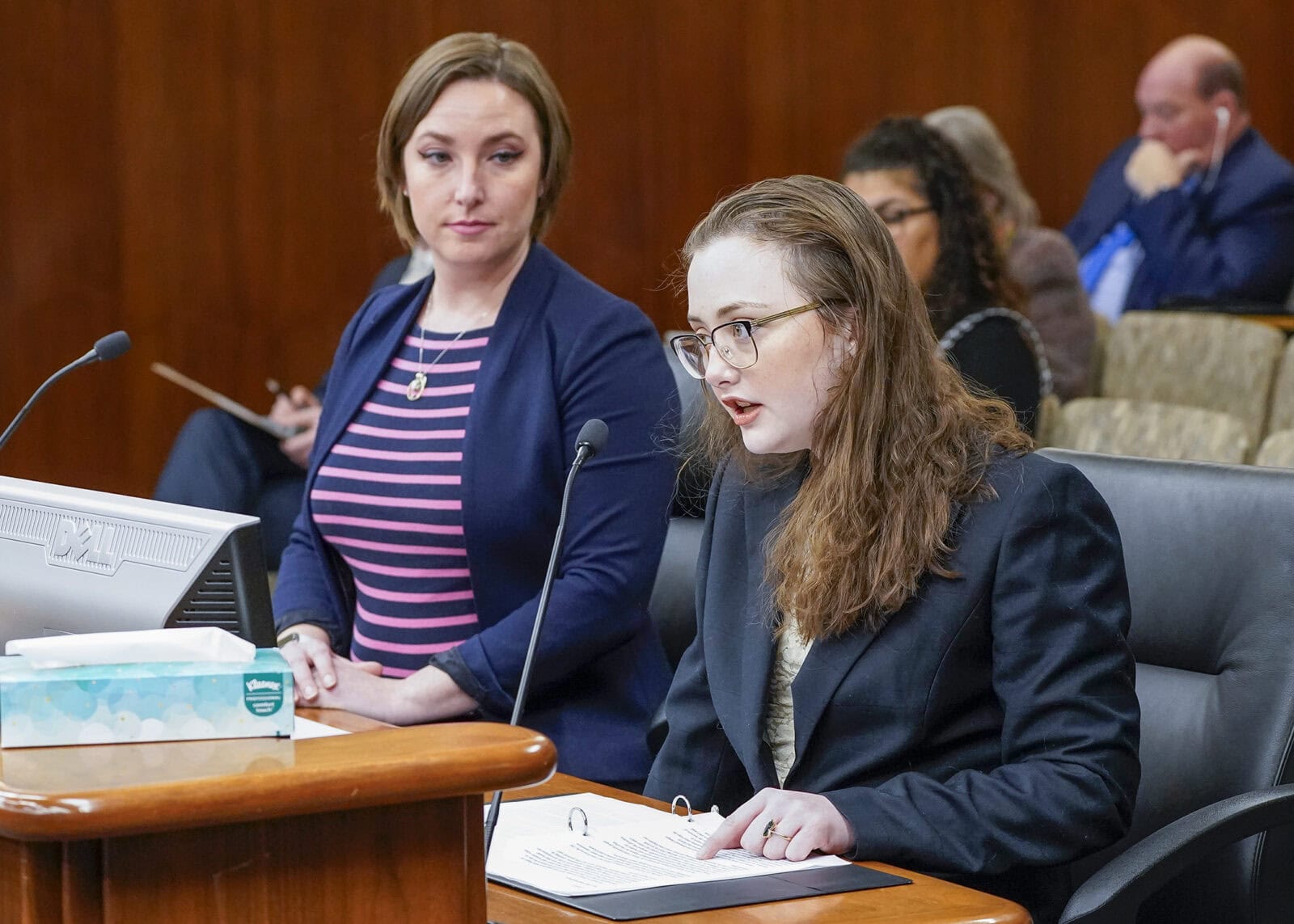
What’s Next – Climate Advisory Groups

We are currently recruiting community members for Covington’s first Climate Advisory Group! The Climate Advisory Group will be an extension of the Climate Safe Lite initiatives, where members will work together to craft a neighborhood climate action plan, confronting critical challenges like flooding, heat, air pollution, and the mental health effects of climate change.

Residents of East Side, Austinburg, and Helentown are invited to apply to join this paid opportunity. No experience is required to participate—just a commitment to meet in person for two hours a week over a seven-week period. The Covington Climate Advisory Group will hold its first meeting October 9, 2024.

Apply today!

In the meantime, Groundwork and Green Umbrella will continue to engage in meaningful partnerships with all Northern Kentucky Climate Safe Lite communities, with plans to host additional workshops in neighborhoods across southwest Ohio and northern Kentucky into 2025.

For more information or inquiries, contact Raynell at rwilliams@groundworkorv.org.

Filed Under: Uncategorized

  • 1
  • 2
  • Next Page »
Green umbrella Logo
  • Careers

  • Contact

  • FAQs

stay connected

subscribe to our Newsletters
© 2026 Green Umbrella. All Rights Reserved.
Privacy Policy · Website by Wonderly.