This Bites: Climate Change and the Risk of Vector-Borne Disease
By Nobi Kennedy
Published May 21, 2024
Join us and act against climate change! Learn how you can get involved.


PFAS - aka “forever chemicals” - were developed by humans within the last hundred years, yet they’ve already spread to the farthest reaches of our world. And they’re not harmless; PFAS are inextricably linked to death and disease, from an oceanside community in Australia to a family farm in West Virginia, from New Jersey farmland

Tap water. Organic tomatoes. Your – yes, your – blood and tissue. What do these all have in common?
They’re places where PFAS – aka “forever chemicals” – can be found. And that’s just the beginning. From the soil in your garden to the deepest parts of the ocean, from the polar ice caps to human placenta, PFAS have polluted the entire – yes, entire – planet.
But what are PFAS, really? How did they get everywhere without us noticing? And what does this mean for our health?
PFAS is short for per- and/or polyfluoroalkyl chemicals1. There are thousands of substances in this family of chemicals, but they all have a carbon-fluorine bond in common. Carbon-fluorine bonds are among the strongest chemical bonds known to exist. They do not degrade at all in the natural environment, so they move and linger throughout the world in water, wind, soil, and living organisms (like humans), accumulating over time.
Carbon-fluorine bonds are extremely rare in nature; however, they are extremely common in the man-made chemical industry because they have a huge commercial value: they resist grease, oil, water, and heat. Take a moment to look around you – look at the furniture, a snack or drink you’re enjoying, even the clothes you’re wearing – is anything waterproof or fire-resistant? Plastic? Polyester? You’re sitting on, drinking from, maybe even wearing PFAS.
Studies about the impacts of PFAS exposure/ingestion are ongoing, but they have been linked to an enormous amount of health conditions, including but not limited to:
The more PFAS you accumulate in the body, the more at risk you are. Because children drink more water, eat more food, and breathe more air per pound of body weight than adults, they have a higher risk of ingesting PFAS than adults. This includes newborn babies, who can ingest PFAS through formula or breast milk. Even fetuses are exposed to PFAS, which can travel through the body and have been found in the placenta.
People who work in industries that manufacture, develop, or utilize PFAS are at a significantly higher risk of health impacts associated with PFAS. For example, inhaling polymer fumes can cause “Teflon fever”, flu-like symptoms that can last for a few hours or even days in only one incident2. It may sound like something that only shows up in industrial plants or factories, but it can occur anywhere people work closely with plastics and other petroleum products. For example, a 2010 study of professional ski technicians in Norway revealed that the ski waxes they used, many of which contained PFAS, were exposing the employees to high levels of PFAS3.
Even if you don’t work in an industry that regularly handles PFAS, you are at an increased risk of exposure if you reside near someplace that does. That’s how the public started to find out about PFAS – people who lived in areas where PFAS were developed and disposed of improperly started to get sick, and it was traced back to devastating PFAS contamination in water supplies. That’s how the public started to find out PFAS were dangerous. But the manufacturers of PFAS already knew.
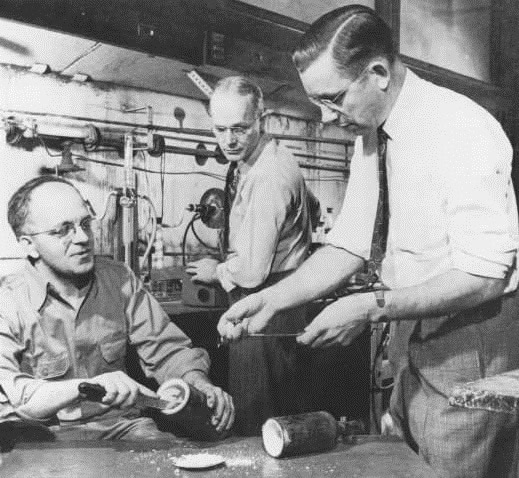
Teflon was accidentally invented in 1938 by chemist Roy Plunkett at a DuPont laboratory in Deepwater, New Jersey. DuPont is a chemical manufacturing company that first began as a gunpowder manufacturer in the 1800’s. Over the years, they worked on explosives, lacquers, and artificial textiles like Rayon before concentrating on chemical development, which led to things like artificial rubber (Neoprene), synthetic ammonia, and Freon, a refrigerant.
Plunkett was working with Freon when he noticed a white buildup in one of his gas canisters. The material didn’t melt, dissolve, or react to anything chemically, and it was extremely slippery. DuPont patented it as Teflon. It was used during World War II by the military for nose cones for bombs and canister lining, and it was instrumental in the Manhattan Project – the successful production of the hydrogen bomb.
During Manhattan Project development, the areas where DuPont processed fluorocarbons – the building blocks of Teflon and all PFAS – were known to cause health issues to workers. In the Deepwater plant, two people died after Teflon by-products were emptied into a ventilating hood. Around DuPont’s Chamber Works Plant in southeastern New Jersey, farms were devastated by an unknown contagion that bewildered the farmers. Crops failed, animals sickened, and farm workers were sick. This was in 1943.
After the war, DuPont and other chemical manufacturers found commercial ways to profit from the inventions they developed for violence. Poison gases became pesticides, explosives became chemical fertilizers, vinyl became medical equipment, flooring, and Saran wrap. Teflon was used for things like fishing gear and waterproofing raincoats, but DuPont hadn’t started marketing it for food products yet because their safety testing was yielding concerning results. Workers who inhaled Teflon fumes developed flu-like symptoms. Lab animals that were exposed to heated Teflon died within minutes. While at-home cooking wasn’t likely to heat the Teflon to the point where fumes would fill a kitchen, the possible liability made DuPont nervous.
In the 1950s, a French engineer coated his wife’s baking tins with Teflon to prevent food from sticking to the sides. It worked so well that he started a non-stick pan company, which did extremely well in France. Meanwhile, in America, people outside the chemical manufacturing industry were starting to notice the impacts of chemical waste around production sites, even if they didn’t know what specifically was causing the destruction. Lawyers, scientists, and government officials put pressure on Congress to regulate synthetic chemicals and food additives entering the consumer market. The pressure worked, sort of – Congress passed a law that required testing for all new chemicals that might wind up in food. New chemicals – meaning the chemicals that were already in commercial use, like Teflon and other PFAS, were to be presumed “safe” and exempted from required testing5.

When an American entrepreneur encountered the French Teflon-lined pans, he approached DuPont to import the pans to the United States. Despite DuPont’s earlier reluctance to use Teflon directly with food, by this point the new food additives bill had passed through Congress, and no additional testing of their chemicals would be required6. DuPont moved forward with marketing Teflon as a cooking miracle.
Teflon was an instant consumer hit, but DuPont still didn’t know why it made workers sick. As its non-stick properties made kitchen tools fly off the shelves, DuPont continued internal safety testing, and discovered that a specific chemical in Teflon, PFOA7, was toxic, causing abnormally large livers and kidneys in lab animals. There was no recall, no public announcement, no change to the product. And there was still waste created from Teflon production, which DuPont dumped into the Ohio River and unlined pits around its plant in Parkersburg, West Virginia.
Robert Bilott was a corporate defense lawyer based in Cincinnati, often working on the side of chemical companies, when Wilbur Tennant came to him for help. The Tennants were from Parkersburg, West Virginia, where they owned a small farm that had sustained their family for generations. In 1983, they sold some acreage to the local DuPont plant for a landfill. The Tennants were reluctant at first, but DuPont promised only to dump nontoxic materials, and the family needed the money.

By 1990, the farm was dying. The once-clear creek turned black and foamy. Cattle started growing tumors, going blind, and throwing up blood. Members of the Tennant family had chemical burns and breathing problems. The Tennants alerted the West Virginia Department of Environmental Protection, which found that DuPont was improperly disposing of waste on the landfill acreage next to the Tennants’ farm. The agency fined DuPont and moved on. As the years passed, animals kept dying, and the Tennants decided to sue DuPont. On the advice of a neighbor, they contacted Robert Bilott, the grandson of an acquaintance.
Bilott was so disturbed by the material Wilbur showed him – including images of foamy creeks, lesion-covered cows with deformed hooves, a dead calf with chemical-blue eyes – that he decided to take the case. Bilott’s work uncovered intentional concealment on the part of DuPont to both silence the Tennant family’s complaints and hide the dangers they knew came with PFOA, which was found in Parkersburg’s and neighboring towns’ drinking water supply. 70,000 people were drinking contaminated water for decades.

Bilott’s work with the Tennant family and the case against DuPont are dramatized in the 2019 film Dark Waters, which starred Mark Ruffalo as Robert Bilott and Anne Hathaway as Bilott’s wife, Sarah. Mark Ruffalo is himself an environmental activist, and he joined Bilott in the award-winning documentary How to Poison a Planet, which premiered in the United States in 2025. How to Poison a Planet includes sworn testimony from industry scientists and employees discussing what chemical company 3M knew about the dangers of PFAS, even as 3M continued to sell them around the world. “This documentary exposes one of the biggest environmental disasters in human history. Without a concerted effort from all levels of business and government, ongoing contamination will continue to endanger the environment and our health,” says Ruffalo.
Green Umbrella hosted a screening of How to Poison a Planet on July 15, 2025, at Cincinnati World Cinema. Following the screening, Robert Bilott was in conversation with Chris Lorentz, Ohio River Basin Alliance chair, and Jeff Swertfeger, Greater Cincinnati Water Works Superintendent of the Water Quality and Treatment Division. This event was sponsored by Taft Law (special thanks to Cincinnati World Cinema for donating ticket sales to Green Umbrella).
While it touches on PFAS in general, How to Poison a Planet focuses on two specific instances of PFAS contamination that have decimated communities: the First Nations Community of Wreck Bay in Australia and the town of Oakdale, Minnesota.

Firefighting foams are made from and packed with PFAS. For more than three decades, Australia’s Department of Defence used 3M’s firefighting foams on their HMAS Creswell naval base and the Jervis Bay Range Facility, which neighbor Wreck Bay. The PFAS in the foam contaminated the waters of Wreck Bay, causing cancer clusters and destroying the Indigenous residents’ relationship to the land. Indigenous Senator Lidia Thorpe, chair of an Australian Senate inquiry into the Wreck Bay contamination, said many members of the Wreck Bay community have “some type of illness related to PFAS, or they’ve lost family members to PFAS … We’re talking about children with rare cancers, we’re talking about eye cancers, we’re talking about breast cancers, and the community is completely devastated.” In How to Poison a Planet, a Wreck Bay resident said that people in the community don’t grow old. A January 2025 article from Australia’s ABC News quoted Wreck Bay resident Henry Simms as saying “I haven’t got one mate out there my age left – a lot of them men died in their early 40s.”
Minnesota Mining and Manufacturing – the original name of 3M – started dumping PFAS waste in Oakdale, Minnesota decades ago. The waste leached into the area’s groundwater, contaminating the drinking water for over 140,000 residents. In 2005, state health officials announced publicly that 3M had contaminated the water. Tartan High School is located in one of the toxic groundwater zones. So many students had cancer, the students joked about the school water fountains to each other: “Don’t drink the 3M cancer water”. Oakdale residents recruited Rob Bilott to help with a lawsuit against 3M, but Minnesota’s laws are different than West Virginia’s, and 3M is extremely influential in Minnesota; lawyers weren’t permitted to discuss whether or not 3M chemicals are harmful, and a jury ruled in 3M’s favor in 2009. In 2010, the state of Minnesota sued 3M for polluting the state’s natural resources. 3M settled the state’s lawsuit in 2018 for $850 million.
In 2004, DuPont settled Bilott’s class-action lawsuit in Parkersburg – which grew to include 80,000 plaintiffs across 6 water districts – for $343 million. Wilbur Tennant and his wife both died before the lawsuit was settled, as did other plaintiffs. Lawsuits continue to bubble up against DuPont and its fellow chemical companies, both for sickening people and covering up the damage they’ve done.
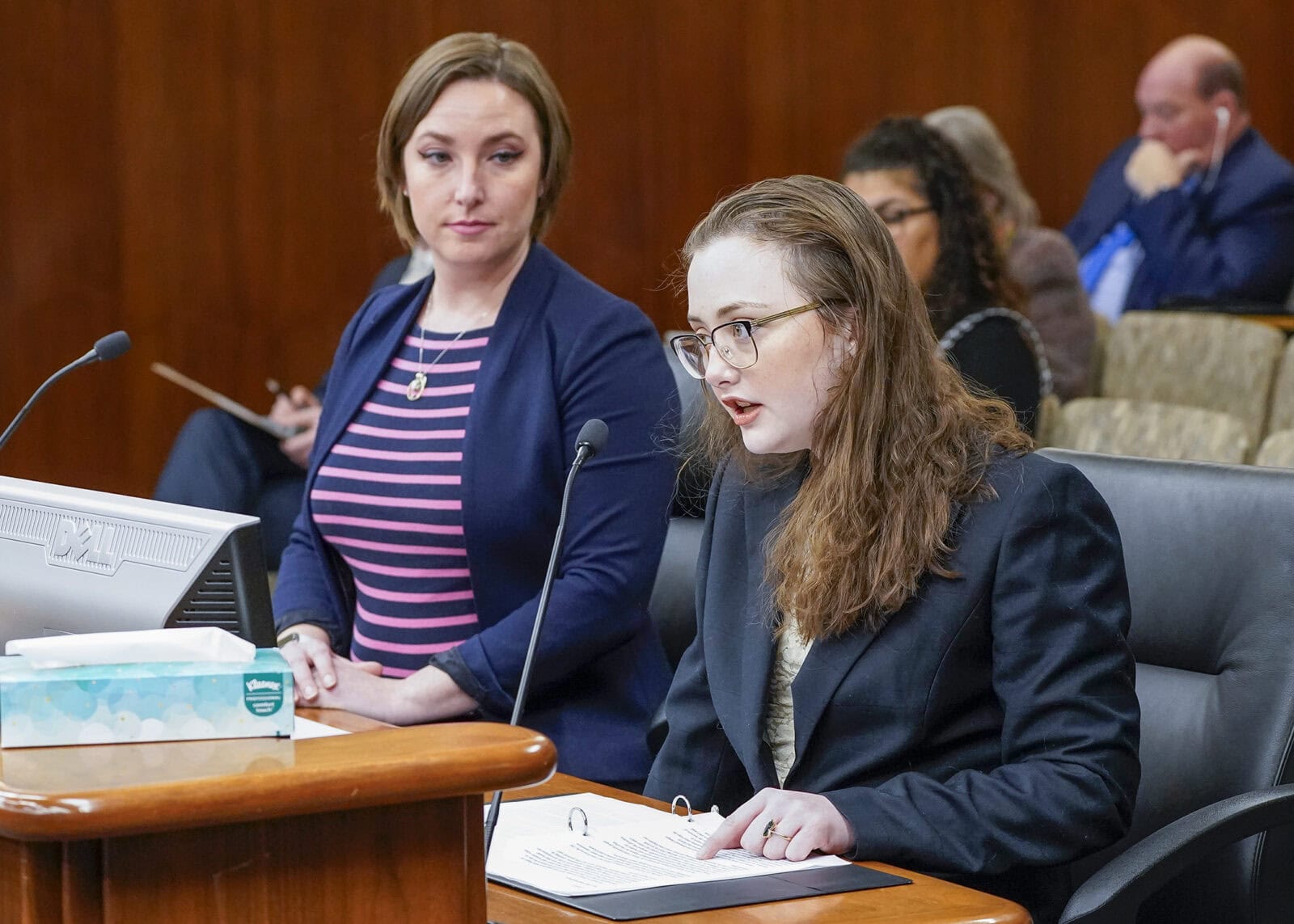
The Oakdale community in Minnesota – in particular a Tartan High School student, Amara Strande – lobbied hard for the laws to be changed to regulate 3M’s chemicals more effectively. Amara’s Law, which takes effect in stages between 2025 and 2032, prohibits the sales of products containing intentionally added PFAS in Minnesota, except for those determined to involve currently unavoidable uses of PFAS. Amara died of cancer in 2023, before she got to see the law named after her enacted. She was 20 years old.
While chemicals companies across the globe are phasing out certain PFAS that have been specifically identified as toxic (such as PFOA), these companies – and industry regulations – are not changing the development methods of carbon-fluorine bonded chemicals: as in, “create first, find out if it’s dangerous later”. For example, short-chain PFAS were developed as an alternative to the original PFAS substances. Short-chain PFAS have fewer fluorinated carbons and so were thought to accumulate less in the environment and living things. However, because they are shorter, they’re highly mobile in soil and water, making it easier for them to spread and contaminate drinking water, and they linger just like the original, long-chain PFAS do.
On June 11, 2025, the House of Representatives’ Committee on Transportation & Infrastructure introduced the H.R.3898 Promoting Efficient Review for Modern Infrastructure Today (PERMIT) Act, which is described as “cutting red tape” and “increasing Clean Water Act permitting efficiency”. In practice, the bill would limit the scope of the Clean Water Act by redefining “navigable” waters to exclude waste treatment systems, areas where waters overflow because of precipitation, converted croplands, groundwater, or any other body of water determined to be excluded by the U.S. Army Corps of Engineers. In other words, the Clean Water Act – which requires regulation of dumping into and polluting of water sources – would no longer apply to any of the above water systems. This means that any company, entity, or person could dump how much of whatever pollutant they wanted into those water systems and not only would they not be fined, the public might never know.
The Committee on Transportation & Infrastructure released a statement listing several industry leaders as supporters of the PERMIT Act. These entities include pesticide companies, building and manufacturing associations, the National Mining Association, and the Fertilizer Institute.
Mike Collins, a Republican from Georgia’s 10th Congressional District, is the Primary Sponsor, with 8 fellow Republicans as Co-Sponsors:
It’s been less than a hundred years since chemical companies began developing PFAS for the commercial market. Yet we’re still learning how damaging PFAS are to the environment and human health. We’re still uncovering the cover-ups within DuPont, 3M, and other chemical companies on how deep their knowledge of the danger ran. And we still don’t know how to effectively get PFAS out of the environment or our bodies. Thanks to the courage of victims like the Tennant family, the Wreck Bay community, and Amara Strande; the tenacity of lawyers like Rob Bilott; and the veracity of journalists like Carrie Fellner, Michael Hawthorne, Sharon Lerner, and Mariah Blake, the lawsuits aren’t going away.
Because there are thousands of PFAS chemicals, and because they have been found everywhere in the world, it can feel like an overwhelming problem to address, especially as an individual trying to protect themselves and their loved ones. First, stay calm – don’t let yourself be daunted by the scope and scale of the problem. Start with small things that reduce your PFAS exposure, things that feel manageable for your family. You can add more changes as your habits adjust. Since PFAS accumulate, any change you make, however small, can be impactful over time.
Steps you can take to reduce PFAS exposure for yourself and your household:
The influence and resources of powerful chemical and manufacturing companies meant that they could – and did – stack the deck in their favor, for decades. The regulatory, legal, and political systems set up now are ones that the companies helped build, but that doesn’t mean they can’t be changed. The changes made already have been because ordinary people spoke up and stood out. If you want systems change in regards to PFAS laws and regulation, you can engage with your elected officials at local, state, and national levels to make sure they know it’s an issue that you, a constituent, care deeply about.
You can also engage with the National Environmental Protection Agency directly. The EPA publishes regulation proposals in the Federal Register (the U.S. government’s daily journal) and you can provide comments before they are enacted. You can comment on existing EPA regulations as well at Regulations.gov. Learn more about interacting directly with the EPA here.
Engage with your local soil and water conservation districts. Many municipalities have specific entities dedicated to the health and safety of the community’s earth and waters. Green Umbrella’s Greenspace Alliance recently released a guide to contacting your representatives that also includes a section on soil and water conservation districts in Greater Cincinnati. Learn more and access the guide here.
Talk to your friends, family, neighbors, and network about your concerns about PFAS. Despite the proliferation of PFAS, many people are still unfamiliar with them. The more your community knows about PFAS and its potential for harm, the more prepared you’ll be to protect yourself from existing PFAS contamination, recognize if it happens even further, and speak up to defend your waters, health, and home.
1 PFAS tends to be a catch-all term for this category of chemicals, but they may also be referred to as PFOA, PFOS, PFNA, and more. This is a sort of square vs. rectangle scenario – as in, a rectangle is always a square, but a square is not necessarily a rectangle. A PFOA may be a PFAS, but a PFAS is not necessarily a PFOA.
2 It’s sometimes called “Teflon fever” because Teflon is a material that is often used for non-stick purposes in heated conditions – like a non-stick frying pan. This is one of the reasons that, if you have any non-stick cookware, it is recommended that you don’t preheat it; the fumes are toxic. “Teflon fever” can refer to illness caused by inhaling fumes from any heated polymer, not just Teflon.
3 In 2020, the International Ski Federation banned waxes containing PFAS in professional races. However, waxes containing PFAS still exist outside of professional skiing, and recreational skiers and snowboarders that use those waxes have a higher risk of PFAS exposure.
4 The primary source of the information in this and the following sections is They Poisoned the World: Life and Death in the Age of Forever Chemicals by investigative journalist Mariah Blake, published by Penguin Random House in 2025.
5 Pressure from chemical industry lobbyists worked on Congress too. Even today, over eighty thousand chemicals circulating in the United States today have never undergone any form of safety testing.
6 Teflon would not have passed safety requirements.
7 PFOA is a type of PFAS.
Green Umbrella members also have access to our members-only newsletters and e-blasts. Join today to receive these perks!
By Nobi Kennedy
Published May 21, 2024
By Nobi Kennedy
Published August 16, 2024
By Kelly Morton
Published February 14, 2024