Join us and act against climate change! Become a member today.
MEMBER LOG IN
DONATE
Green umbrella Logo
  • What We Do
    • Our Work
    • Our Mission
    • Our Region
    • Our Impact
  • Our Team
  • Our Programs
  • Events
  • Resources
    • Member Directory
    • Green Jobs Board
    • Get Outdoors
    • Reports & Tools
    • Stories & Announcements
  • Get Involved
  • Search

Reflecting on Cincinnati Climate Week & the Midwest Sustainability Summit

July 6, 2026 by Krystal Gallagher

By Alison Green

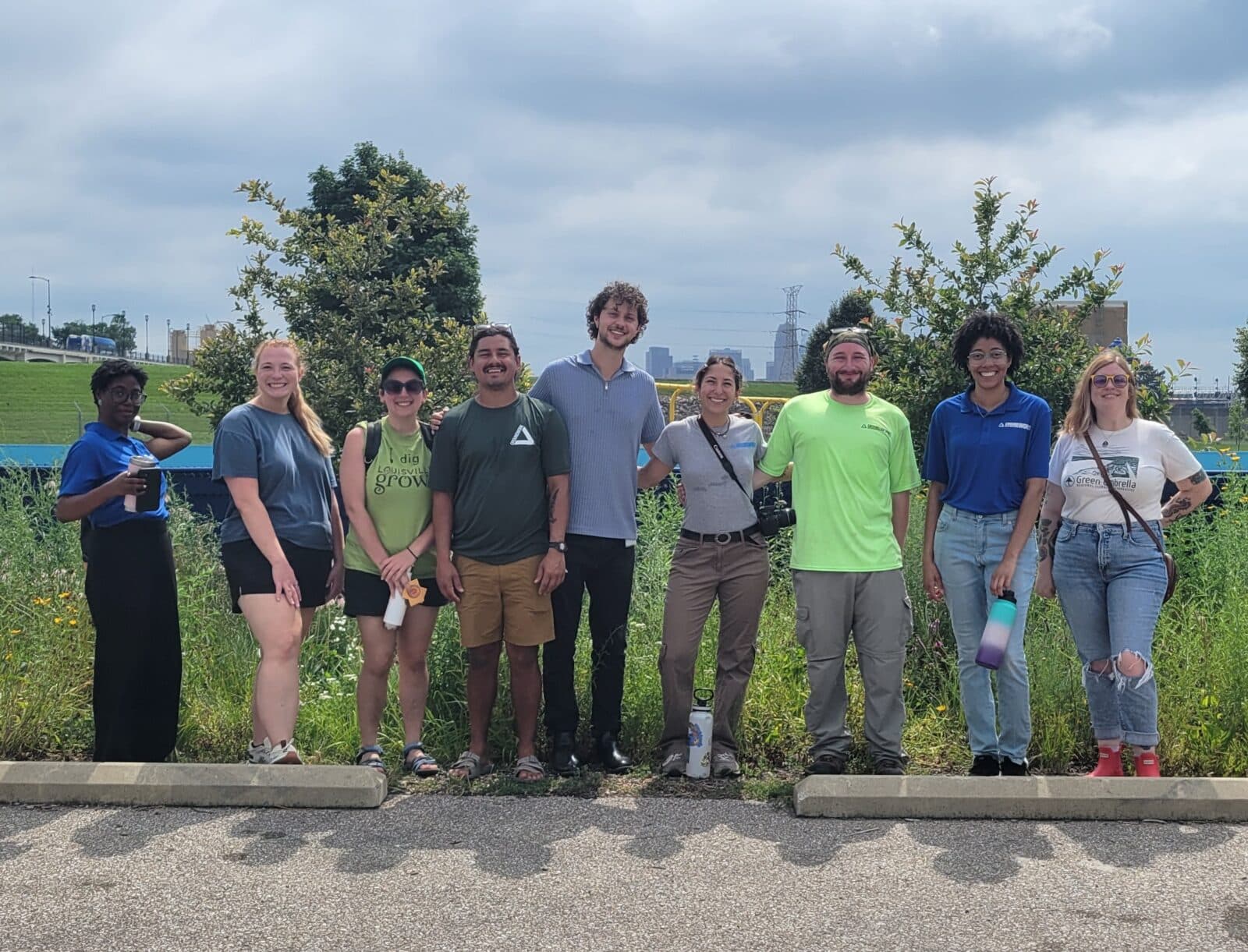
Pollinator tour in Lower Price Hill with Groundwork

Reflecting on Cincinnati’s inaugural Climate Week is no small feat. A simple idea from the Green Umbrella team blossomed into a week of action across our tri-state area. The week united youth, residents, organizations, researchers, and policymakers to celebrate, educate, and advocate for a more community-led and resilient region.

From June 8-14, there were 67 events hosted across 10 counties, with over 75 event hosts and 1,500+ attendees. Events ranged from energy affordability workshops and solar tours to a BIPOC Happy Hour, family-friendly storytime, green burial ground tour, 5K race, and so much more. Numbers aside, the goal of this year’s Climate Week was simple: bring the diverse community of our region together to appreciate and build a thriving region for all. This means fostering and supporting events that center on collaboration, community engagement, and accessibility across numerous sectors and interests.

Cincinnati Climate Week Volunteer Planning Team Member, Alex Hurley, puts it perfectly: “Climate change is global, but climate action is often local. That’s why I helped launch Cincinnati Climate Week – to give people a doorway into a conversation that can otherwise feel too big to touch. And of course, not everyone will care about every piece of the climate puzzle, but if one event, one issue, one moment speaks to them, they can be activated. That’s the power of building something local, from the ground up.”

This attitude is reflected deeply in Climate Weeks’ anchor event, the Midwest Regional Sustainability Summit, hosted on June 12. This year’s Summit brought nearly 600 people from across the region to the Sharonville Convention Center to participate in 20 breakout sessions with 99 speakers, interact with 42 local exhibitors, and view 3 live performances, an art show with 16 artists, and a research poster session with over 30 posters.
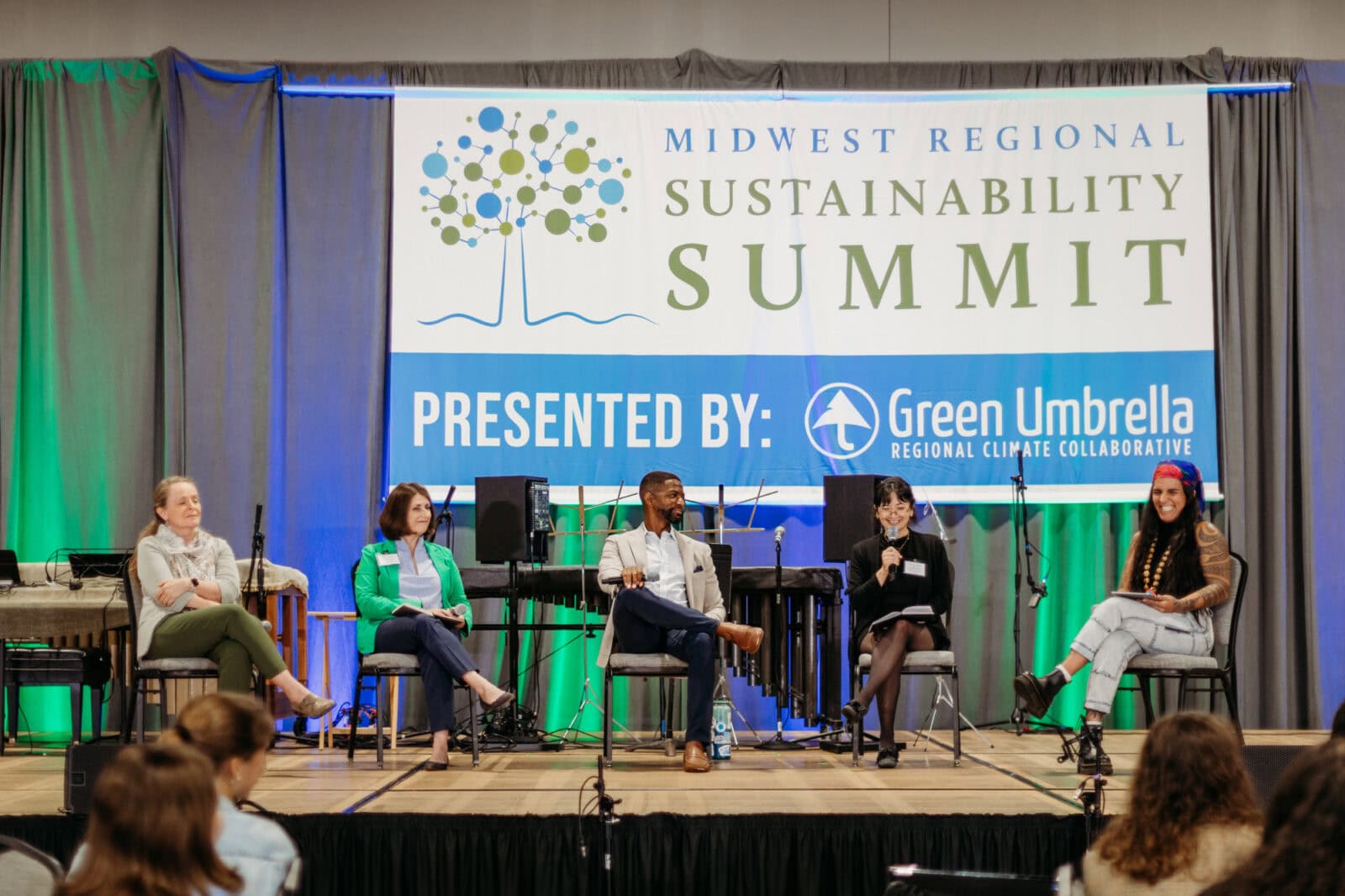
Plenary Panel at the Midwest Regional Sustainability Summit
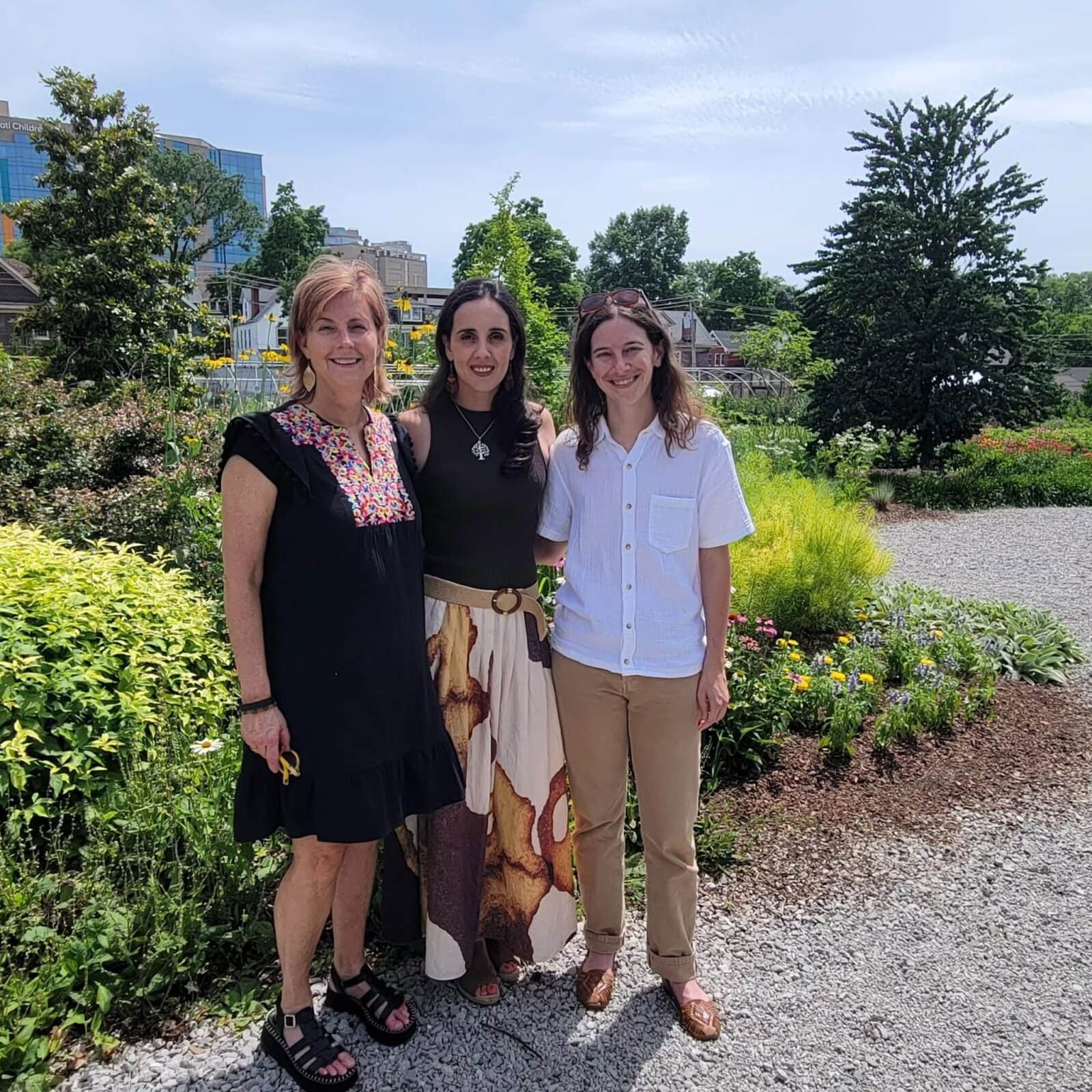
Green & Healthy Schools Symposium Keynote Speaker Brenda Kessler, Cynthia Walters, and Van Sullivan

In addition to the Midwest Regional Sustainability Summit, we also hosted the first Green & Healthy Schools Symposium on June 13. Friends from Children & Nature Network, Cincinnati Zoo & Botanical Gardens, Groundwork Ohio River Valley, Cincinnati Public Schools, the City of Cincinnati, and so many more organizations, advocates, educators, and students joined us at Rockdale Academy for this groundbreaking event. The day consisted of students from Clark Montessori handing out homemade pickles, a student keynote speaker, and in-depth panels and workshops exploring green schoolyards, workforce development, and school community wellness.

Out of all the impact, influence, and action that was created from this year’s Climate Week, one thing remains constant. We have incredible strength when we collaborate to make our region great, and we can’t wait to start working on Cincinnati Climate Week 2027, along with this community.

If you participated in 2026 Cincinnati Climate Week, Green Umbrella would love to hear about your experience and ideas for future years. Email feedback and questions to events@greenumbrella.org.

If you’re interested in getting involved in Cincinnati Climate Week 2027, whether that is hosting events or becoming a volunteer Climate Week Ambassador, fill out this quick interest form.
Filed Under: Events

Care About Greenspace? Time to Care About County Commissioners.

April 14, 2026 by Kelly St Charles

Author: Claire Carlson, edited by Kelly St. Charles

The excitement of national political pendulum swings are hard to resist. Positions of power within the federal government claim our attention while locally elected officials are overlooked or forgotten entirely. But seemingly small changes occurring in our cities, counties, and townships have a bigger impact on our day-to-day lives. You’ve heard of senators, house representatives, and mayors – get ready for county commissioners. Like many locally elected officials, county commissioners play an important (and often unrecognized) role in the daily lives of communities, including yours. 

During my first “real world” job out of college, I had the opportunity to work with over 170 soil and water conservation district commissioners. Before that job, I didn’t understand the importance of locally elected officials. For me, national policies overshadowed changes happening in my own community – even though these local changes had a more tangible and visible impact on the lives in my neck of the woods. When I voted in local elections, I’d look at my ballot and think, “Who are the people running for this position?” and sometimes even “What does this position do again?” The county commissioner was one of those positions for me. 

Now I know: a county commissioner is primarily responsible for administering county affairs. This means overseeing the county’s operations and acting as key policymakers. They supervise county departments, manage county finances, and partake in long-range planning, budget development, and financial oversight. These responsibilities also extend to general governmental administration, property tax assessment and collection, and maintenance of roads and bridges. Additionally, as the population grows, county commissioners increasingly address services such as planning, zoning, solid waste collection, and public utilities. 

Want to raise chickens in your backyard? Talk to your county commissioner. Want more parks in your community? County commissioner again. Want your local road maintained? You guessed it, county commissioner.

The legal scope of their power comes from state laws. County commissioners are empowered to enact local ordinances and resolutions on various topics, including public health, parks, and land use zoning. They also have the authority to levy general and special taxes that fund government operations and services. They can approve and administer the annual county budget, which controls expenditures of money for all county purposes. 

For me – the manager of Green Umbrella’s Greenspace Alliance, which unites stakeholders to conserve and expand our region’s natural spaces across the Tri-State region – one of the most important facets of the commissioner role is its influence on zoning ordinances. Zoning is essentially the law applied to land-use planning, ultimately deciding how land is developed and used. This deeply influences how a community will evolve. 

Since county commissioners represent specific districts within their county, they can be viewed as liaisons between community members and the county government. Similar to a city council member, a county commissioner serves as a representative of their constituents and advocates for their interests in higher levels of government. 

In a region where the population is continually growing, finding a balance between development and preservation of our natural systems and heritage is essential to a thriving and balanced region. That’s why what county commissioners do is so important for my work in conservation, and why it should be important to you.

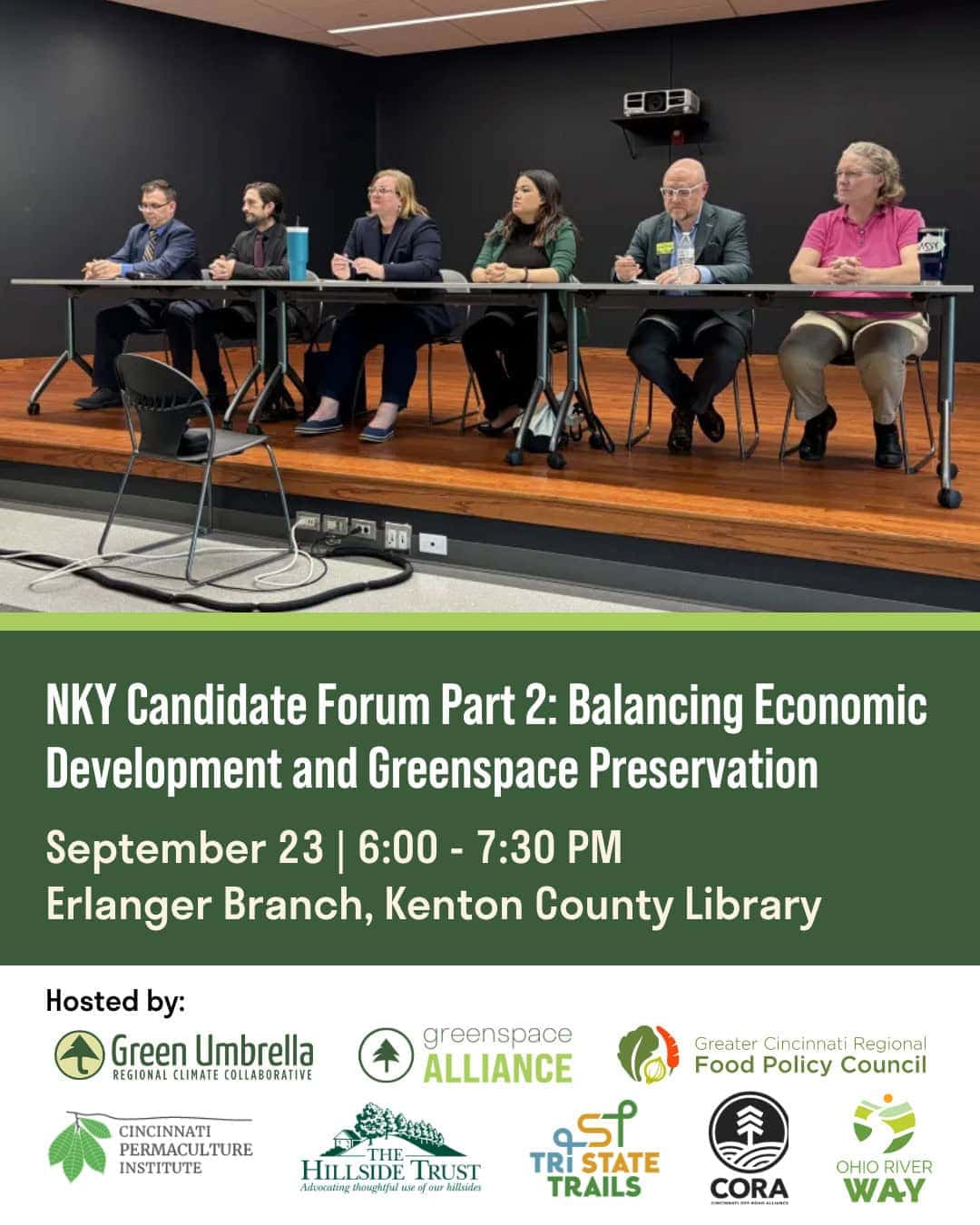
To shed light on this position and its importance within a county, Green Umbrella and regional partners hosted a NKY Candidate Forum: Balancing Economic Development and Greenspace Preservation on Wednesday, April 22, from 6-7:30 pm at the Erlanger Branch of the Kenton County Library. The forum featured candidates running for county commissioner seats in Boone, Kenton, and Campbell counties, providing them with the opportunity to answer questions on economic development and greenspace preservation. All candidates running for county commissioner positions in Boone, Kenton, and Campbell counties were invited to attend. You can read about the event at the websites of WVXU and LINK nky, both of which sent reporters to the event.

It’s time to start paying more attention to county commissioners. After all, there’re the ones you’ll have to talk to about backyard beehives and the dog park across the street.


Claire Carlson is Green Umbrella’s Greenspace Alliance Manager. She is an environmental conservationist with over 7 years of experience in the field. From research on macroalgae as a tool for carbon sequestration in Florida to restoration work as an AmeriCorps member in fields and oak savannahs of Iowa, she’s always sought to enhance and protect the outdoor spaces that we love. Most recently she was the Northeast Iowa Watershed Planning Coordinator for Conservation Districts of Iowa where she led over 20 counties through a strategic 5-Year Soil and Water Resource Conservation Planning process.

Filed Under: Events, Greenspace Alliance

Under Our Umbrella: A Year of Collective Impact

February 11, 2026 by Kelly St Charles

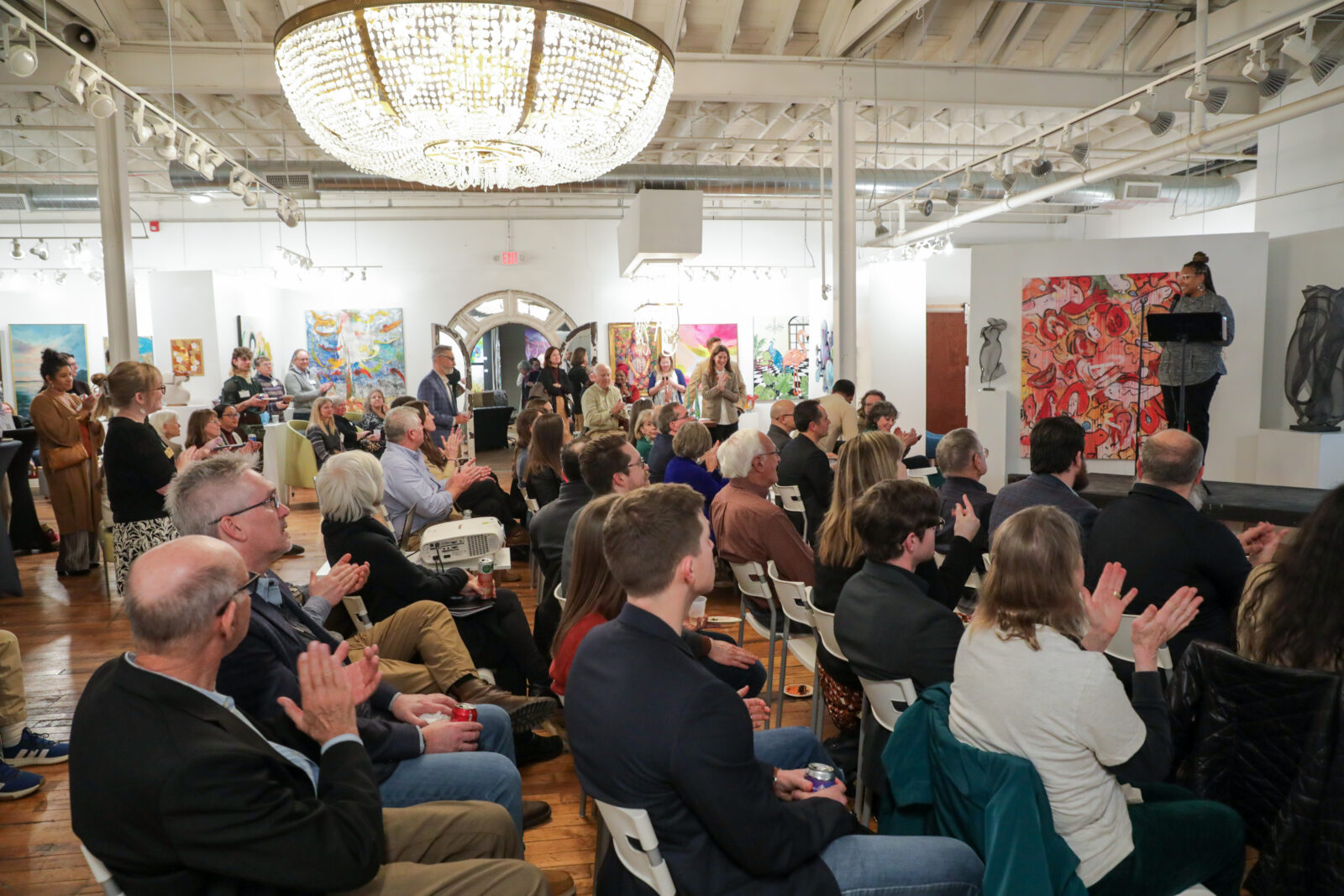
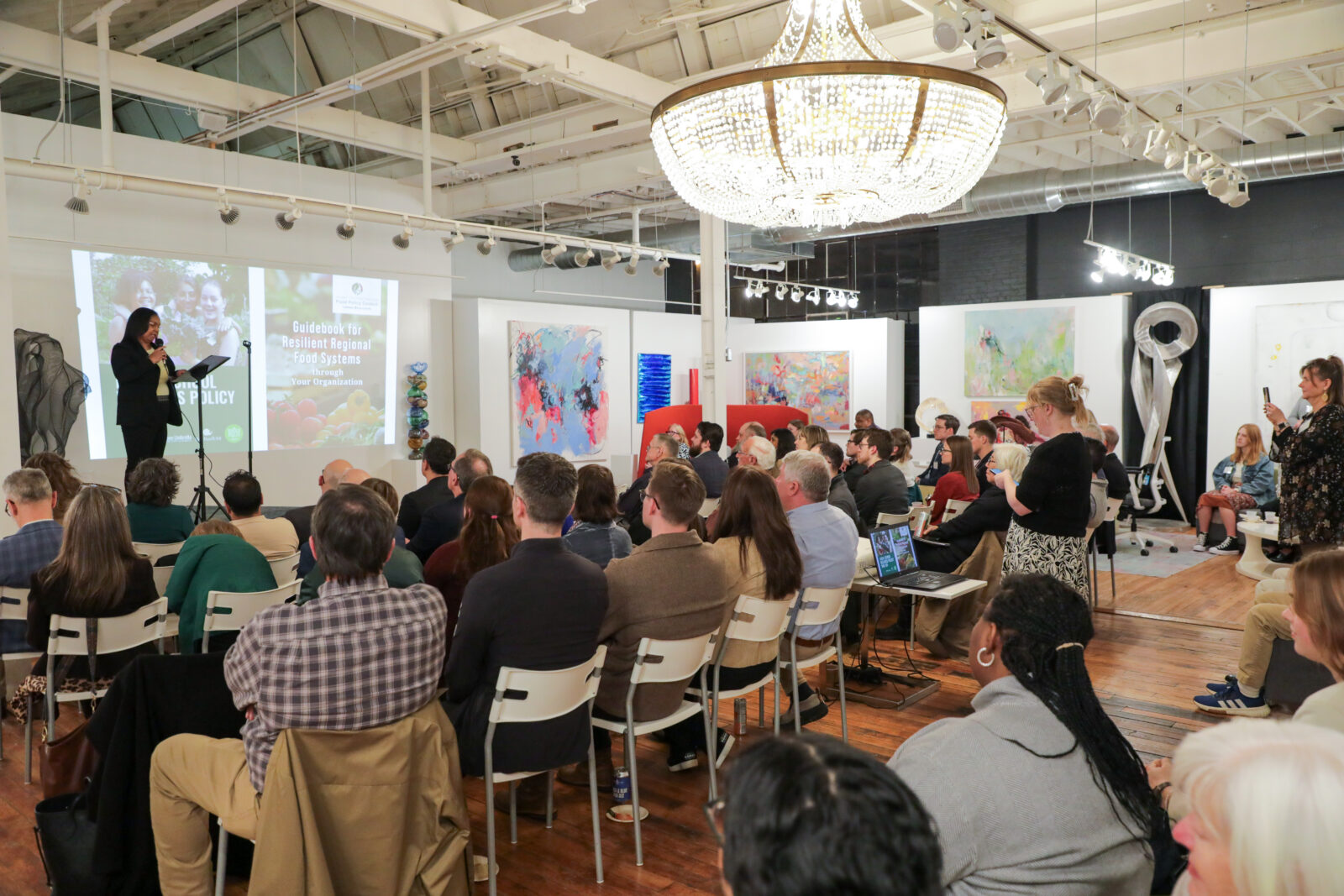
On February 10, 2026, sustainability leaders, community partners, and supporters came together for Green Umbrella’s Annual Impact Celebration. The evening was not just about looking back; it showed what can happen when a region unites to face environmental challenges.

As Board President Jaime Love welcomed attendees, the message was clear: “Green Umbrella is all about bringing our region together to work on environmental issues that no one could tackle alone. It’s important to celebrate the real progress our partners have made.”

2025: A Year of Measurable Impact

And progress there was! The numbers shared at the celebration showed how working together led to real environmental action in our region:

  • We united people and organizations from all sectors—governments, nonprofits, schools, businesses, and communities—to share solutions, coordinate efforts, and work for a healthier, more resilient region. Our network now includes 184 active members and continues to grow.
  • We supported our boots-on-the-ground community partners by hosting or co-hosting 52 trainings, helping 2,038 people better understand local environmental challenges and make informed decisions.
  • By providing tools, data, and coordination, we helped partners turn plans into results for the whole region. Five new communities joined our 25 Communities Project to get ready for climate change. Ninety-eight community climate projects were completed, and we trained over 190 new climate leaders to boost our region’s ability to act.
  • We also saw exciting progress in neighborhoods across our region: 160,000 pounds of food scraps were composted in Hamilton County, keeping them out of landfills; 190,026 pounds of methane were avoided through food waste diversion; 3,875 pounds of local produce were grown in community orchards; acres of greenspace protected rose to nearly 129,000; and 60 out of 66 Cincinnati Public Schools had green schoolyards features.
Cincinnati Public School Superintendent Shauna Murphy

Behind each statistic is a story of partnership. Hamilton County Commissioner Denise Driehaus shared countywide achievements through the 25 Communities Project and Climate Action Fellowships, including food-waste diversion, climate budgeting, and a forthcoming county-wide Sustainability Plan. Cincinnati Public Schools Superintendent Shauna Murphy reported on district-wide outdoor learning gains, expansion of workforce pathways, and progress toward serving student-grown food in cafeterias—transforming how our youngest residents experience environmental stewardship. Angie Burke from The Nature Conservancy highlighted how the Climate Action Fellowship is helping build the region’s green job talent pipeline. Jennifer Foster, Vice President of the Avondale Community Council, shared how “Ground Yourself in Greenspace: Avondale” is engaging residents through data and stewardship.

These achievements didn’t happen in isolation. They represent the power of Green Umbrella’s collaborative model—bringing together governments, nonprofits, schools, businesses, and community residents to turn ideas into action.

Honoring a Legacy of Leadership

A poignant moment of the evening came with the recognition of outgoing Executive Director Ryan Mooney-Bullock. Partners across the region acknowledged her transformative leadership and the indelible mark she’s leaving on Green Umbrella’s collaborative climate work.

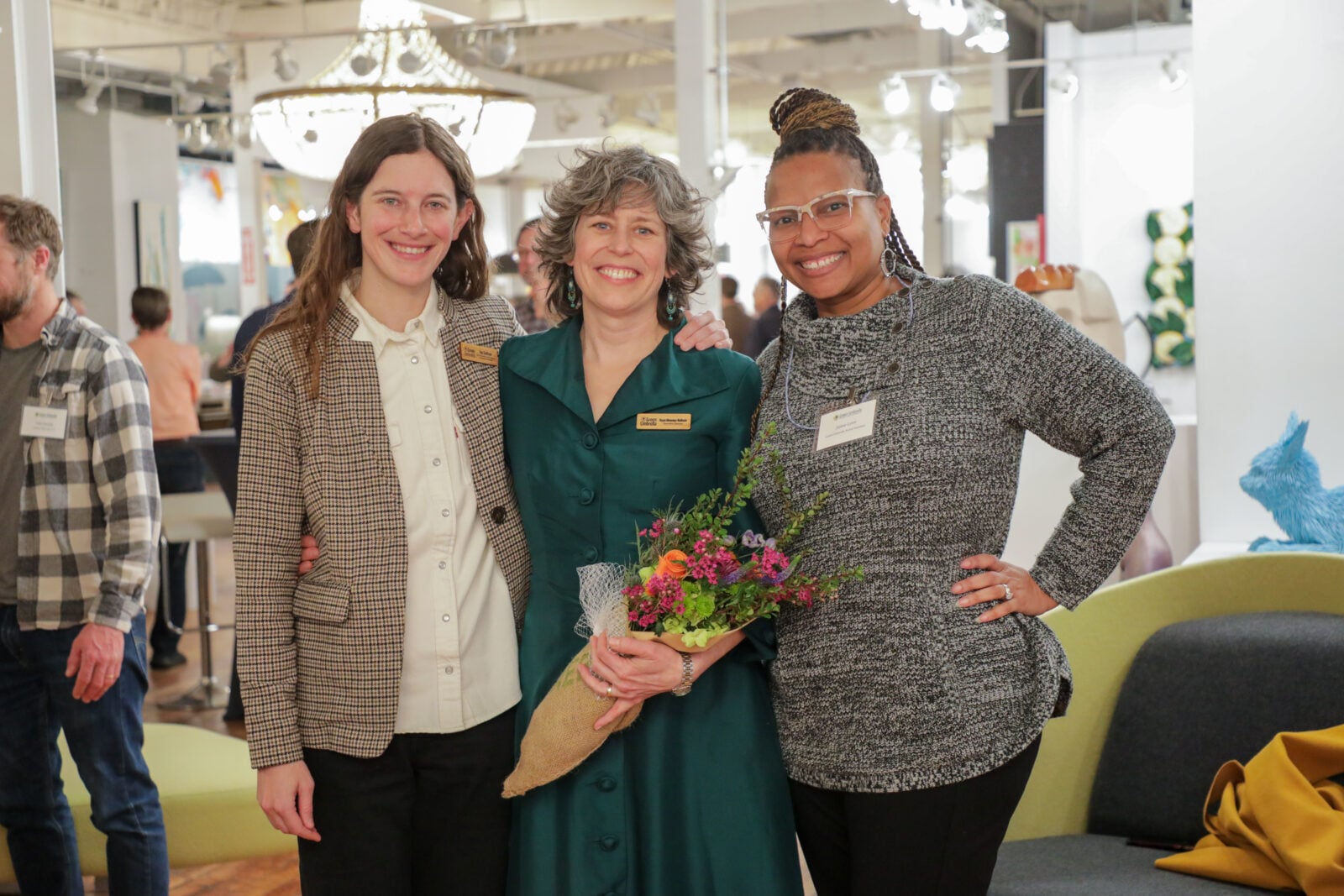
Van Sullivan presents Ryan Mooney-Bullock with flowers from the Green Umbrella staff

“Under Ryan’s leadership, Green Umbrella stands stronger than ever, rooted in a clear strategic vision, energized by deep community partnerships, and positioned to accelerate our region’s response to the environmental challenges ahead,” said interim executive director Van Sullivan. “Ryan leaves the organization in truly excellent shape, equipped to thrive in our next chapter.”

For Ryan, the work has always been about the collective. “It has been an honor and a privilege to work alongside so many passionate partners, community leaders, and staff who believe in a healthier, more resilient future for all of us,” she reflected. “We have built something truly special together, and I have full confidence that this important work will continue.”

That confidence is well-placed. Ryan’s legacy is not only in the programs and partnerships she established, but also in the strong foundation of collaboration she helped create. Today, Green Umbrella is a network of 184 active members across 10 counties, guided by a clear strategy, proven programs, and strong community trust. Our foundation is solid, our vision is clear, and our momentum is growing.

Looking Ahead: 2026 and Beyond

Green Umbrella is at a pivotal moment, and we are looking ahead with confidence and optimism. In 2026, we will focus even more on what works: collaboration, community-based solutions, and measurable action. Our plans reinforce our role as a regional convener that helps members reach their climate and sustainability goals. This year, we will strengthen collaboration, expand climate-readiness efforts, and create new ways for the community to get involved.

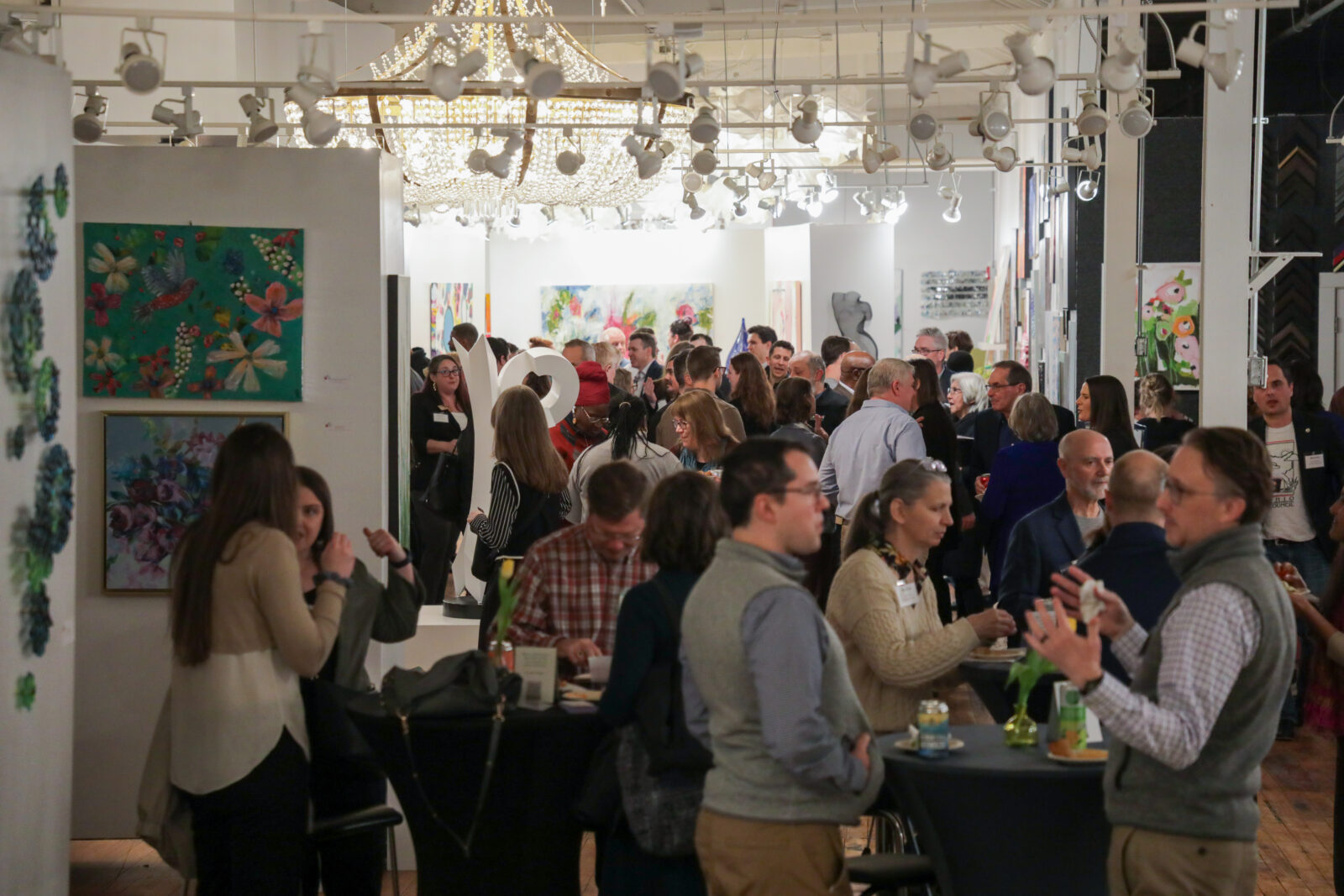
Guests mingle at the Impact Celebration in the beautiful ADC Fine Art space

For instance, we will keep focusing on policy change to help our region make progress for everyone. Later this year, we will release a regional playbook that gives local groups a list of solutions for sustainability, equity, and resilience. This playbook builds on the recent ThriveTogether emissions drawdown plan. We will help communities and organizations adopt policies and projects that cut emissions, improve health and equity, and boost environmental resilience.

All of this work is accomplished through local leaders and advocates, who are at the heart of our strategic plan. As the Regional Climate Collaborative for Greater Cincinnati, we help local decision-makers to work collaboratively across jurisdictions and sectors. Our member benefits, technical assistance, educational programming, and collaborative teams are how you will see this work in action.

A highlight of 2026 will be the launch of Cincinnati Climate Week, taking place June 8-14, with the Climate Week Network. This new regional event will include in-person and virtual activities hosted by our partners, highlighting local climate solutions and building a stronger future together. Green Umbrella’s 13th annual Midwest Sustainability Summit will anchor the week (June 12), followed by the Green & Healthy Schools Symposium (June 13). These events will bring together hundreds of leaders and community members to connect, share, and learn about climate solutions in our Tri-state area.

To sustain this important work in the long term, we are finding new ways to fund our efforts. We have been incredibly fortunate over the last eight years to grow our staff, and much of that growth has been fueled by grants. But we recognize that the uncertainty of grant funding—both from the public and private sector—means we cannot be too reliant on them. Your support through membership, sponsorship, ticket purchases, and donations to our Leadership Legacy Campaign will help us get there.

A Movement Rooted in Partnership

Last night’s celebration was made possible through the generous support of Duke Energy, Great Parks, SOPEC, HighGrain Brewing, Rhinegeist Brewery, and Deeper Roots Coffee. Their partnership demonstrates the broad coalition of public, private, and nonprofit organizations working together through Green Umbrella to advance regional sustainability.

Guests peruse pieces from the ADC Fine Art silent auction

But the true strength of this movement isn’t found in any single sponsor, program, event or achievement. It’s in the collective commitment of everyone showing up—meeting after meeting, project after project, year after year—to build a healthier, more resilient region.

As Tanner Yess, Executive Director of Groundwork Ohio River Valley and a former Green Umbrella intern, put it: “We’re on a mission to save the world, right? We’re moving the needle because of shared values and collective impact. I’m thankful to have Green Umbrella as a foundation for our movement.”

That foundation, strengthened by our Green Umbrella team and many dedicated partners, is poised to carry us forward into an ambitious future. The work continues. The region is ready. And together, we’re building the climate-ready, equitable, thriving future our communities deserve.

Left to right: Van Sullivan, Ryan Mooney-Bullock, and Jaime Love

Filed Under: Events, Green News Updates, Green Umbrella News

Wasted Money, Wasted Potential: Food Waste Is a Loss for All

September 23, 2025 by Kelly St Charles

In the United States, over 60 million tons of food – almost 40% of what’s produced – is wasted every year, costing producers hundreds of millions of dollars in lost profit. And yet millions of people face food insecurity daily. The solution seems obvious: waste less food. But anyone in the food industry will tell you that it’s not so simple. Between weather anomalies, transportation logistics, supply chain issues, product shelf life, and consumer constraints, food waste can feel inevitable for producers, sellers, and consumers.

What can we do? By preventing and recovering wasted food, we can tap into the economic potential of a valuable resource AND mitigate food insecurity.

Where does food waste happen?

Food can be lost at every step in production, retail, and in our own homes. On farms, unusual weather can prevent harvesting, or unpredictable market prices can mean profits are lower than the cost to harvest and transport the food. A harvest can then be left to rot in the field, or it’s dumped after being harvested if a delay compromises its shelf life.

In stores, food past its expiration date is routinely thrown away. Blemished, bruised, or wilted produce is pitched. Dented and damaged packaging means the product gets picked over before being discarded into the dumpster. In restaurants and food service industries, a mistake in food ordering or change in customer preference triggers an ingredient surplus. Planning to use all aspects of an ingredient is difficult (offal and bones, for example), leaving food-prep remnants heading straight to the garbage.

Even in our own kitchens, where we have control over what we buy, cook, and serve, wasted food is a common problem. A head of lettuce gets wedged in the back of the fridge, forgotten until it turns brown and soggy; a gallon of milk sours before you drink it all; a box of cereal left open by mistake goes stale overnight. 

For the farmer, processor, retailer, manager, chef, business owner, and consumer, throwing away food is throwing away the money used to produce the food, and throwing away its potential.

Alongside this money and potential lost through wasted food, 13.5% of households in the United States are food insecure, meaning that their diets and eating habits have been impacted by lack of or restricted access to food. In Cincinnati, more than 270,000 families, from across all of the city’s 52 neighborhoods, experience food insecurity every year.

What happens to wasted food?

Most food thrown away goes into the trash and heads to the dump, with discarded food making up 24% of the waste in U.S. landfills. As it rots in landfills, the organic material releases methane, a greenhouse gas 28 times as powerful as CO2 at trapping heat in the atmosphere. Throwing that wilted broccoli into the trash doesn’t seem like a big deal, but when all the producers, businesses, and consumers in the country each throw their broccoli on the pile, it leads to a significant cause of global warming.

A trash-can alternative for food waste is compost. Composting is a way of recycling organic matter, using oxygen, bacteria, fungi, and even organisms like worms and beetles to turn organic waste into compost, which often looks like garden soil. Compost is sometimes called “black gold” because it is extremely rich and beneficial for growing new crops. Composting food waste prevents the methane emissions that are generated when food waste sits in a landfill. Composting also creates a valuable source of fertilizer for farmers and backyard gardeners. When food cannot be salvaged for consumption by people or animals, composting food waste is the superior choice for the planet (and your pocketbook) than sending it to the landfill.

From surplus to solution

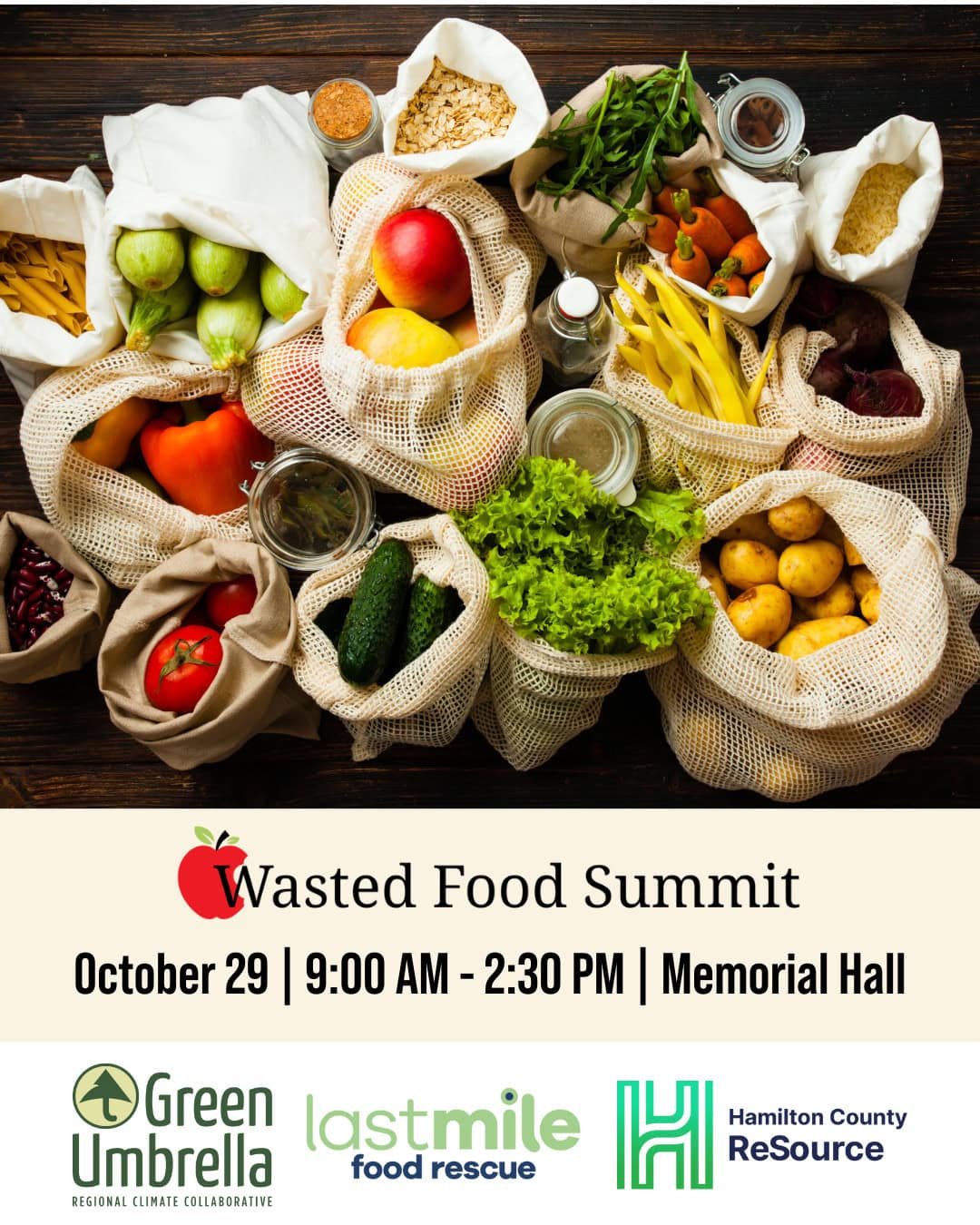
Solving a problem this big requires many hands. On October 29, 2025, the region’s first-ever Wasted Food Summit will take place at Memorial Hall in downtown Cincinnati. Co-hosted by Green Umbrella, Last Mile Food Rescue, and Hamilton County ReSource, the Wasted Food Summit will be a powerful gathering of changemakers, business leaders, chefs, advocates, and sustainability experts, all working to turn wasted food into opportunity.

Highlights from the Summit include keynotes from Sara Burnett, Executive Director of ReFED and national food waste expert, and Chef Alejandra Schrader, award-winning author, chef, food TV personality, and activist; practical steps to overcoming barriers to food donation; breakout sessions for businesses and advocates; and networking with peers and leaders in sustainability, food access, and policy.

The Wasted Food Summit is designed for businesses, institutions, and organizations, as well as individual advocates passionate about reducing waste and addressing hunger in their communities. Learn more about the Summit and register at the link here.

Funding for the Wasted Food Summit is generously provided by Sustainable Agriculture Research and Education (SARE). For questions or partnership opportunities, contact Charlie Gonzalez at charlie@greenumbrella.org.

Ongoing solutions to wasted food

Within Greater Cincinnati, several organizations exist to help producers, businesses, and institutions reduce wasted food. Nonprofits like Last Mile Food Rescue and LaSoupe collect surplus food. These organizations transform the food into restaurant-quality dishes and then distribute it to food insecure households and communities. (Looking to help directly? Become a volunteer food rescuer!

Helping your kitchen and your wallet

The average household in the United States wastes an average of 6.2 cups of food per week, or 322 cups per year – enough to fill 360 medium-sized take-out containers. Household food thrown away is often expired (according to its packaging), leftovers no one wants, or forgotten. Preventing wasted food in homes can save $1500 annually, making it very worthwhile for households to take steps in changing behavior.

Tips for wasting less food:

  • Eat those leftovers! If cold food bums you out, remember that there are better ways to rejuvenate leftover dishes than the microwave. Try pan-frying pizza in a swirl of olive oil, then dropping a tablespoon of water into the pan and covering it with a lid. The crust will crisp up and the cheese will melt in the steam.
  • Shop your pantry and fridge before heading to the grocery store. You might have ingredients you didn’t realize and prevent yourself from winding up with three half-used bottles of dijon mustard.
  • Use the ingredients you have on hand to drive your meal choices instead of the other way around. Craving noodles? Instead of running out to buy ingredients for pad thai, check your shelves to see what you already have and let that guide you. Peanut butter, soy sauce, garlic, and ginger make a delicious impromptu noodle sauce.
  • Inventory your produce regularly. Make a habit of going through where you store your food to make sure you’re eating the things that will expire first. Check your fridge weekly, your pantry bi-weekly, and your freezer monthly. 
  • Donate shelf-stable items you don’t think you’ll eat before it expires. Maybe that week you were determined to make yourself like artichokes never panned out, and now you have three jars of canned artichokes. Or that soup phase never materialized and you have two cartons of chicken stock on your shelf. Food pantries accept shelf-stable, non-expired items – stop feeling bad about those lingering food products and donate them!

Even the most vigilant of food-waste vultures will create some food waste. Melon peels, egg shells, coffee grounds, and so many other items can be composted. You can set up a compost corner in your yard, or collect your scraps in a bin to compost with a local organization or at a community garden. If you compost at home, in a few months time, you can collect your own compost to use in your yard and flowerbeds!

More Information & Resources

Local

  • Food Insecurity Remains a Big Problem for Many in the U.S., and Locally – Tana Weingartner, WVXU
  • Nourish Together: Addressing Food Insecurity In Our Region – United Way of Greater Cincinnati
  • Up to 40% of the U.S. Food Supply Ends Up in Landfills. An App Wants to Change That. – WVXU with Last Mile Food Rescue
  • Freestore Foodbank
  • Food Pantries & Soup Kitchens in the Greater Cincinnati Area – The Voice of Black Cincinnati
  • Composting with the Common Orchard Project
  • Composting with Queen City Commons

National

  • Hunger in America – Feeding America
  • Food Waste Data – ReFED
  • Food Security in the U.S. Key Statistics & Graphics – U.S. Department of Agriculture
  • How to Compost at Home – NPR
  • U.S. Composting Council
  • Reducing Food Waste: Eight Tips for Home Cooks – National Resources Defense Council

Filed Under: Events

The View from the Summit: A Day at the Midwest Regional Sustainability Summit

June 30, 2025 by Kelly St Charles

Eight-foot-long, black-clothed tables, covered in hundreds of shiny name badges. Clusters of people with ceramic coffee cups crowded around exhibitors. And me, Green Umbrella’s Communications Manager, eating a plate of scrambled eggs and fruit, writing it all down. The 12th annual Midwest Regional Sustainability Summit, the largest conference on sustainability in the Midwest, has begun!

Let’s back up a bit. I’ve been working for Green Umbrella, Greater Cincinnati’s Regional Climate Collaborative and host of the Midwest Regional Sustainability Summit, for about three years now. I wanted to try something a little different for this year’s Summit: I decided to take notes throughout the day to compile into a blog post so that people who have never attended the Summit can understand what it’s like to experience the largest sustainability conference in the Midwest. And how incredibly awesome, inspiring, and motivating it is.

Fair warning – this is long (in my defense, it was a big day!). Below are the different sections. Please feel free to jump to the ones that interest you the most.

Electric Vehicle Showcase
Breakfast & Overall Vibes
Programming Start & Keynote Speaker
Morning Breakout 1: Beyond the Box
Morning Breakout 2: Short Talk Series: Food & Agriculture
Lunch, Summit Awards, & Plenary Panel
Grounding & Meditation Space
Afternoon Breakout Session 2: Community-Led Research: The Power of Lived Experiences as Data for Policy Change
Performance Showcase
Final Thoughts & Takeaway

Here is my day, from start to finish, attending the Midwest Regional Sustainability Summit, hosted by Green Umbrella, at the Sharonville Convention Center in Cincinnati, Ohio on June 4, 2025.


The Electric Vehicle Showcase, presented by Drive Electric Dayton

There were a lot of new things this year, including the EV Showcase. Drive Electric Dayton set up 4 cars in the front of the convention center, car doors wide open, letting people explore what an EV is really like. My partner has an EV, so I’m already familiar, but it was really cool seeing the EV trucks in person. They looked gorgeous, with tons of storage space, to the point where I was thinking there was no way an EV truck was going to be affordable. But the owner of my favorite truck (the Ford F150) told me it was $42k (??!!), which is waaaay less than I had expected. Thanks, Drive Electric Dayton, for introducing me to my newest dream car!

Walking into the Summit space, plus breakfast

In the convention center lobby, Green Umbrella staff and Summit volunteers checked in attendees and handed out name badges. To the left, an open space was lined with art pieces before opening into a hallway that led to the convention space. I took my time down the hallway to look at the art, which included a crystal-studded rain chain with a bucket of flowers, a live artist moving like water in a miniature pool, and a walk-through tunnel with plastic and glass chips hanging from strings that dangled and swung like wind chimes.

In the convention space, exhibitors lined the walls and bordered an array of round tables covered in black tablecloths. A stage at the front of the room was flanked by two large screens lit with rotating slides that thanked sponsors and promoted different Summit programming. Long tables on either side of the event space were set up with iced tea, water, orange juice, and locally roasted coffee from Deeper Roots and La Terza. I grabbed an iced tea and chose a table on the far right side in the very front row before the stage. I put down my bags and headed to that most magical of food arrangements: the breakfast buffet.

To the far left of the room, several white-clothed tables held steaming chafing dishes, plates of fruit, and bowls of yogurt and oatmeal. I loaded a plate with scrambled eggs, sauteed vegetables, yogurt, granola, and fruit. People who attend conferences know that food made en masse tends to be subpar taste- and texture-wise, but everything was really tasty.

Introduction & Keynote

Charlie Gonzalez is the Corporate Engagement & Events Manager at Green Umbrella, which means Charlie is always in the middle of everything, making things smoother and easier. He’s in charge of the Summit Planning Team, and I swear, he’s done a better job every year that I’ve attended. 

Charlie officially opened the Summit from the stage by asking us to put down our phones to take a moment and center ourselves (I feel attacked!). A thoughtful silence fell over the crowd, and I suddenly felt lighter, remembering how much I love this event and how inspired I felt at previous Summits. After a moment, Charlie spoke on Sustainable Stories, the theme of this year’s Summit:

“Stories are how we make meaning out of the world around us – and within us … The stories we tell communicate our values. They convey our fears, sadness, and despair; our dreams, hopes, and aspirations.

There’s one meta-narrative in particular that comes to mind that has had a profound influence on the relationship between humans and nature. We have built a civilization based on the story that we are separate from and superior to nature. … It is a story that has taken us to the brink of an unimaginable existential and ecological crisis.

Once we see and understand how narratives are built into the framework of our existence, we can work to reimagine and change the story. Let’s tell stories of the world we aspire to create. And let’s live a life that helps bridge the gap. – Charlie Gonzales

… Indigenous people have long been champions of environmental stewardship, with a worldview rooted in a deep sense of interconnectedness and respect for all beings. I’m thrilled that this year’s Summit centers Indigenous perspectives on living in harmony with nature and the rhythms of local ecosystems.

Once we see and understand how narratives are built into the framework of our existence, we can work to reimagine and change the story. Let’s tell stories of the world we aspire to create. And let’s live a life that helps bridge the gap.”

*Full disclosure, I cheated here a bit. I asked Charlie for a copy of his comments, so those are actual quotes. The rest of the notes I took from speakers and session are summations/my own words.

There were a couple more introductions before the keynote: 

  • Ryan Mooney-Bullock, Executive Director of Green Umbrella
  • Words from Summit sponsors: Fifth Third Bank, Duke Energy and Xavier University’s Edward B. Brueggeman Center for Dialogue
  • Rachel Crammer, Climate Fellow and Climate Futurist (she talked about how we need positive climate fiction, not just dystopias, because it changes the way we think in a negative way. She described a concept that was new to me: Solarpunk, which is an aesthetic and philosophy that imagines the future through a lens of environmental justice) 
  • And Brianna Mazzolini-Blanchard, Executive Director of the Urban Native Collective, who introduces the Keynote Speaker: Dr. Lyla June Johnston

“Greetings, my kin and my people,” began Dr. Lyla June. That’s my favorite opening from any speaker ever. I was immediately at ease.

The first thing she did was myth-busting: 

  1. The Indigenous peoples in Ohio were not primarily hunter gatherers. They were cultivators of the land. The abundance that the colonizers stumbled upon was not an accident, but designed and cultivated over generations of Indigenous peoples.
  2. There were not just a few Indigenous people living in the space found by the colonizers. There were large populations of established communities.
  3. The Indigenous communities weren’t there for a “few thousand years”. They were around for at least 23,000 years.

Next, Dr. Lyla June dove into her slide deck, which was packed with examples of Indigenous regenerative ecosystem design from around the world. Regenerative ecosystem design is the intentional planning of crop and livestock production around how the environment already functions – like if you know a certain area floods every time it rains, planting a native crop there that thrives with intermittent and heavy watering. It  requires less maintenance and creates a lasting, flourishing area that feeds the whole ecosystem. Some of my favorite examples she mentioned were: 

  • North American grasslands pyro-management – intentional burning of old grasses to mineralize the plants’ nutrients and revitalize the soil. Because the native grasses had deep root systems, they would survive the burn and grow through. Now, the grasslands are covered with invasive species that are not adapted to burning. If and when it burns, the fire is destructive instead of restorative. 
  • Floodplain aquaculture in Bolivia – during times of flood, the Baure people would build berms and pools that would funnel the fish into weirs that would remain as the water receded, essentially farming the fish and creating a natural fishery.
  • Kwakwaka’wakw clam gardens – around Quadra Island, right above Vancouver on the Northwest Coast of North America, the Indigenous peoples would use empty shells to build up a sort of wall along shoreline waters that would cultivate a healthy ecosystem for new shellfish. They’d remove intrusive stones and destructive debris, resulting in a clam garden designed to feed the entire biosphere.

She had a lot of examples – like, a lot – and stressed that just because these techniques were used in the past, that does NOT mean they were primitive. These techniques were cultivated over time, designed with intention, and successful in helping both the Indigenous peoples AND the entire ecosystem thrive. “With the way we’re managing the Earth,” Dr. Lyla June said, “I don’t know that we’ve ever been more primitive than we are now.”

Then Dr. Lyla June brought up something that really stuck with me. Humans are good at supporting systems. Humans grow, clear, and nourish. What if humans are a keystone species? What if our ability to reason, plan, and design makes us perfect stewards of our Earth? 

If I’m being honest, I’ve been pretty pessimistic about humans and our role in the world lately. But the idea of being a keystone species, one that ties an ecosystem together by creating an environment that encourages life and abundance, is a compelling one. I think of my little backyard – with pockets of flowering bushes crowded with pollinators, a compost pile teeming with regeneration, a peach tree beloved by neighborhood squirrels – and realize every choice I’ve made to make our yard a nicer place for our family has also brought more life and food into the entire backyard mini-ecosystem. Maybe we can learn to view the Earth not as a resource to pillage, but as a living, breathing home to cultivate for all life.

Dr. Lyla June received a well-deserved standing ovation from the Summit crowd at the end of her talk. Throughout the rest of the day, I heard people talking about how moved and inspired they were. I’m still thinking about it, weeks later, and planning how I can encourage more life around me. I think I’ll start, as Dr. Lyla June suggested, with simply filling the water in my birdbath.


Morning Breakout Session 1 – Beyond the Box

For my first morning breakout session, I chose Beyond the Box: A Journey in Innovation and Sustainability in Packaging.

I decided to check out this one because it made me think of the excessive amount of packaging you get when you order something online. The session’s speakers were:

  • Joey Beyersdorfer, Vice President of Sales and Marketing, Clear Packaging
  • Emily Williams, Sustainability And Innovation Partnerships Leader, TC Transcontinental Packaging
  • Jeff Snyder, Senior VP of Recycling & Sustainability, Rumpke Waste & Recycling
  • Nathan Mckee, Sustainability Analyst Manager, Trayak
  • Molly Spitzer (Moderator), Sustainability Analyst, Trayak

In this session, I learned that when analyzing a product’s environmental impact, brands look at a life cycle assessment. This includes the sustainability impacts of the product throughout its entire life, from idea to manufacturing to consumer and beyond, plus transport throughout the process. The “carbon footprint” is just one lens they look through. Does processing put out emissions? How much water is being used in production or growth, and how does it impact water quality afterwards? Does making something recyclable make the production journey worse? 

Jeff Snyder from Rumpke had a lot of stats ready about how much opportunity we’re missing as far as recycling. In Ohio: 

  • 31% of corrugated cardboard is recycled
  • 24% of paper is recycled
  • 22% of glass is recycled (This one kills me! Glass is such a great material to recycle!)

Overall, 70-75% of recyclable material goes into landfill, and Rumpke does NOT want that. Landfill space is not a limitless resource. What can be recycled, they want recycled. Rumpke uses AI and x-rays to distinguish among different plastics, even down to the specific brand the material came from – like, they could tell you how many Dasani water bottles Cincinnati recycles, which is crazy to me. The new technology can also help identify dangerous materials to pull out of waste before it heads to the landfill, like lithium ion batteries (NEVER throw those in the trash, y’all!!).

Then there’s compostability testing in packaging. If something is designed to be compostable, does it break down enough? If it breaks down, does it add microplastics or hazardous materials to the soil? Will the compost created from the material actually sprout seeds? And there are different types of composting: commercial composting, at-home composting, “natural” composting (like tossing a banana peel out of your car window), freshwater composting (like tossing a banana peel into a lake), saltwater composting (like tossing a – you know what, stop throwing your garbage everywhere, people). So there have to be different types of compost testing. The path to market for a new “compostable” product is very expensive, and it takes a long time to get there. Plus, compostable packaging is only compostable if people *actually* compost it. If you put compostables in the recycling bin, it goes to the landfill where it takes 50-60 years to break down. Landfills are just not set up for effective composting.

The session was just about over when Nathan Mckee from Trayak brought up something I was really excited about: refill and reuse! Nathan made an excellent point:. what could really make a difference in sustainability is focusing on the opportunities of refillable and reusable items. Think about it – what if anytime you went to Starbucks, you got a reusable cup that you gave back the next time you went? Think of all the cups, lids, and little green drink stoppers you’d save from landfill. Closed systems like schools, hospitals, and stadiums have huge possibilities. There’s a long way to go, but there are opportunities ahead.


Morning Breakout session 2 – Short Talk Series: food systems & agriculture

Hosted by Chris Smyth from the Common Orchard Project, the short talk series had seven different people give a mini-presentation on their area of expertise. Below is a list of the speakers and what I took from each of their presentations.

Jason Kamp, Director of Garden Programs at Gorman Heritage Farm

Jason’s presentation was a very personal one. He detailed feeling stuck and lost in his day-job before finding Wendell Berry’s work. Berry is a Kentucky poet and author renowned for his deep connection to the Earth and nature. Inspired by Berry and looking for a life transformation, Jason left his job to become a farmer, joining the team at Gorman and turning his backyard into a garden where his family grows as much food as they can. Follow his story on instagram: @jasonthebackyardfarmer.

Andrea Chaillet, Graduate Student at Miami University 

Andrea’s piece was on something I never thought about before: sustainability practices in the hemp and cannabis industry. Andrea said that she also works at a dispensary, and there are very few brands that use organic cannabis. People are starting to grow their own cannabis plants at home to make sure their product is actually organic – sometimes you can even find cannabis seeds at farmer’s markets!

Zack Burns, Hydroponics Technician at the Cincinnati Zoo and Botanical Garden

The Cincinnati Zoo & Botanical Garden certainly deserves the title of the Greenest Zoo in America. The giant water tanks at Hippo Cove and Manatee Springs, the enormous reservoir at the new Elephant Trek, and of course providing water for their many resident animals – it’s all part of a detailed network of water conservation. The Zoo is working on water retention so that every drop of rainwater is collected and utilized, both to reduce water use from city sources and to ensure overflow water doesn’t escape to basements in neighboring Avondale homes. They also have a hydroponics program that grows lettuce in vertical container farms on Zoo property that helps to supply the giraffe lettuce supplies!

Susan VonderHaar, Cincinnati Permaculture Institute Director

Last year, the Cincinnati Permaculture Institute received two grants – a Seeds of Change and a Boots on the Ground grant – to both install new local food sites (like community gardens and food forests) and train residents to care for the sites in their neighborhoods. Susan walked us through the mini urban farms that CPI worked at all around the city. The amount of work that they were able to accomplish in only a year with only two grants was incredible to see – they’ve worked at more than 20 sites, with more than 100 people, installing more than a thousand plants at the sites.

Jodee Smith, Resilient Food Systems Manager from the Environmental Resilience Institute at Indiana University

Jodee’s area of expertise is food systems resilience, which is the ability to withstand and recover from food supply disruptions – think of severe weather interrupting a harvest, or a pandemic halting transportation systems. How well will a community respond and react to these disruptions? Well, now there’s a cool website that Jodee helped to develop called CARAT (Community & Agriculture Resilience Tool) where you can self-assess your community’s food systems resilience for free.

Kevin Mackey, Urban Farming Initiative

UFI is a newer organization – it came together in 2020 after Kevin struggled to make his salsa business work amidst the food systems chaos of the COVID pandemic. He realized that coordination was missing within community circular food systems, and that’s where UFI fits in. Kevin walked through some of UFI’s programs, like their community gardens with commissary trailers that serve as a hub for cultivating, distributing, and celebrating locally grown produce.

Peter Huttinger, Turner Farm

Peter is the Director of the Turner Farm Community Garden Program, which supports community gardens around the city. He talked about how he was disillusioned with community gardens because they tend to be reliant on one specific leader, who might be inconsistent or disappear in a few years. Through the Community Garden Program, community gardens have a more structured support to help them thrive. Peter talked about how Turner Farm is strongly committed to soil health, regenerative practices, experiential learning, and cultivating a culture of generosity throughout their programs. 


Lunch, Awards, & the Plenary Panel

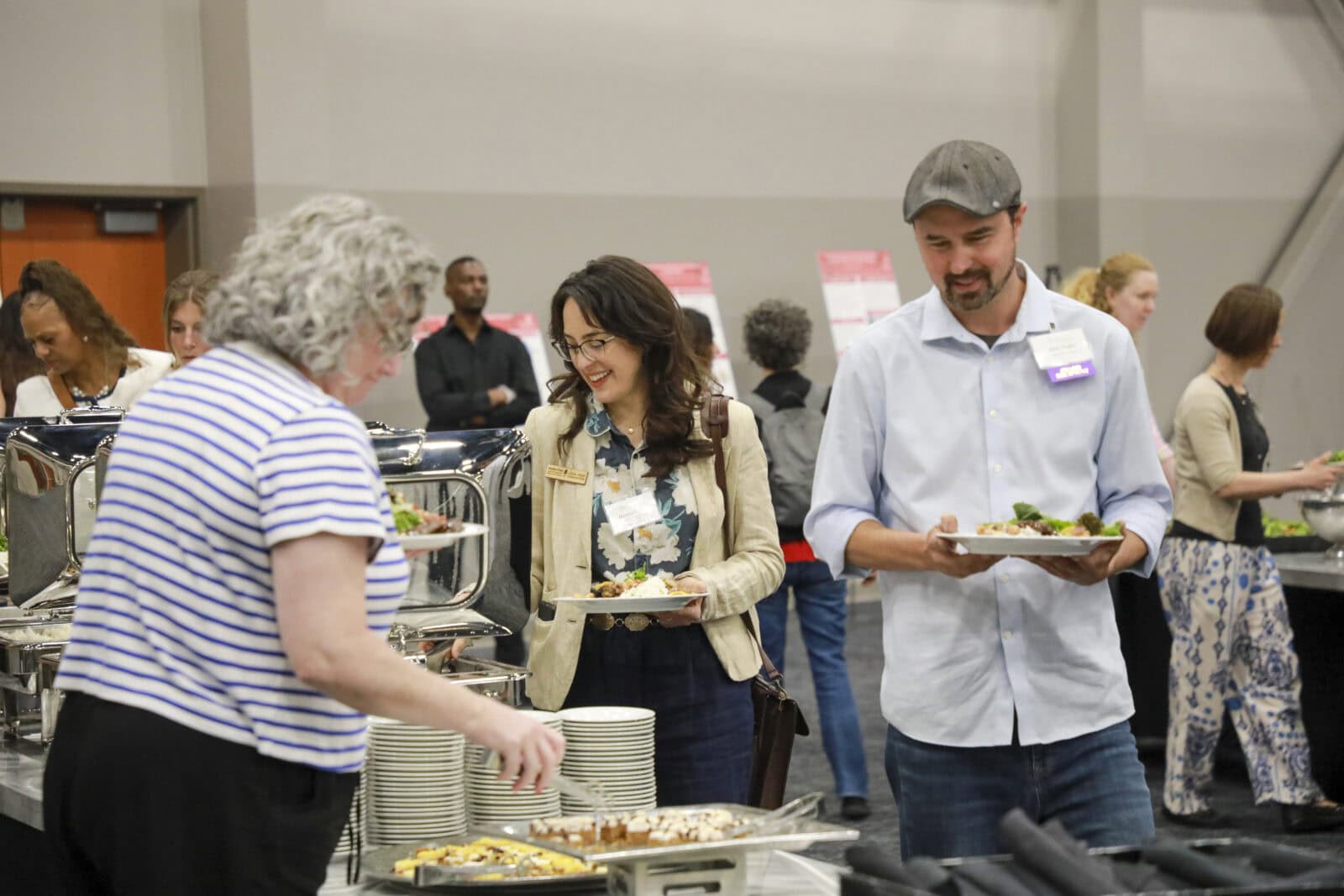
My favorite part of everything is the food. For lunch, there was General Tso’s cauliflower with rice and sauteed veggies, plus sliced portabella mushrooms and mixed salad with a garlic/ginger dressing so good I could sip it from a straw. For dessert, there were trays of bite-sized pastries: tiny vanilla cupcakes, s’more squares, turtle brownies, and a berry crumble bite. I tried everything, including each of the desserts, and enjoyed more Deeper Roots coffee while watching the awards ceremony.

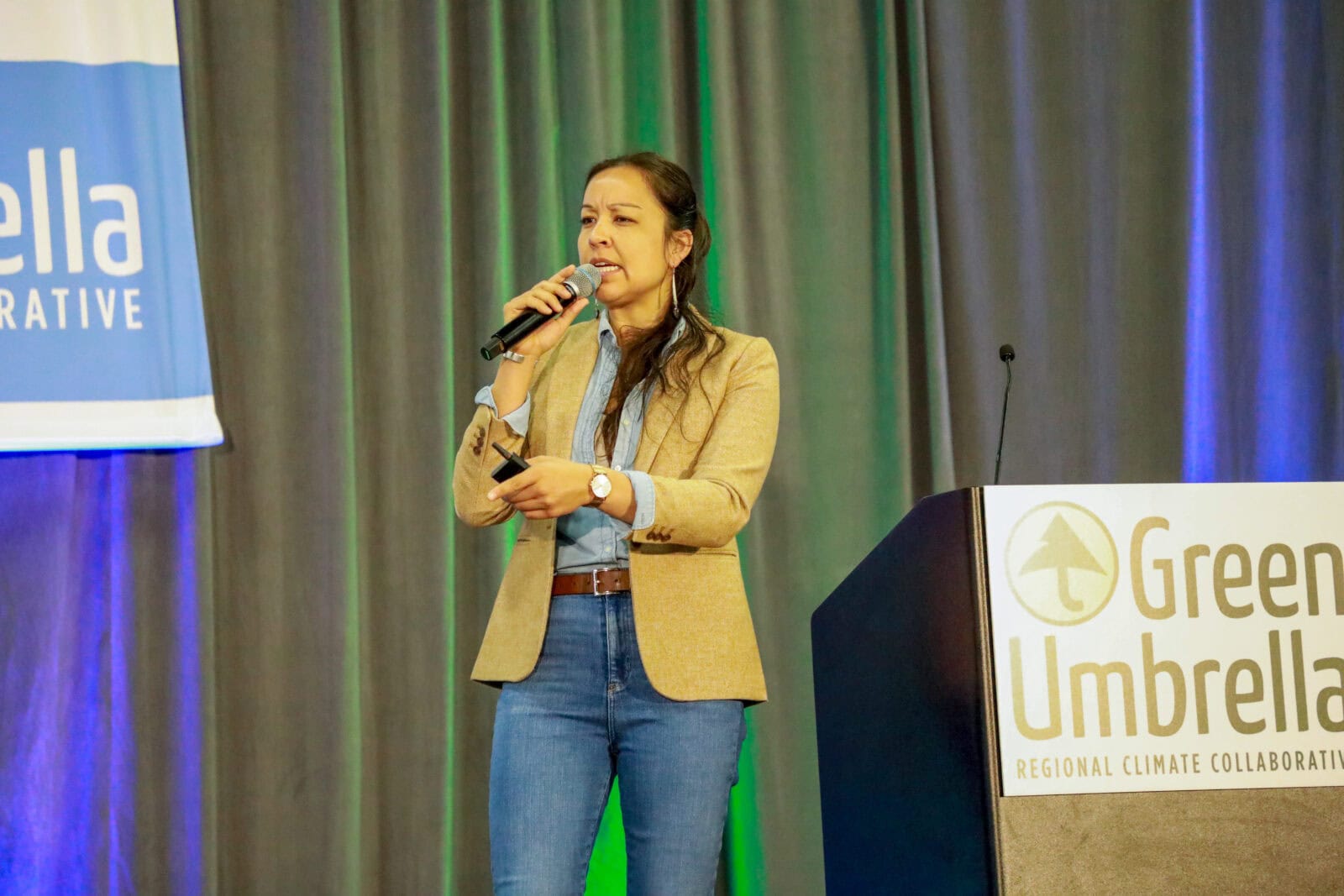
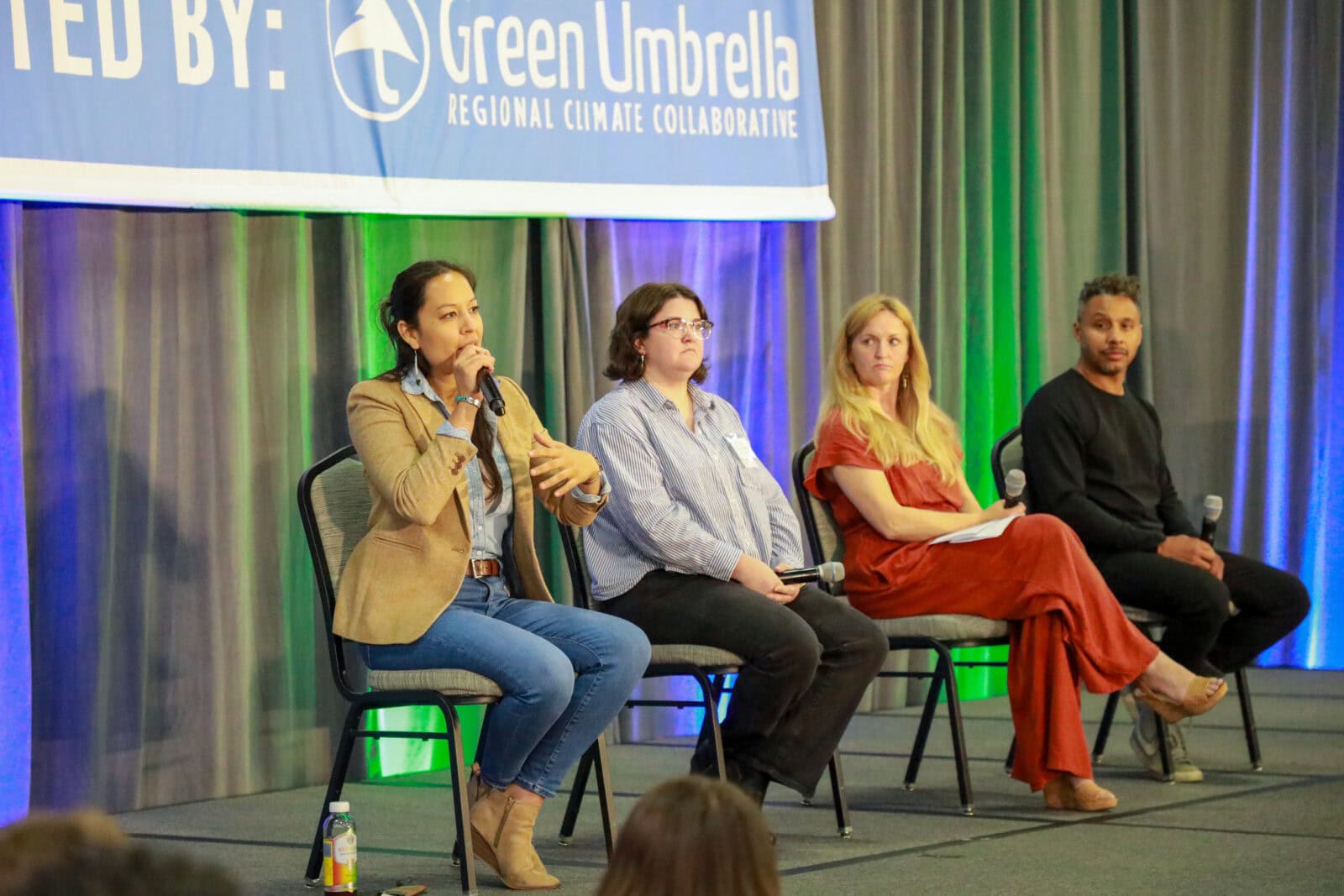
This year’s plenary panel was called “The Power of Sustainable Stories: Inspiring Change Through Climate Narratives”, and I have to say, this panel was stacked. There was the amazing keynote speaker from this morning, Dr. Lyla June Johnston; Erika Street Hopman, from ChavoBart Digital Media and one of the people behind the Yale Climate Connections’ Podcast (I LOVE Yale Climate Connections); Tory Stephens from Grist, one of my go-to climate news orgs; Becca Costello from WVXU, my favorite local news radio; and as a moderator, they had Dani McClain, an award-winning journalist and author who used to be the Writer-in-Residence at the Cincinnati & Hamilton County Public Library. Everyone introduced themselves, and then Dani led the conversation.

“I’m on this stage because of sewage.” You have my attention, Becca Costello. She’s one of the developers of the podcast Backed Up, which is about Cincinnati’s complicated sewer system and was named one of the best podcasts of 2024. She talked about how she didn’t intend to make a podcast about climate change and sustainability, but that’s how it turned out, because all these community and environment issues are linked. The work led to her reporting on logging in Indiana forests, and someone working out there tried to get her fired (a badge of honor for reporters, she said). She also talked about the new grounding and meditation space at the Summit and something there that really struck her. In the grounding space, there was a table covered with a map of a community. Two mounds of clay were there for attendees to use to sculpt physical things that they wanted to see in a sustainable future, and to place on the map. Becca molded a book to represent freedom of information, and she became emotional thinking about how so much is censored, held back, or “redacted” because of what the truth means. But truth is how we move forward and make strides towards a future that is livable for all. I made a mental note to check out the grounding space later.

One of the things I loved about Dr. Lyla June’s morning keynote was the amount of examples of Indigenous cultivation In the plenary panel, she told us that she didn’t even hear about Indigenous environmental brilliance until she was in grad school in her 20’s. She talked about the lack of transparency, of not learning history that doesn’t fit the colonist narrative. There’s the stereotype that Indigenous people are simply “wise” and “they love nature”, but that’s a wild simplification: they’re ecological scientists. They sculpted the world to be abundant in life and ecology. “I’m trying to increase access to information about my ancestors, and our ancestors,” said Dr. Lyla June. Indigenous people had to be portrayed as primitive savages to justify land theft, because if they’re not people, not “civilized”, colonizers can say “they don’t deserve the world, they don’t need what they have, and we can take it”. The conquering mentality did not have room to acknowledge the depth and expansion of Indigenous knowledge, and so it was ignored or belittled. When we relinquish that conquering mentality, we can allow knowledge systems to flourish.

I was so excited to hear that Erika Street-Hoffmann was part of the Yale Climate Communications’s podcast. I’ve been exploring YCC a lot lately. It’s an incredible resource for ways to communicate about sustainability to new (and potentially reluctant) audiences. Erika has a background in science, but she felt called to storytelling because it’s a way to “crack someone open” to new information. Connecting people’s daily worries to climate change – energy bills, food costs, health concerns – reaches people where they are. A family in a suburban community might not be interested that a beach city on the other side of the country is losing coastline, but they’ll care that their energy bills are going up month after month. One story might not make a huge difference, but as more perspectives, more stories, more people are connected through environmental issues, that makes a change. And Erika has the data to back it up: they take surveys after their radio pieces to show that listeners walk away with new perspectives. And – I love this part – the pieces are only like 2 minutes long, so they’re very palatable, and they’re released daily, so there’s always something new to listen to. 10/10 recommend.

I knew of Grist from coworkers – the Grist website is one of our team’s favorite places for climate news and reporting – but Tory Stephens’ job is one that especially interested me. He works on Grist’s climate fiction initiative, Imagine 2200. Specifically not climate dystopian fiction, because there’s already a ton of that out there, and because Grist’s surveys of young people indicate that people already have climate anxiety; they don’t want to read more about it. Instead, Imagine 2200 showcases stories about climate hope, about going through the fire and coming out the other side. His work recalled what Climate Fellow Rachel Crammer talked about in the morning Summit introductions, about solarpunk and reimagining the future through a lens of environmental justice. In Tory’s work with Imagine 2200, they showcase short stories that are decolonizing vs extractive, “through-topian” vs dystopian, green and just vs gray and despairing. It made me think of WALL-E, that Disney movie about a little robot (WALL-E) left alone to clean up a trash-covered Earth after humans escaped to space. I highly recommend it for lots of feelies.


Afternoon Breakout Sessions – Aka playing hooky and being inspired

After the plenary, I jumped onstage for the Green Umbrella staff photo. Say hi to the team 🙂

At this point I still hadn’t decided which breakout session to attend. To buy time before I made a decision, I gave myself the 10 minutes I had to spare in the grounding area. The moment the door closed behind me, the sounds of the busy conference hall disappeared, replaced by the warm hum of a sound machine peppered with bird song. The light was soft and cool, and an installation of folded paper leaves hanging from the ceiling stirred gently in the air. A table of climate-themed books, both fiction and nonfiction, stood to my right, while a counter covered in houseplants was on the right. Chairs rested against the far wall where people sat reading. An open doorway led to a bright room full of people crafting handmade clay pieces to add to a map, the one Becca mentioned in the plenary talk. I sat down to add my own clay piece.

I thought about the map’s prompt – what do you want to see in a sustainable world? – and thought about my baby daughter. I thought about how scary it was to think about bringing life into a world that is burning, how microplastics have been found in placenta, how even breastmilk has been found to carry forever chemicals. How a world that is sustainable for all should nurture us, not poison us from inside the very womb. And I got it, how Becca felt emotional around creating her little clay book. Because I was getting emotional molding a lump of clay into a soft figure with arms wrapped around a small bundle, in what I hoped to be a nurturing fashion. I’m not an artist. But I hope that when other people look at it, they too imagine a world where children are safe in a community built to sustain them throughout their lives.

I missed the breakout session. But I had a beautiful moment with other people forming their own clay dreams – windmills, peace signs – and I bought one of the cute little houseplants that were on display (a new spider plant, one that already looks much happier than the ones I have in my house).


Afternoon Breakout Session 2: Community-Led Research: The Power of Lived Experiences as Data for Policy Change

Yet another breakout where there were too many good sessions to choose from, so I chose this session for the silliest of reasons: it was in the Main Room and that’s where I already was. I am so glad I did, because this session was again different from the others I’d attended: it was a presentation of a case study in Chicago that used stories and experiences from residents as qualitative data.

Speakers:

  • Paulina Vaca, Urban Resilience Associate, Center for Neighborhood Technology
  • Bela Jaimes, New Economy Program Associate, Southeast Environmental Task Force
  • Em Ayala, EJCJ Program Manager, Southeast Environmental Task Force

First, Paulina showed three maps of Chicago for the audience to compare: maps that illustrated wealth concentration, social vulnerability, and air quality. The more affluent areas clearly overlapped with the less vulnerable areas and the neighborhoods with better air quality. These maps are telling, but they are missing something: the viewpoints of the residents who live in these areas. The presenters described how traditional systems are structured around data and numbers, not lived experiences. It is very hard to prove environmental racism, but with archival evidence and a combination of information, you can back up your argument. They defined Community-Led Mixed-Method Research:

Quantitative Findings + Qualitative Findings = Community Needs Assessment

But how do you get ethically-sourced qualitative data?

This is something I never considered before. The presenters talked about an “extractive” mindset, where researchers, organizations, and companies go in to collect resident testimonials without considering where the residents are coming from. I was very interested in this area, so I asked what ethically-sourced qualitative data looks like. It looks like:

  • Making sure you are welcome in the community and not forcing your presence on them
  • Giving storytellers space to reflect and take breaks as hard topics surface (talking about negative experiences can bring up difficult emotions – think about how you’d feel talking with strangers about your mother’s lung cancer or your neighborhood flooding)
  • Compensating people for their time and testimony
  • Giving the study/assessment’s findings back to the community (for free!!)

What makes for good qualitative data isn’t a huge number of stories. Look for nuance, specificity, and depth. It’s not meant to replace quantitative data, it’s meant to supplement it and give numbers a human face.

Once you have your ethically-sourced qualitative data and your quantitative data, it’s time to use it to drive action and next steps. Here’s where their case study came in: #StopGeneralIron.

Originally on the North Side of Chicago, General Iron is a metal shredding company that creates a lot of pollution around them, specifically air pollution that has toxic metals and volatile organic compounds (VOCs). Remember those maps at the beginning of the session? Those wealthier, more affluent areas are more heavily concentrated in the North Side of Chicago. After those communities protested the pollution in their neighborhoods, the Illinois EPA approved permits for new facilities construction on the South Side of Chicago – the lower-income neighborhoods that are predominantly Black, Brown, and Latino communities, that already have more vulnerability and poorer air quality than the North Side. South Side community organizers mobilized their community, setting up protests, collecting support, and claiming that it was part of a historic pattern of consolidating industry in the South Side. Both qualitative and quantitative data – resident lived experiences and numbers around health outcomes, industry pollution, and more – worked together to tell the full story of the historic and continuing injustice. The national EPA made the City re-examine the permits, and eventually ruled in favor of the activists. 

General Iron appealed, was rejected, and they have appealed again (as of the Summit, it was still going through the court system). While the fight and this story isn’t over yet, it’s a prime example of how an intentional, strategic community-led mixed-method research initiative can drive action towards the ultimate goal: policy change.


Performance Showcase

This part of the Summit is always one of my favorites. I love seeing the different ways performers are inspired by the environment. Last year there was spoken word, dancing, and rap; this year, there’s an opera singer, an Indian dance group, and a string quartet! The performances were in the main stage area, so I didn’t even have to move after my last breakout session. I got a front-row seat to what was sure to be a fantastic performance.

First up, soprano Quinn Patrick Ankrum performed selections from No One Saves the Earth from Us But Us, a song cycle by Lisa Neher dedicated to Greta Thunberg and those of her generation, and those who will follow. Having heard Quinn do a sound check from the mainstage yesterday while I was helping Charlie with Summit set-up in the convention center lobby, I was nervous about sitting in the front row. I was sure the power of her voice was going to blow me away. But it wasn’t the volume of her voice that bowled me over, it was the emotion. She embodied every word of the lyrics: “The last glacier fits in our warm hands … O vulnerable humans”. Her entire face shivered and trembled as sound swirled from her like a wind before a storm. It was a moving and beautiful start to the performance showcase.

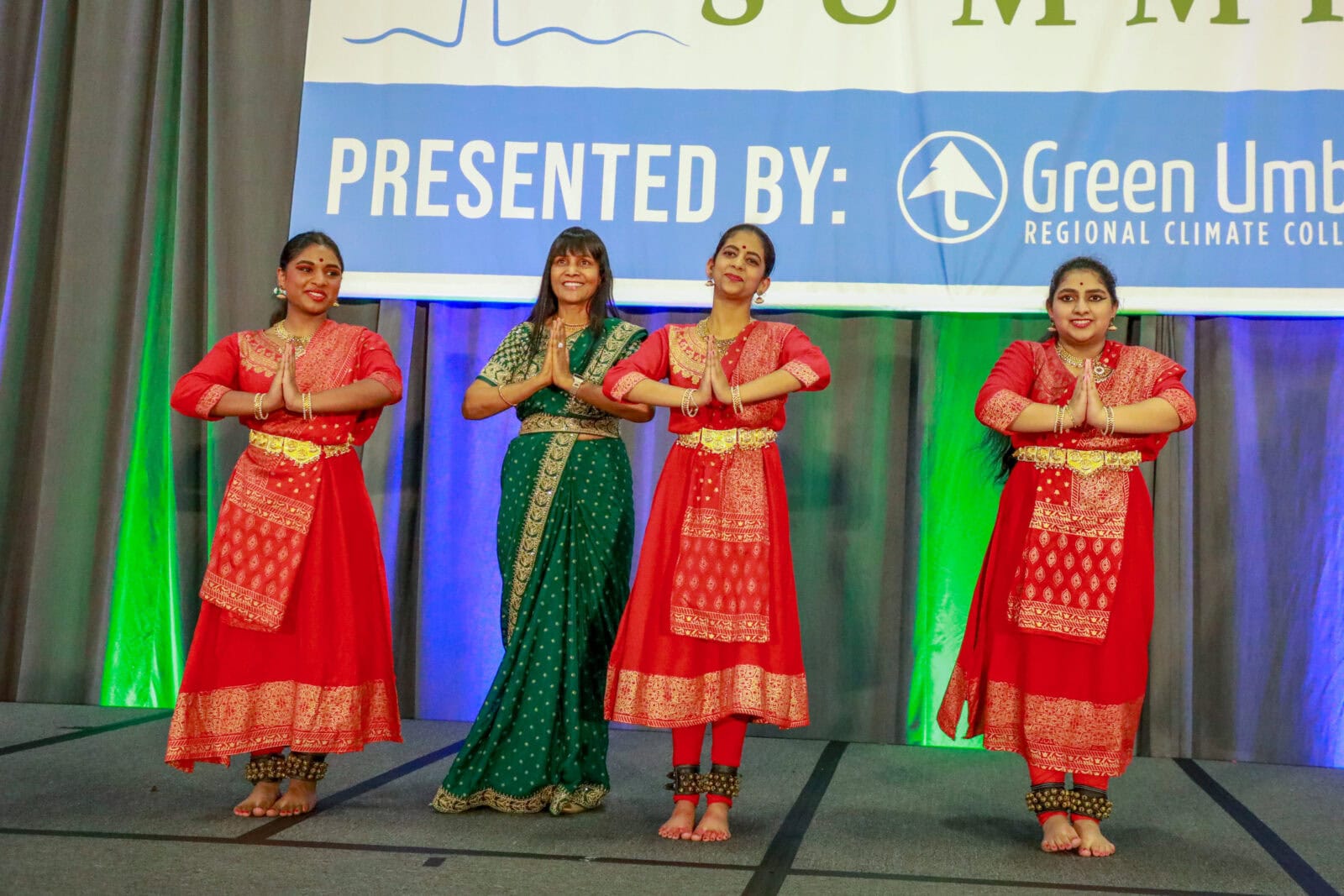
Next, dancers from the Cultural Center of India performed Passage of the River: Dances of India by Padma Chebrolu. Bells tinkled as the dancers climbed the stage stairs, performing even before the music started. The dancers were in bright red and gold attire, covered in bells and shimmering with jewelry. At one moment, a dancer dropped into a squat so perfectly balanced on her toes that I remembered I needed to do more pilates. Their faces were so expressive and focused that I found myself smiling and frowning along with them in turn. For the first time, I wished I was farther away because the dancers filled the stage with their movements in a way I couldn’t capture in the front row without awkwardly turning my head back and forth.

Lastly, a string quartet from Summermusik performed Jerod Tate’s Pisachi (Reveal) to close out the showcase. The composition draws from Hopi and Pueblo Indian music, rhythms, and form. The piece begins with a gentle call from the viola with soft, high support from the violins. A deep, shimmering hum from the cello brings warmth as a violin takes the high melody until the instruments meet together in harmony. They all seem like they’re living in their own worlds, but in a way that fits together like different species in a forest. A clutch of pizzicato from the violins, a sweeping glissando, and then the music is off again, on a chase after the violins and viola as the cello follows hungrily like a shark in water and then – silence. There’s a breath, and then the audience breaks into applause. I’ve never written along with music to describe it before, so please take this with several grains of very coarse salt. 

The string quartet continued playing during the networking hour, which took place in the same area as the poster display.


Final Thoughts & Takeaways

Blessings upon Deeper Roots and La Terza, for both my morning iced coffee that drove my note-taking throughout the day and the afternoon brew that accompanied my many desserts following lunch.

We see what we seek, and after this Summit, I realize I was really seeking hope and inspiration. And I found it. There’s so much more to the Summit I didn’t prioritize as much as I did in years past – the many incredible exhibitors, networking and connection building, science and data and more – but I found what I needed.

In the plenary panel, Dr. Lyla June described the Dine story of creation, where we’ve gone through 3 worlds, all of which ended in catastrophe – and then we rebuilt the world anew. We’re in our 4th world now, destined to be destroyed as well. But we are learning creatures, people of growth and resilience, and we can rebuild. 

“One person can’t solve it all, but we can all love the world … Our love is enough. It’s what we have to give. We might not have the power to do everything, but we always have the power to love.” – Dr. Lyla June Johnston

Filed Under: Events

2025 Midwest Regional Sustainability Summit

January 8, 2025 by Kelly St Charles

Contributors: Charlie Gonzalez, Viviana Saldarriaga, & Kelly St Charles

The Midwest’s Premier Sustainability Conference Returns in 2025

The Midwest Regional Sustainability Summit brings together 650 passionate and visionary leaders to share inspiring, forward-thinking, and solution-oriented ideas that propel us toward a healthier, more resilient, sustainable, and equitable future. Join Fortune 500 powerhouses, innovative entrepreneurs, government officials, sustainability directors, academic, non-profit, and community leaders committed to solving some of the region’s toughest environmental problems while creating a positive economic impact!

Our Venue for 2025:

The 12th annual Midwest Regional Sustainability Summit will be held at the LEED certified and newly expanded Sharonville Convention Center (15 miles north of Cincinnati, OH).

2025 Speaker Proposal Deadline: Extended to January 31st!

We invite proposals for 50-minute discussion panels, 50-minute interactive workshops, and 5-minute short talks that explore this year’s theme, across a wide range of focus areas. The submission deadline has been extended to January 31 and there is still time to meet with us to discuss and refine your proposal idea! Learn more about our submission guidelines here.

Other ways to participate: Art Show, Poster Displays, Summit Awards

We are also seeking inspiring visual and performance art, scholarly and practitioner posters that showcase climate solutions and innovative sustainability efforts, and award nominations for individuals and organizations for their impact, innovation, and leadership. The deadline for art, poster, and award submissions is March 1. Learn more.

This Year’s Keynote Speaker: Lyla June Johnston

Dr. Lyla June Johnston (aka Lyla June) is an Indigenous poet, musician, scholar, author, human ecologist and community organizer of Diné (Navajo), Tsétsêhéstâhese (Cheyenne) and European lineages. Her multi-genre presentation style has engaged audiences across the globe towards personal, collective, and ecological healing.

She blends her study of Human Ecology at Stanford, graduate work in Indigenous Pedagogy, and the traditional worldview she grew up with to inform her music, perspectives and solutions. Her doctoral research focused on the ways in which pre-colonial Indigenous Nations shaped large regions of Turtle Island (aka the Americas) to produce abundant food systems for humans and non-humans.
In her profoundly hopeful TED talk, Lyla June outlined a series of timeless human success stories focusing on Native American food and land management techniques and strategies. We’re thrilled to have her as our 2025 keynote speaker!

This Year’s Theme: Sustainable Stories

Stories have the power to reframe the past and shape the future. They connect us, inspire us, and motivate meaningful change. Stories communicate our values, our dreams, and our tangible impact. And they are a vital tool to bridge complex data and personal experiences, align collaborative partners toward shared goals, and create opportunities for transparency and accountability.

Every organization and individual has stories to tell that communicate the impact they have and the vision they aspire to. We use them to market our products and services, to influence decision makers, or to get donors and grants. To effectively convey the power of our actions we must be strategic about the narratives we craft, how we share them, who tells them, and who is listening.

At this year’s Summit, we invite sustainability leaders from across the Midwest to share the stories of their impact and successful partnerships. Join us to make new connections and celebrate climate solutions as we each find our place in the movement to secure a resilient, equitable, and thriving future!

Sponsorship Information

Give your organization prominent brand recognition as a champion of sustainability by becoming a Summit sponsor! We offer a variety of options that enable you to reach a diverse and dynamic coalition of leaders committed to making our region more environmentally, socially, and economically sustainable. Learn more about sponsoring the Summit!

The Midwest Regional Sustainability Summit Is Sponsored By:

Summit Planning Partners

Filed Under: Events

Your Membership Benefits at Work: Get Your Discounted Tickets for the 2024 Midwest Regional Sustainability Summit!

March 11, 2024 by Kelly St Charles

This page is for active members at the Supporting and Leading Levels. 

You can update or upgrade your membership by going to "Account" -> "Subscriptions" -> "Subscribe."


Forgot Password

Filed Under: Events Tagged With: events listed on member calendar, leading members, supporting members

Call for Participation: 2024 Midwest Regional Sustainability Summit

November 14, 2023 by Kelly St Charles

Join us on May 2, 2024, at the Duke Energy Convention Center for our
11th Midwest Regional Sustainability Summit!

The Midwest Regional Sustainability Summit brings together 600+ passionate and visionary leaders to share inspiring, forward-thinking, and solution-oriented ideas that propel us toward a healthier, more resilient, sustainable, and equitable future. We are currently accepting speaker applications for panel discussions and workshops, proposals for visual and performance art submissions, abstracts for our first poster session, and nominations for our annual sustainability awards. More information about these opportunities are detailed below and on the Summit website.

2024 Theme: From Vision to Action

We find ourselves at a critical juncture for collective action as we work to address the global and local impacts of the climate crisis. We can and must bring the energy and spirit of collaboration to implement solutions that advance mitigation, adaptation, and climate justice.

Last year’s Summit theme focused on imagining visionary and inspiring possibilities that inform, empower, and motivate our actions to create a more vibrant, equitable, and thriving region. This year, building from a place of hope and renewed resilience, we will focus on aligning our collective efforts to move from vision to action.

The climate challenge and new opportunities invite us to chart the course for a great future together. With the right combination of planning, persistence, and partnerships, the future we envision is within our grasp. Climate action is occurring at all levels of government, business, academia, non-profits, advocacy groups, and within our neighborhoods. Across all systems and actions, there is a role for everyone to make an impact!

The Midwest Regional Sustainability Summit serves as a spark for connecting and learning together, deepening our resolve, and celebrating collaborative climate solutions as we each find our place in the movement to secure a resilient, equitable, and thriving future.

2024 Keynote: Jacqueline Patterson

Jaqueline Patterson headshot

Jacqueline Patterson is the Founder and Executive Director of the Chisholm Legacy Project: A Resource Hub for Black Frontline Climate Justice Leadership. The mission of the Chisholm Legacy Project is rooted in a Just Transition Framework, serving as a vehicle to connect Black communities on the frontlines of climate justice with the resources to actualize visions.

Before launching the Chisholm Legacy Project, Patterson served as the Senior Director of the NAACP Environmental and Climate Justice Program for over a decade. During her tenure, she founded and implemented a robust portfolio that included serving the state and local leadership whose constituencies consisted of hundreds of communities on the frontlines of environmental injustice.

2024 Call for Participation – Be a Part of the Summit

Speak at the Summit

With 20 breakout sessions, the Summit features 80+ speakers from Greater Cincinnati and across the Midwest​. We invite proposals for 50-minute discussion panels, 50-minute interactive workshops, and 5-minute short talks that align with this year’s theme across any of the following climate-related issue areas:

  • Healthy & Resilient Communities
  • Business & Green, Circular Economies
  • Government & Policy
  • Healthy, High-Performing Infrastructure
  • Active Transportation, Public Transit, & Micromobility
  • Resilient Local Food Systems
  • Climate Justice, Equity, & Inclusion
  • Green Workforce Development
  • Emergency Preparedness

** Speaker Proposal Deadline: January 12. **

Attendees explore art pieces in the gallery space at the 2023 Midwest Regional Sustainability Summit

Share your art at the Summit

We seek inspiring visual and performance art that aligns with the Summit theme as we continue to incorporate the creative arts into the Summit! From paintings and sculptures to interactive exhibits, our art show features dozens of local artists – and our program integrates spoken word and dance performances. Learn more about our call for artists! Submission deadline: January 15.

Share your work or research at the Summit

We invite scholarly and practitioner posters that focus on work or research that aligns with the 2024 Midwest Regional Sustainability Summit theme “From Vision to Action.” Learn more about our call for posters! Submission deadline: March 1.

Sustainergy, Summit Award Winners

Nominate a sustainability leader for an award

We welcome nominations recognizing individuals, organizations, businesses, and communities that have made outstanding strides in the areas of Impact, Innovation, and Leadership. Award winners will be honored at the Summit. Learn more about our awards! Nomination deadline: March 1.

Sponsor the Summit

Give your organization prominent brand recognition as a champion of sustainability by becoming a Summit sponsor! We offer a variety of options that enable you to reach a diverse and dynamic coalition of leaders committed to making our region more environmentally, socially, and economically sustainable. Make your commitment early to get the most out of it and be included in all our marketing and event communications. View our event sponsorship package!

Summit Planning Partners

Filed Under: Events

Green umbrella Logo
  • Careers

  • Contact

  • FAQs

stay connected

subscribe to our Newsletters
© 2026 Green Umbrella. All Rights Reserved.
Privacy Policy · Website by Wonderly.