Why Businesses Love Green Umbrella
By Kelly Morton
Published November 13, 2023
Join us and act against climate change! Become a member today.

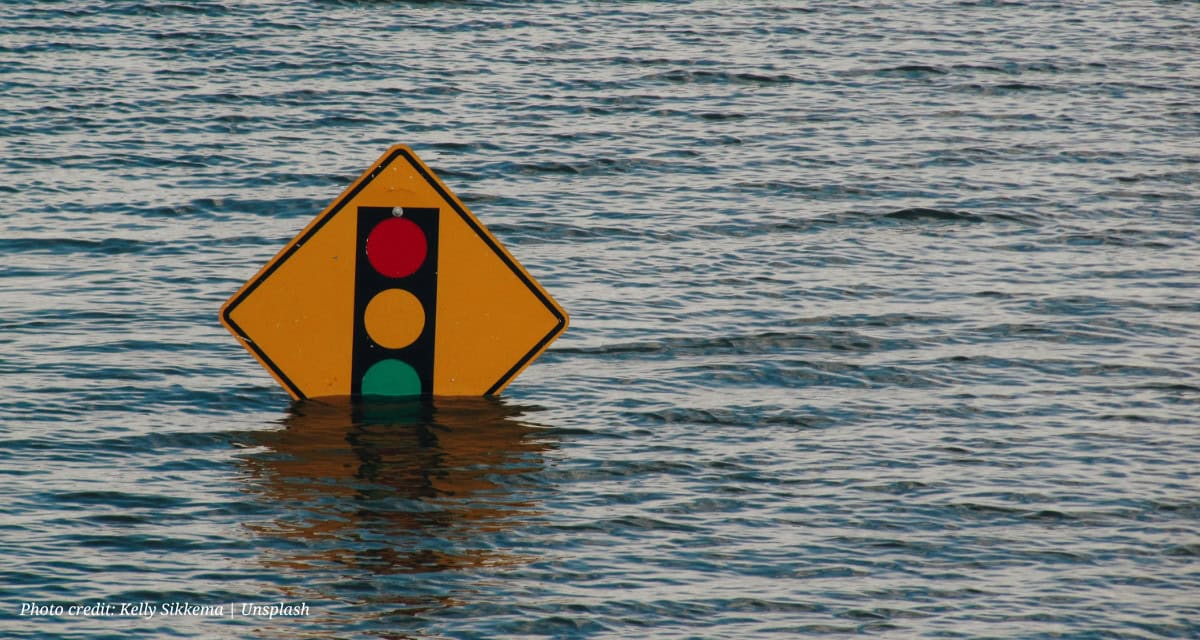
We can’t treat climate disasters like localized issues that can be repaired in pieces. Floods and fires don’t respect borders, boundaries, or property lines. Preparing for and responding to extreme events requires coordination planning across jurisdictions. We need our government leaders to work together to weave resilience plans that cover everyone in our region.

The weekend of July 17, 2026, my social media was filled with pictures of a flooded I-71. People stranded on car roofs. Rescue boats in the street. Severe storms dumped more than five inches of rain across the Greater Cincinnati region in under an hour. They didn’t just cost us money, time, and convenience – the storms caused building damage, physical injuries, and the death of a member of our community. The storms cost us a sense of security that pictures like the ones in my feed wouldn’t be taken in our neighborhoods.
With smoke from Canadian wildfires drifting into the region to haze the skies and dirty our air, the floods reinforce the sense that the climate has become increasingly unstable and dangerous.
I grew up in prime wildfire and extreme drought territory in Colorado. Having made my home in Cincinnati for the last 25 years, I’ve seen the extreme weather of my youth slowly follow me to the Tri-State region. It may be unbelievable, but it’s not a surprise. Because of climate change, the regional weather map is changing. In the coming decades, Ohio is going to be more like Arkansas: with hotter, longer summers and rare winter snow.
After disasters hit, local communities and their governments are the ones left to clean up the mess. In the case of these recent rains, officials from the City of Cincinnati, Norwood, and other municipalities, local utilities, and others came together to rescue stranded residents, close flooded streets, update the public, and restore safety. Just as we work together to respond to disaster, we need to work together to prepare for disaster.
We can’t treat climate disasters like localized issues that can be repaired in pieces. Floods and fires don’t respect borders, boundaries, or property lines. Preparing for and responding to extreme events requires coordination planning across jurisdictions. We need our government leaders to work together to weave resilience plans that cover everyone in our region (and ideally throughout the country, but one step at a time).
At Green Umbrella, the Tri-State’s Regional Climate Collaborative, part of our work is helping local governments become more responsive and prepared through our Climate Action Fellowship program. Now in its third year, the fellowship matches students and professionals with local government partners to develop practical plans for our changing climate. This summer, nine fellows are working in regional communities on a range of climate resilience projects including managing overland flooding and landslides, extreme heat planning, greenspace management, and more.
Green Umbrella’s fellows and their government staff collaborators will present the results of their work at a free showcase on August 12 at 3:30-5:00pm at the University of Cincinnati’s Digital Futures Building. Want to see what climate preparedness looks like at the local level? Come learn more about what this year’s communities – Hamilton County, Mariemont, Oxford, Covington, Anderson Township, Cincinnati, and other regional organizations – have been working on this summer.
Learning more isn’t the only thing residents can do about local climate action. We can organize. Across the region, residents have come together through the Climate Safe Neighborhoods Partnership, co-led by Green Umbrella and Groundwork Ohio River Valley, to understand the specific challenges their neighborhoods face and develop plans to address them.
We can’t stop the storms, but we can prepare for them. I urge our local leaders to work on action plans that get us ready for what is coming as climate change makes bad weather worse. Green Umbrella convenes and engages local governments, organizations, businesses, communities, and schools to make collaborative action plans that make our region more resilient to floods like the ones we saw this month. You can learn more about how you can become involved with Green Umbrella at the link here, or you can reach out to me directly: van@greenumbrella.org.
I encourage everyone to learn more about what your community is doing for climate preparedness, and to get involved with those efforts. If your community isn’t preparing, tell your local officials to start now. The earlier we prepare, the better we’ll withstand the next storm.
Van Sullivan
Green Umbrella Interim Executive Director
Green Umbrella members also have access to our members-only newsletters and e-blasts. Join today to receive these perks!


By Beth Robeson
Published September 6, 2024