Why Businesses Love Green Umbrella
By Kelly Morton
Published November 13, 2023
Join us and act against climate change! Learn how you can get involved.

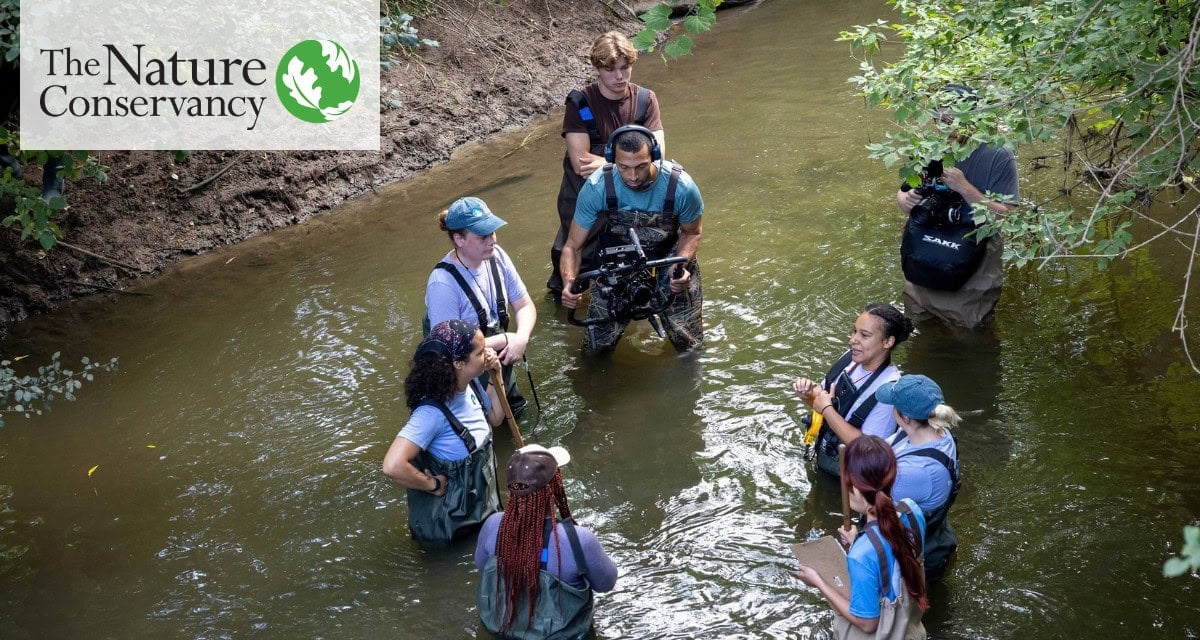
We’re thrilled to partner with the Nature Conservancy for a film screening and conversation around their new documentary series, In My Backyard, a first-hand docuseries highlighting hyper-local solutions to climate change happening in the most impacted communities. Read on below to learn more about In My Backyard and our upcoming event on November 19, 2026.

We’re thrilled to partner with the Nature Conservancy for a film screening and conversation around their new documentary series, In My Backyard, on November 19, 2026. Following the screening, Director Tonyisha Harris will join us for a discussion about community-driven climate solutions and what we can learn from the communities already leading this work. Tickets for the event are available here. Cincinnati World Cinema has generously donated their space for the event, so all ticket sales will directly benefit Green Umbrella’s climate action initiatives in Greater Cincinnati (special thanks to our event sponsor, Taft Law!). Read on below to learn more about In My Backyard!
In My Backyard is a 3-part documentary series highlighting robust and innovative solutions to climate change from the most impacted communities. The screening on November 19 will include all three parts, which are each approximately 20 minutes long.
The series takes the audience on a journey across the United States, with each episode grounded in a narrative thread that begins in Chicago, Director Tonyisha Harris’s hometown. “My connection to nature began under a single tree on my block in Chicago’s South Shore,” says Harris. “It was the only green space I had growing up, and it shaped both my love for nature and my understanding of how joy can persist through hardship.”
Harris’s childhood in a nature-stricken space was formative. “While children across the city explored forest preserves and lakefronts, my community carried inhalers, traveled miles for groceries, and lived alongside polluting industries,” she says. “We faced environmental injustices that made our neighborhoods especially vulnerable to climate change. I saw firsthand how decisions made far from our communities shaped our health and futures.”
Harris is not only the series director – she’s also the host, introducing us to grassroots leaders and climate action advocates who have made big impacts in their respective communities. Each episode explores a central theme – biodiversity preservation, green job creation, grassroots activism, and renewable energy (seeking funding) – spotlighting how frontline communities are transforming climate challenges into opportunities to build stronger, more vibrant backyards.
Part 1 begins in Beverly, Chicago, with Harris’s high school mentor, Dr. Lynne Muhammad, aka “Dr. Grandma”. A former Chicago Public Schools teacher, she’s the founder of The STREAM Labs, a learning center that provides science- and reasoning-based programming to youths across the city. This segment highlights education as the foundation of grassroots climate action, showing how early access, mentorship, and culturally rooted learning can spark lifelong engagement and leadership. The episode continues on to Ann Arbor, Michigan, where Melina Pakey-Rodriguez from the Huron River Watershed Council helps bring community-driven freshwater management solutions to life. Finally, we head to Lake Charles, Louisiana. Here, Roishetta Ozane, founder of The Vessel Project, works directly with residents impacted by hurricanes, flooding, and industrial pollution to build systems of care rooted in mutual aid, policy advocacy, and community power. This segment highlights grassroots organizing as a critical climate solution, showing how lived experience, collective care, and local leadership are reshaping what resilience looks like on the frontlines.
Back in Chicago, we meet Jalynn Webb, Program Coordinator for Imani Village, a social enterprise that is developing a sustainable, eco-friendly intergenerational “village” for the historically disenfranchised residents of Chicago’s Pullman Community. Through Imani Village, Jalynn supports youth working on food access, green space, mental health, and environmental justice, equipping them with the confidence and tools to advocate for change in their own neighborhoods. Next we visit Richmond, California, where Urban Tilth trains local residents to cultivate agriculture and build a more sustainable food system within a just and healthier community. As part of this work, Urban Tilth also employs watershed technicians like Marlow Ray, Paola Casillas, and Solwazi Allah, who protect their community through invasive species removal, native plant restoration, and hands-on watershed management. Lastly, we meet Israel Cueva and Jade Diaz in Staten Island, New York, who manage several community gardens to bring fresh produce directly to public housing residents in partnership with the New York City Housing Authority.
In our last story from Chicago, we meet a group of mothers transforming their neighborhood by advocating for safe, accessible green spaces for their children and community. Through Women for Green Spaces (Mujeres por Espacios Verdes), parents at Pilsen Community Academy are organizing to reclaim outdoor space as a matter of health, dignity, and environmental justice. Then we head south to the United States-Mexico borderlands, where students in The Sonoran Field Course engage in hands-on efforts to protect biodiversity across borderlands. Guided by Dr. Rodrigo Sierra-Corona, students learn to restore wildlife corridors, propagate native plants, and repair ecosystems. With new border wall construction looming, this work feels especially urgent, modeling a future where conservation is led by the communities who call the borderlands home. For the final feature of the series, we meet DeCora Hawk, founder of Thunder Valley Community Development Corporation on Lakota land in South Dakota. DeCora and her community are restoring traditional knowledge while addressing modern challenges like housing insecurity, food access, and climate vulnerability. This segment highlights how Indigenous leadership offers a powerful model for climate action.
Despite the climate issues and injustices, In My Backyard is hopeful. Says Harris, “This series is a story of joy, resilience, and leadership. It celebrates frontline communities protecting ecosystems, creating green jobs, and organizing for change, inviting audiences to see these communities not as victims, but as leaders of a more just and sustainable future.”
Watch the trailer for In My Backyard here, and join Green Umbrella, The Nature Conservancy, and Tonyisha Harris at Cincinnati World Cinema on November 19!
Special thanks to our event sponsor, Taft Law; venue sponsor, Cincinnati World Cinema; and beverage sponsors, Rhinegeist and Urban Artifact.
Green Umbrella members also have access to our members-only newsletters and e-blasts. Join today to receive these perks!