Join us and act against climate change! Become a member today.
MEMBER LOG IN
DONATE
Green umbrella Logo
  • What We Do
    • Our Work
    • Our Mission
    • Our Region
    • Our Impact
  • Our Team
  • Our Programs
  • Events
  • Resources
    • Member Directory
    • Green Jobs Board
    • Get Outdoors
    • Reports & Tools
    • Stories & Announcements
  • Get Involved
  • Search

Why green jobs plans matter and where US cities stand in implementing them

July 25, 2023 by Krystal Gallagher

Source: Brookings

Why green jobs plans matter and where US cities stand in implementing them

Editor’s note: This report is the first in a two-part series exploring how cities can support green workers, especially amid historic federal infrastructure investment. The second report focuses on specific federal funding opportunities.

The transition to a cleaner and more resilient economy will be one of the most significant economic and physical transformations in U.S. history. Trillions of dollars will be required to adopt clean electricity, retrofit homes and businesses, establish new manufacturing processes, and protect cities and towns from changing weather patterns. Now, with landmark federal laws—including the Infrastructure Investment and Jobs Act and Inflation Reduction Act—bringing significant public capital and tax credits to further incentivize private investment, the transition is poised to gain speed in the coming decade.

The rise of a green economy has also brought a renewed focus on green jobs. To put all this public and private capital to use, the country needs a sizable workforce to construct new power plants and transmission lines, modernize older buildings, and plan and deliver more resilient communities. Ideally, the transition to a green economy should offer durable and growing career pathways while it cleans the air, protects American neighborhoods, and grows U.S. industries.

However, there is reason for skepticism over whether there are enough workers ready to pursue all these projects. The workers who construct, operate, and maintain U.S. infrastructure are either in short supply, aging, or leaving their jobs rapidly. Transportation departments, water utilities, and other employers are struggling to retain talent, let alone find the millions of new workers needed in the skilled trades and other related positions in the coming years. Growing a clean economy will require more analysts, managers, and other white-collar professionals to oversee and assess humanmade and natural infrastructure systems. The concept of a green job is still far too amorphous, with little understanding of the knowledge and skills it will take to execute more climate-focused work.

Preparing a climate-ready workforce requires an all-hands-on-deck approach among public and private leaders across the country—including federal policymakers, state community college systems, and individual employers—but these capacity-related gaps often come to ground in U.S. cities and regions. Past Brookings research has highlighted how cities are essential to driving climate action. Many cities continue to make bold climate pledges, including commitments to achieve net zero emissions and protect the most vulnerable. They also play an active role in workforce development, including by funding educational and related training programs. But without a coordinated, comprehensive plan to retrain and recruit workers in well-defined, green-related careers, city leaders will be unable to achieve their climate ambitions.

This brief assesses 50 large cities’ climate action plans (CAPs), which ideally should encapsulate many of the elements essential to local infrastructure workforce development. Local leaders need to articulate their training and hiring priorities, the various sectors in need of talent, and the funding and timelines required to accelerate action. Of course, CAPs are not the only planning efforts addressing such needs—amid other programs launched by federal and state leaders, in addition to innovations in the private sector—but this brief shows that many local leaders are not in a position to harness new funding and that they have more workforce planning to do:

  • Most of the relevant cities—47 of 50—mention green jobs in their CAPs, but they only tend to do so in passing. While some cities do not refer to green jobs at all in their plans, most cities only include a more general call for equity and greater net opportunities.
  • Most of the cities—40 of 50—emphasize energy projects when discussing workforce needs, but considerably fewer cities emphasize workforce needs in terms of buildings, transportation, or other parts of the built environment. Only about half of the cities (24) emphasize workforce needs around building upgrades and retrofits, while even fewer (20) emphasize these needs around transportation improvements.
  • Only 19 of the 50 cities include detailed information on collaboration with other institutional and organizational partners when discussing workforce development. Examples of these partners include community colleges, community-based organizations, and other groups essential to engaging new workers, training them, and providing supportive services.
  • Only 11 of the 50 cities include information on funding—or additional programmatic support—for workforce development. Many cities do not spell out clear costs for needed training programs or propose specific funding and financing to support them.
  • Only 9 of the 50 cities include specific dates, benchmarks, or timelines for workforce development. Most CAPs lack details on the duration of any green workforce development efforts or benchmarks to measure success.

This research brief does not aim to precisely define green jobs, especially amid continued debates among policymakers and researchers on how to isolate, measure, or forecast such employment figures. Rather, this brief seeks to address the information deficits limiting local and regional planning about green jobs. It first examines the scope of the green jobs challenge by outlining the major skills and training needs, before considering some of the essential ingredients for ongoing local workforce development planning. Then, using detailed findings from our review of 50 municipal CAPs, we describe many of the successful practices that city leaders and other stakeholders can adopt to expand climate-focused talent development. America is poised to unleash generation-defining climate investment—and the American worker is poised to be a central part of these efforts.

A full list of the 50 cities analyzed is available in an interactive map below and described more extensively in a downloadable methods appendix.

To read the full report, click here!
Filed Under: Green Umbrella In The News

Cincinnati Fire training ground expansion has neighbors concerned over health and safety

July 3, 2023 by Krystal Gallagher

Source: WVXU

Cincinnati Fire training ground expansion has neighbors concerned over health and safety

Sandra Davis has lived in South Cumminsville for more than three decades. She says explosions from the nearby Cincinnati Fire training grounds along the Mill Creek used to shake her house. Some of her neighbors, including educators at Ethel M. Taylor Elementary School just 700 feet away, have concerns about air quality on burn days.

Davis also wonders how the facility affects property values, especially with a $13 million expansion coming.

“I understand the importance of the fire training facility,” she says. “And it’s really great that it’s a regional training facility — they’re able to help other fire departments — I just want it to be safe for the fire fighters as well as the community because we’re here ongoing.”

Davis and other residents of South Cumminsville, Millvale and North Fairmount gathered June 29 at the school for a listening session organized by environmental nonprofit Green Umbrella and the Cincinnati NAACP. Officials from the Cincinnati Fire Department also attended to hear concerns and share information about future plans for the training facility’s expansion.

RELATED: Cincinnati Fire breaks ground on expanded campus for recruits

Interim Fire Chief Steven Breitfelder says the facility is “absolutely essential” and can’t be located elsewhere, though he understands residents’ concerns. In the past, the department has adjusted its schedule to shorten the amount of time it’s actively burning material. The department also alerts the elementary school on days with live fire training so the school can shut off its HVAC intakes while burning is happening.

Breitfelder says the training fires only include “Class A” material like wood and paper you’d find in the average campfire. He says those burns won’t increase with the coming training facility, which will be classroom and indoor training space unrelated to live fire exercises. Those spaces — including expanded places for women who are firefighters or recruits to change into and out of their gear — are necessary to relieve current crowded conditions and to continue diversifying the fire department.

“Though we’re building this big training facility, it’s not going to really increase any of the live burns or anything we’re doing down there currently,” he says.

Officials with the department also say bomb detonations at the site are rare, happening maybe once a year these days. They do acknowledge smaller gunshot-like sounds occasionally happen as part of investigations into suspicious packages and other items. Those exercises sometimes use shotgun shells that contain water instead of pellets.

Still, residents are concerned about noise and air quality impacts, especially for seniors who might not get alerts about the burns. Green Umbrella Climate Action Coordinator Tyeisha Cole, who grew up in Millvale, says those are part of more systemic environmental justice issues in the area. Millvale and surrounding communities are predominantly Black, with a history of disinvestment and industrial pollution. Cole is also chair of the Cincinnati NAACP’s Environmental Climate Justice Committee.

Read past reporting from Nick Swartsell at CityBeat: Fire Training Facility Near Cincinnati Elementary School Draws Scrutiny

“What we want to focus on are win-win solutions, like investing in climate resilience adaptation strategies,” she says.

She’d like to see federally-funded air quality and noise mitigation efforts in the area around the training facility, as well as the surrounding neighborhoods as a whole.

Breitfelder said the department will try to do more to notify residents on days when burns are taking place. Residents at the June 29 listening session asked if those notifications could be sent the day prior to training days. Breitfelder said he thinks that is possible.

Some residents felt frustration with the fact they’ve been expressing the same worries about smoke and explosions for years. However, Davis says she was encouraged by the fact the department came to listen.

“I was really glad to see they have concern and some investment in the area,” she said.

Filed Under: Green Umbrella In The News

Midwest Regional Sustainability Summit attendees work to address climate change in Cincinnati, beyond

May 15, 2023 by Krystal Gallagher

Source: Spectrum News 1

Midwest Regional Sustainability Summit attendees work to address climate change in Cincinnati, beyond

CINCINNATI — Green Umbrella has spent the past 25 years working to draw attention to the greater Cincinnati region’s need to embrace and prepare for climate change.

Over the past quarter-century, the nonprofit has brought together elected leaders, subject experts and the Average Joe to discuss the region’s most challenging environmental problems. One of their primary vehicles for those conversations over the past decade has been the Midwest Regional Sustainability Summit.

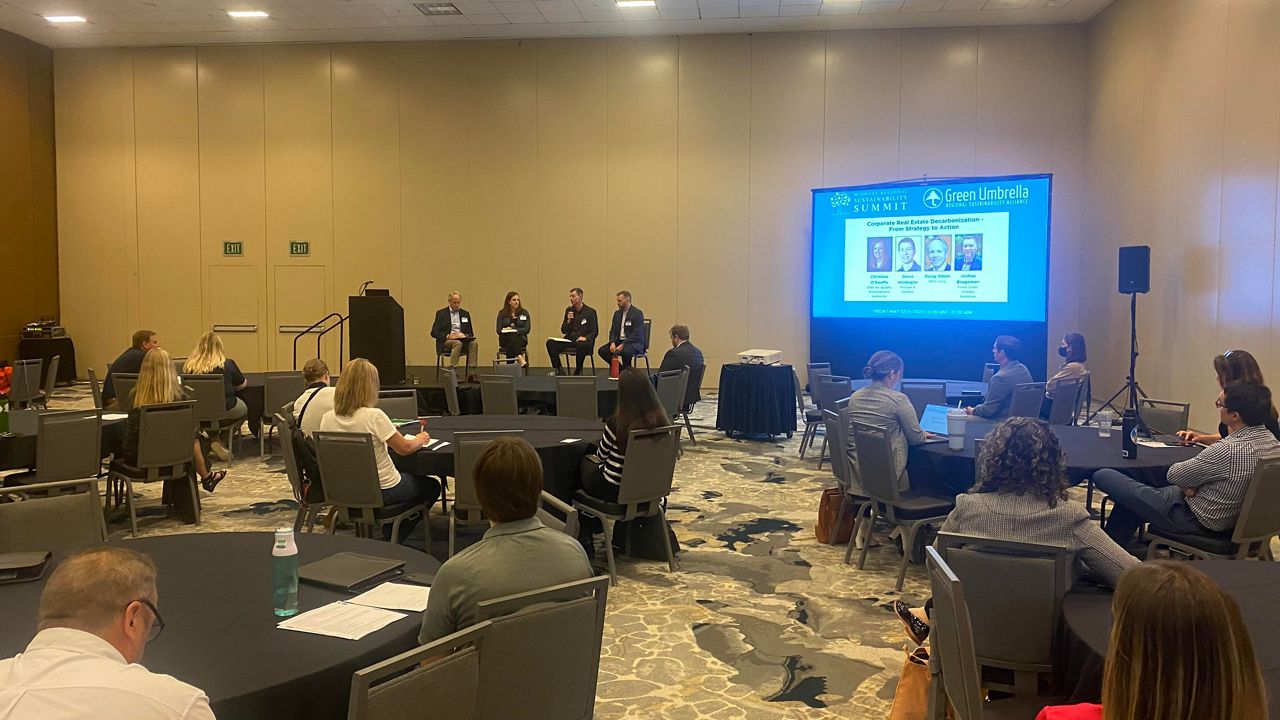
On Friday, Green Umbrella convened its 10th summit at a new, bigger location at Duke Energy Convention Center in downtown Cincinnati.

A group of 600 attendees spent the day in more than 20 breakout sessions, panel discussions and workshops. Some topics discussed included government policy, transportation, food systems, climate justice, eco-friendly infrastructure and the green economy.

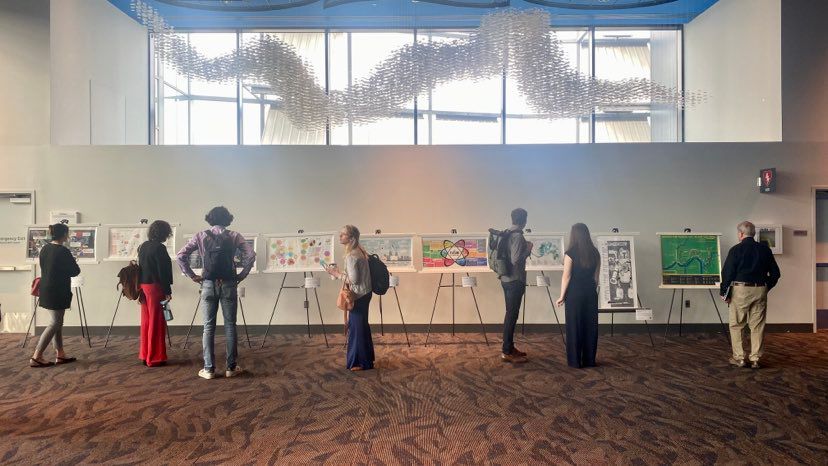
The third-floor space also featured an art show with interactive exhibits, a virtual reality space, and a healing and wellness area, according to Charlie Gonzalez, member relations and events manager for Green Umbrella.

The summit moved downtown this year because it offered a better Cincinnati experience for out-of-town guests, Gonzalez said. He also said there were people visiting from Chicago, Cleveland, Indianapolis, Milwaukee and “everywhere else in Ohio and Kentucky.”

But the move also had a practical component, Gonzalez said. This year’s registration was 50% greater than the previous record year, and they also saw increases in exhibitors and advertisers.

The third floor of the convention center served as an important gathering spot before, during and after panel discussions. (Spectrum News 1/Casey Weldon)

The third floor of the convention center served as an important gathering spot before, during and after panel discussions. (Spectrum News 1/Casey Weldon)

That growth is emblematic of the commitment the region has made to sustainability efforts, he said.

“We want people to think about possibilities of what’s possible if we get this right,” Gonzalez added. “This is a passion movement here in Cincinnati and we want to help empower people to find their place and creating a better world.”

The theme of this year’s summit is “imagine what’s possible.” It was a powerful touchpoint in the keynote speech delivered by Katharine Wilkinson, executive director of The All We Can Save Project and a bestselling author.

“The mind-boggling part of climate decision-making, and climate action is that it is happening everywhere all the time so we need leadership on this topic from everywhere,” said Wilkinson, named one of 15 “women who will save the world,” by Time magazine.

“From different departments within a city government to different corporations operating in a city to community groups and neighborhoods — there’s such a need for climate leadership and all those spaces. But it’s unusual for those different corners to be in a shared space and have a chance for dialogue and to work together,” she added. “Spaces like this, where we can have some genuine dialogue, are really important.”

Andy Holzhauser, a Green Umbrella board member, recalled attending the first Midwest Regional Sustainability Summit more than a decade ago. 

“It was a small group of passionate people,” said Holzhauser, a partner and the CFO of Cincinnati-based Donovan Energy. “You need to have that passion, but if it stays small, you’re never going to have the teach needed to make a difference.”

Over the years, the event has grown into an attraction that draws CEOs of companies, government lobbyists, climate scientists, elected officials, and community leaders. He mentioned commitments from companies like Procter and Gamble and Fifth Third Bank. But they haven’t forgotten about “Jim from down the street,” he said.

Having everyone at the table is critical, Holzhauser said, because they need every voice to speak up and weigh in to get anything done.

“There’s a lot of work to be done. To do that, the rooms must be bigger, and we have to engage more people,” he added.

Sherry Nicholas, a Cincinnati resident, made the trip downtown to learn about electric vehicle charging. Her condominium complex wants to install one, and she wanted to talk to people like Holzhauser to go through the options.

While most interested in the panel on electrification, she found discussions on food sharing and sustainability through the community.

“It was so interesting,” she said. “Glad to have stuck around for the other panels.”

Nicholas voiced excitement over the number of government leaders, corporate partners, nonprofits and subject experts in attendance. She especially appreciated the scheduled networking time before and after the event.

The event brought together field experts, politicians and residents to work on efforts to prepare the community for climate change. (Spectrum News 1/Casey Weldon)

The event brought together field experts, politicians and residents to work on efforts to prepare the community for climate change. (Spectrum News 1/Casey Weldon)

“We’re moving in the right direction,” Nicholas said of the Queen City. “I believe the grassroots movement locally is pushing corporations toward sustainability efforts as opposed to the other direction. I’m happy the big wigs are here to listen, and truly, sincerely, have a conversation.”

One of the elected officials in the room was Cincinnati Council member Meeka Owens, chair of the Climate, Environment and Infrastructure Committee. She called the summit an “important part” of the city’s climate action planning because it connects experts and advocates with the needed people and resources.

One exhibitor in the room was Blue Ocean Solids, a sustainability-focused water treatment company based in Loveland, Ohio.

Kathleen Collier, the company’s director of sales and marketing, called the Sustainability Summit a key opportunity for Blue Ocean to expand its network. She described the water treatment market as a “this is how it’s always been done” situation. The summit gave her team a chance to “meet people that are looking to do the same things we are,” she said.

“It’s just a wonderful community,” Collier added of those in attendance Friday.

This summit is a gathering of the region’s sustainability community and “thought leaders,” said Oliver Kroner, director of the city of Cincinnati’s Office of Environment and Sustainability. He described it as an opportunity to connect and hear about emerging work in climate change preparation.

He called it “energizing” to see how the different local efforts weave together and support each other.

Members of Kroner’s team were at the Duke Energy Convention Center to “share and learn,” he said. Along with elected leaders, Kroner took part in a panel on the recently approved five-year update to the Green Cincinnati Plan, the city’s climate action plan. They also discussed the many city-led and community projects underway to make it a reality.

Examples include the largest city-led solar array in the country and Cincinnati’s 2030 District, a commitment by businesses, developers and the city to cut carbon use by the year 2030.

Other members of his panel included Owens, Council member Liz Keating and Hamilton County Commissioner Denise Driehaus.

“Cincinnati continues to receive national and international attention for urban climate work. Of course, sustainability is not a competition; it’s work that requires collaboration and innovation,” Kroner said. “The summit is an opportunity to showcase all of this good work and inspire more.”

“Our goal was for everyone in attendance to walk away with a sense of hope and understanding of how they individually fit into the collective climate effort,” he added.

Filed Under: Green Umbrella In The News

West side school uses nature as a teacher in a unique way

May 10, 2023 by Krystal Gallagher

Source: WCPO

West side school uses nature as a teacher in a unique way

CINCINNATI — Over the last four years, students at nearly 20 Cincinnati Public Schools have been able to experience nature in a way they may not always get to in the city.

Recently, Rees E. Price Academy planted trees to add to the canopy at the school in East Price Hill and soon they will have an all-new outdoor garden, a space where they will learn how to grow their own food and more.

It is fitting for the school where “kindness is the culture,” and Principal Tiffani Maher said, “bringing in a garden, the culture of our teachers, cultivating that in our kids we can’t go wrong.”

This is part of a partnership with the Green Umbrella CPS Outside Impact Team.

Cynthia Walters is the Green Schoolyards coordinator.

“The main goal is to get more students outside and to create school teams, meaningful professional development, integrated curriculum, and really connect kids with nature. Not only that, but also create a pathway to add education, workforce skills development, and just really instilling for every CPS student, the benefits of tree canopies and benefits of growing food and good air quality for neighborhoods. Schools have a big, big role in doing that.”

Principal Maher said the data shows that these programs do help children.

“We are in an urban oasis if you will and every last one of our kids here has experienced some sort of complex trauma. Being outside in the garden helps them to, to relax and to be calm and to help them get their hands dirty. Getting them outside breathing the fresh air, and then learning how to grow their own food and to cultivate things that are going to bring beauty and joy to them. It was I’m just glad that they chose us to be a part of this, this wonderful movement, planting trees for the tree canopies…it’s a wonderful thing.”

Maher said it also builds community.

it helps to build community, when you have teachers as amazing as ours are, they help the children realize like if you plant a tree in your community, you can come back in 1015 years later, and say, I planted that tree and sit in second grade. And that was one of the things that we did here, they’re going to be able to come back to their school with their children, with their grandchildren. And say, we planted that tree right here when I was eight years old.

Maher added, “to be able to say I helped, and I contributed to the backyard garden or the front yard garden or my community garden. Those are life changing little nuggets that we’re planting in kids so that they will be able to move forward and do great things.”

Walter said this is just the beginning of further site improvements, school yards into parks, more visual pathways for a greener future. She wants to see it spread further.

“It needs to be a district wide effort, we have to put things in place that really sustain it, support teachers. It has to be an equitable distribution of resources. I also want to see the city involved. I really want this to be in an amazing partnership, especially with the new green Cincinnati plan. There is such potential, and we’re beginning that right now and that’s going to really set a precedence for the years to come and really inspire our next generation because they really need to be in control of what happens next.”

Filed Under: Green Umbrella In The News

Growing Green: How building up the urban canopy can help Cincinnati create a sustainable, cooler future

May 9, 2023 by Krystal Gallagher

Source: WCPO

Growing Green: How building up the urban canopy can help Cincinnati create a sustainable, cooler future

CINCINNATI — Crystal Courtney has a vision for Cincinnati’s 52 neighborhoods. As the division manager of natural resources for Cincinnati Parks, she wants to see a future with more trees, better air quality and less flooding.

“More voices saying the same thing affects change more quickly,” she said. “It just feels like the whole world is becoming more environmentally conscious.”

For the last few years, Courtney said the city conducted study after study, and talked with hundreds of residents about what they wanted to see come out of a climate action plan. What they found, is that it all starts with trees.

“To see exactly where canopy is needed to support the communities that need it most, the communities that may not have the resources to mobilize some of the benefits that come from tree planting,” Courtney said. “It’s a plan that is guiding the future of the next 10 years of how we actually build out our communities to make them more resilient long term.”

The city’s already seen a boost in tree cover, up from 38% in 2010 to 43% in 2020.

“All the neighborhoods that were below the canopy goals are all increasing as well,” Courtney said. “So we see good trends happening.”

But according to Courtney more needs to be done.

Residents from various neighborhoods across the city met in groups to create climate safe neighborhood plans. The goal, according Green Umbrella Climate Action Director Savannah Sullivan, is “to understand what their experience with environmental impacts, climate impacts are, and what solutions they want to see in their neighborhood.”

Green Umbrella brought in people from the Beekman Corridor (Millvale, South Cumminsville, North Fairmount, South Fairmount, and English Woods), Bond Hill, Roselawn Avondale, Paddock Hills, Carthage, Over-the-Rhine, West End and Camp Washington.

“We’ve engaged 11 neighborhoods so far. And what we’ve heard from residents is that they’re really experiencing flooding, not just on their property, but in their basements. So, sewer overflows are a huge concern. They’re also experiencing extreme heat, and associated air quality issues,” Sullivan said.

There are a lot of partners working to get the green plan moving. Groundwork’s Kelsey Hawkins-Johnson said, “Not only do we talk about climate change, but we do talk about historic segregation and racism as well. And what that looks like within our community, why their community looks the way it does, because of those policies. Our community engagement process focuses on these neighborhoods first because they are not only the most underserved, but they are most urgently in need of the types of resources that we can use to improve heat conditions, reduce flooding, and so on.”

Those concerns are big, over-arching ones. Anthony Smith, who was in the Beekman Corridor group, said “I got involved, because I wanted to make a change in the community and in the world itself. “

Smith said his main goals for his neighborhood is “to see more trees. I want to see more community gardens so people can get fresh fruits and vegetables. It’s coming together. But it’s coming slowly. The more people we get into it, the faster it may come to existence.”

Bond Hill’s Margaux Roberts was part of the climate advisory group and said her biggest takeaway is that her neighborhood was one of the hottest in the 52. On any given day Bond Hill and Roselawn can be 12 degrees hotter than other neighborhoods with more tree canopy.

Heat is just one part of the problem.

“We have a major problem with stormwater. We deal with flooding and that’s been a key component of some of the frustration with the residents is we need help with this, Roberts said. “So, people need to understand that trees help with that. And it’s a natural way to be able to, to help with that stormwater to help with just being able to give back to the community.”

“It’s really nice to be able to say that I’ve done something that can impact my community,” Roberts said, but she also wants to impact her 15-month-old son, “so this work is really critical to me thinking about what will be helpful to him.”

You can find more about the entire 2023 Green Cincinnati Plan here.

Filed Under: Green Umbrella In The News

Growing Green: Sustainable solutions for the future

May 8, 2023 by Krystal Gallagher

Source: Yahoo News

Growing Green: Sustainable solutions for the future

Common Orchards, part of Green Umbrella, has 30 orchards in our area with plans to do ten a year until they reach 100. “We’re trying to put it into production for community. So, like a lot of people can eat from a fruit tree, you don’t need many fruits yourself from one tree. So why don’t we plant some fruit trees and get a bunch of people together to enjoy that?” said Chris Smyth, the director of the project. “Really, we’re trying to reactivate unused or vacant spaces. Maybe a lawn next to a church or a field next to a community garden.” Smyth said that in in five to seven years, they should be producing around 1,000 pounds of food.

Filed Under: Green Umbrella In The News

‘Healing the land’: Tri-State organization plans to create 100 orchards in the region

May 8, 2023 by Krystal Gallagher

Source: WCPO

‘Healing the land’: Tri-State organization plans to create 100 orchards in the region

MOUNT HEALTHY, Ohio — For hundreds if not thousands of years, communal spaces to grow food meant camaraderie, comfort and sustainability. Now, an organization here in Greater Cincinnati wants to bring that back.

The Common Orchard Project, part of Green Umbrella, has 30 orchards in our area with plans to build ten a year until they reach 100.

“We’re trying to put it into production for community. So, like a lot of people can eat from a fruit tree, you don’t need many fruits yourself from one tree. So why don’t we plant some fruit trees and get a bunch of people together to enjoy that?” said Chris Smyth, the director of the project.

“Really, we’re trying to reactivate unused or vacant spaces. Maybe a lawn next to a church or a field next to a community garden.”

Smyth said that in five to seven years, they should be producing around 1,000 pounds of food.

“I would say it’s a really high return. But it takes patience. And if we’re investing in our places, like we’re all going to be here in five years, like let’s invest in it, plant fruit trees, and keep showing up each year.”

One orchard is growing in Mount Healthy’s Tikkun Farm. They already planted fruit trees, but the project came and added more. Staff at the farm are learning how to better care for the trees.

“So it’s good to bring the networks together and connect people in the environmental community to share knowledge,” said Isabelle Booker. She is the urban farming instructor for the job training program at Tikkun Farm. She is also now the orchard steward.

Booker said, “This year, I really hoped to focus on bringing the fruit to a free market, where we have shoppers come three times a week, and then being able to have access to produce that was locally grown here on site.

Smyth said that is another part of the process.

“We’re also trying to help people who’ve had the good intention to start fruit trees to kind of come alongside guide and mentor them and to how to better care for these trees.”

At Tikkun Farm the orchard, and the fruit borne from it in the coming years just means they can give back even more to neighbors.

“Creation care is what we consider all of this, which means healing the land,” said Booker. “So being able to educate people and get them involved in the service projects that we do around here weekly, is how we keep this sustainable.”

Filed Under: Green Umbrella In The News

Youth Environmental Council gives teens chance to weigh in on their Cincinnati future

April 20, 2023 by Krystal Gallagher

Source: Spectrum News 1

Youth Environmental Council gives teens chance to weigh in on their Cincinnati future

CINCINNATI — Thousands of environmentalists, community advocates, and business and government leaders took part in a year-long process to create Cincinnati’s new climate action policy.

But perhaps the most significant voices heard during the Green Cincinnati Plan process were those not even old enough to vote for the City Council members who approved it.


What You Need To Know

  • The formation of the Youth Environmental Council last year aimed to ensure local teens would have a voice in the Green Cincinnati Plan
  • Teens and young people will bear the biggest burdens of climate change
  • The 11-member council offered feedback, led community engagement sessions and helped craft the final 172-page document
  • One of the group’s next projects is to find ways to simplify the Green Cincinnati Plan for younger audiences

Althaea Adams-Van Schaik, Aana Shenai and Bienvenue Niyonkuru were three of the teenage leaders of the inaugural Cincinnati Youth Environmental Council (YEC).

The 11-member body — created last year by City Council and operated by Groundwork Ohio River Valley — to help offer a youthful point of view on climate change justice, sustainability efforts and overall environmental action. The group’s biggest task was working on the recently approved Green Cincinnati Plan.

Four team members formed a leadership group that continued throughout the months-long development period. Each teen went through training on community engagement, urban planning, climate science and social activism.

The YEC presented its initial findings and suggestions to City Council’s Climate, Environment and Infrastructure Committee on April 11. It’s chaired by City Council Member Meeka Owens.

“The policies we enact sometimes take a long time to actually lead to results, so these are the policies are going to be affecting our generation the most,” Shenai said. “It’s important that young people understand that fact and give their input now before it’s too late.”

Helping young environmentalists find their voice

Shenai, a 17-year-old at Seven Hills School, wants to major in environmental studies or environmental science. She joined the program to learn more about the behind-the-scenes element of creating policy and working with government officials.

One of her first assignments on YEC was to join two subcommittees for the Green Cincinnati Plan, the city’s playbook for addressing climate action. It receives an update every five years after various community meetings and feedback from residents.

Youth from the YEC and other organizations spent over 150 hours at more than 40 Green Cincinnati Plan meetings, according to Tanner Yess, Groundwork’s executive director. The teens contributed dozens of recommendations that led to the creation of 30 goals, 40 strategies and 130 actions aimed at making Cincinnati more climate resilient in the decades to come.

City Council approved the 172-page document on April 12.

“You don’t need to be a CEO or a City Council member to talk to important people like,” the 18-year-old added. “At first, I was a little intimidated, but I learned there’s no reason to be scared. We all care about our city.”

“You can make a difference no matter your age,” said Adams-Van Schaik, a Walnut Hills High School senior.

Attending those meetings helped Adams-Van Schaik learn more about the Green Cincinnati Plan — something she knew little about previously. They also connected her with City Council members, organizations such as Green Umbrella and the Ohio Environmental Council, and residents of all ages from across the city.

“The experience helped me find my voice as a resident,” Adams-Van Schaik said.

The council is led by Groundwork Ohio River Valley, an organization focused on climate justice action. The program’s Green Team youth program was the starting point for several of the members. (Photo courtesy of Groundwork Ohio River Valley)

“I felt like I was on the same level as everybody. Nobody was like, ‘Oh, look at these little environmental people. They’re so cute,’” she added. “It was like they were like talking to us like we were also professionals.”

Prior to joining the YEC, Adams-Van Schaik was a member of Groundwork’s “Green Team,” which handles more hands-on environmental tasks, such as urban agriculture and green infrastructure.

Adams-Van Schaik plans to attend Miami University in Oxford, Ohio, next year and major in botany. She’s interested in revegetation and wetland restoration and wants to learn more about natural alternatives for use in fashion and other industries.

Her interest in the environment isn’t unique among her classmates, Adams-Van Schaik said. The school has a popular Sustainability Club and a Bio-Eco Club.

“It’s good to have people who’ll be leading in the future getting involved now, so that confidence and experience we’re going to be so important,” Adams-Van Schaik said.

The importance of ‘green’ education

One of the youngest members of the YEC is Bienvenue Niyonkuru. The 16-year-old doesn’t know what profession he wants to choose. He’s debating becoming a pastor, pursuing a career in nursing or even joining the military, he said.

His passion for urban forestry attracted him to the Green Team two years ago.

“Even if we can’t vote, we can have an impact on the decisions that affect Cincinnati, and the state and possibly the world,” Niyonkuru said.

The Aiken High School student believes outreach to young people is important, and it’s something governments should start doing more at all levels. He noted his school has environmental programming, but he expressed a desire to have more such learning opportunities outside of the classroom.

Niyonkuru thinks the YEC could help amplify the Green Cincinnati Plan messaging to friends, neighbors and classmates.

“What we want is for the next generation and the generation after that, to experience what we have,” he added. “We want to help make sure they care enough about the environment to make that change.”

The initial purpose of the Youth Environmental Council was to provide input into the Green Cincinnati Plan. City Hall leaders voiced the potential of expanding the program. (Photo courtesy of Groundwork Ohio River Valley)

Youth education about this topic is something “near and dear” to the heart of Kylie Johnson, the Southwest Ohio regional field director for the Ohio Environmental Council.

Before joining the OEC, Johnson worked for The Action for the Climate Emergency, a national nonprofit dedicated to working with high school students on environmental issues.

Johnson represented the OEC on the Green Cincinnati Plan steering committee. She also helped lead the Community Activation subcommittee.

Having a unique range of voices, perspectives and backgrounds was vital to that process, Johnson said. With an emphasis on equity, the goal was to ensure it prioritized the needs of those most vulnerable to climate change.

Young people are going to bear the biggest burden, Johnson said.

“They’re also our next generation of leaders who are going to pick up the baton and continue to lead this work,” she added. “It’s really important that we’re engaging them now and educating them about the science, consequences and solutions of climate change, while also empowering them and equipping them with the tools that they need to protect their futures.”

The work isn’t over yet

Johnson attended YEC’s presentation during the Climate, Environment and Infrastructure Committee meeting. Owens opened the floor to the student to share findings and detail their work on the Green Cincinnati Plan and beyond.

Shenai suggested the document wasn’t approachable enough. She and the YEC team proposed using simplified digital assets to make information about best practices and impacts “more digestible.”

The YEC is going to play a key part in that, Owens said. Initial thoughts are for the teens to report back to City Council and take part in other programs beyond the Green Cincinnati Plan.

Her goal is for them to feel like “peers” at City Hall. 

“The work we’re doing on climate change, sustainability, resiliency — it’s all about what we’re doing now, and the environment and planet and communities were’ going to leave behind for generations to come,” Owens said.

Yess and the Groundwork team are recruiting new members to the YEC through Aug. 31. They’re adding five more spots to the council for at least the next year, Yess said.

Adams-Van Schaik will be too old to take part in the YEC next year. She’ll miss it, she said, but she believes she’s leaving the council and the city in excellent hands.

“We know we can do this,” Adams-Van Schaik said.

Filed Under: Green Umbrella In The News

The Ohio River has been named the nation’s ‘second most endangered’ waterway. So what happens now?

April 20, 2023 by Krystal Gallagher

Source: WXVU

The Ohio River has been named the nation’s ‘second most endangered’ waterway. So what happens now?

A national group focused on clean water and river health has named the Ohio River the second-most endangered waterway in the U.S.

American Rivers, based in Washington, D.C., highlighted the Ohio River in its America’s Most Endangered Rivers of 2023 report, which is available online.

The Colorado River in Arizona was listed as the most endangered river in the report.

The group describes the report as “a list of rivers at a crossroads, where key decisions in the coming months will determine the rivers’ fates.”

RELATED: Ohio River deemed ‘second most endangered’ waterway by American Rivers group

On Cincinnati Edition, we’ll discuss the factors that threaten the Ohio River and hear from advocates about how they want to see the river protected.

Then, the need to address climate change has become more urgent, with a recent United Nations climate report warning that the world is on “thin ice.” But even that stark assessment stressed that humanity still has a chance to prevent the worst harms of the changing climate.

Green Umbrella’s upcoming Midwest Regional Sustainability Summit is focusing on that collective hope and the need for action. The event on May 12 at the Duke Energy Convention Center features a plenary that will dig deep into climate justice action and possibility at the neighborhood, metro and national levels. On Cincinnati Edition, we discuss the message of this year’s summit.

Green Umbrella is a financial supporter of Cincinnati Public Radio

Guests:

  • Heather Taylor-Miesle, senior vice president of advocacy and regional conservation at American Rivers
  • Richard Harrison, executive director and chief engineer at the Ohio River Valley Water Sanitation Commission (ORSANCO)
  • Katharine Wilkinson, Ph.D., climate strategist and author, executive director, The All We Can Save Project, and this year’s keynote speaker
  • Peyton Siler-Jones, program director of Sustainability and Resilience, National League of Cities 
  • Charlie Gonzalez, member relations and events manager, Green Umbrella

Listen to Cincinnati Edition live at noon M-F. Audio for this segment will be uploaded after 4 p.m. ET.

Never miss an episode by subscribing to our podcast: 

  • WVXU Mobile App
  • iTunes
  • Stitcher
  • NPR One

Filed Under: Green Umbrella In The News

Brown Leads Bipartisan Effort to Help Ohio Farmers Grow Their Businesses & Support Local Economy

April 19, 2023 by Krystal Gallagher

Source: Senator Sherrod Brown

Brown Leads Bipartisan Effort to Help Ohio Farmers Grow Their Businesses & Support Local Economy

WASHINGTON, D.C. – Today, U.S. Senator Sherrod Brown (D-OH) hosted a news conference call to discuss his bipartisan Local Farms and Food Act, which would make it easier for Ohio farmers to sell their products locally, improving and updating Farm Bill programs Brown helped pass, based on feedback from Ohio farmers.

“We support local economies best when we produce more in Ohio – whether it’s cars or produce or beef or flowers. Ohioans shouldn’t have to buy apples from Washington when they could get them from Geauga County, or vegetables from Mexico when they could get them from a farm in Tiffin,” said Sen. Brown. “This will build on our success in past Farm Bills and make improvements to ensure Ohio farmers have the tools and support they need to sell their products in their own communities.”

Brown was joined on the call by Kristy Buskirk, the owner of Clay Hill Produce and Flowers in Tiffin, who spoke about her experiences selling her produce locally in Ohio and the importance of making it easier for Ohio farmers to sell within their communities and our state. 

“Selling directly to our consumers, mainly at farmers markets, we have been able to expand our customer bases by accepting food assistance vouchers, including senior coupons. These are such a win-win for the community. As our business grows, the funds in this bill also make expanding our sales into wholesale channels more accessible by funding the necessary infrastructure. Farming is hard enough and having support to feed our community helps both my business and my community thrive,” said Buskirk.

The bipartisan, bicameral Local Farms and Food Act would simplify applications for certain Farmers Market and Local Food Promotion Program projects, increase funding for the Local Agriculture Market Program (LAMP), reauthorize the Senior Farmers Market Nutrition Program, reduce barriers to the Gus Schumacher Nutrition Incentive Program (GusNIP), and build upon the GusNIP Produce Prescription Program, among other provisions. U.S. Senators Tina Smith (D-MN), Peter Welch (D-VT) and John Fetterman (D-PA) introduced the legislation with Brown and U.S. Representatives Chellie Pingree (D-ME) and Dan Newhouse (R-WA) introduced companion legislation in the House.

Brown introduced the Local FARMS Act of 2017 and secured key provisions from it in the 2018 Farm Bill — including, most notably, the creation of the Local Agriculture Market Program. He has talked with farmers and other agriculture representatives at roundtables around the state over the last several months as a part of the 2023 Farm Bill planning process. Brown, the first Ohioan to serve on the Senate Agriculture Committee in more than 50 years, has long been a leader for Ohio’s rural communities and will help write the upcoming 2023 Farm Bill.

This bill is a win for local farmers, consumers and the environment – I look forward to working with my colleagues to get it passed.

U.S. Senator Tina Smith (D-MN)

“Agriculture is the backbone of Minnesota’s diverse economy, and all Minnesotans should have access to healthy, local food,” said Sen. Smith. “This bill would support local farmers and producers while making it easier for them to sell their products to local markets. This bill is a win for local farmers, consumers and the environment – I look forward to working with my colleagues to get it passed.” 

“Vermont’s farmers work hard to produce world class products that are at the core of our economy and culture. But many Vermont families can’t access locally grown food, and small and mid-sized farms often struggle to bring their products to market. The Local Farms and Food Act will help bridge the gap between farms and families, helping our farmers grow their businesses and expanding access to nutritious, local food. I’m proud to join my colleagues to support this bipartisan, bicameral, common-sense measure,” said Sen. Welch.  

“This bill invests in rural communities by increasing access to nutritious, locally grown food, and cuts red tape to make it easier for farmers to bring their products to market,” said Sen. Fetterman. “It’s a slam dunk, and let’s get it done.”

“More and more consumers want to know where their food comes from, who grew it, and how it was produced. Despite this growing demand in Maine and across the country, it’s estimated that food in the United States travels roughly 1,500 miles from farm to plate. We can and must do more to reduce that distance and build out local food systems,” said Rep. Pingree. “My bipartisan Local Farms and Food Act is a win all around – it provides resources for local farmers to bring their products to market, it helps ensure local communities have access to healthy foods, and it reduces our environmental footprint by encouraging more direct to consumer food purchasing.”

“Central Washington is one of the most agriculturally rich and diverse regions in the United States. To continue our support for local and regional food systems, we must ensure our farmers have the necessary resources to bring their products to market so people are able to enjoy the delicious food grown right in their own communities. I am proud to introduce the Local Farms and Food Act that will strengthen support for our growers and help people gain access to locally grown food,” said Rep. Newhouse.

The legislation is endorsed by the Ohio Ecological Food and Farm Association, Ohio Farmers Union, the Appalachian Center for Economic Networks, Ohio Food Policy Network, BIPOC Farming Network, Green Umbrella, National Sustainable Agriculture Coalition, Farmers Market Coalition, Fair Food Network, Union of Concerned Scientists, Wholesome Wave, American Farmland Trust, Agricultural Viability Alliance, American Sustainable Business Network, Kiss the Ground, Regenerate America, Academy of Nutrition and Dietetics, Farm Action Fund and Greater Cincinnati Regional Food Policy Council.

“Better infrastructure and greater investment in regional food systems are needed to build a more resilient supply chain,” said NFU President Rob Larew. “The Local Farm and Food Act puts power back into the hands of farmers, ranchers, and their communities. National Farmers Union is happy to support this bill.”

“The Ohio Ecological Food and Farm Association (OEFFA) has been meeting with members and partners throughout the state of Ohio since last fall to talk about what is needed to continue the progress on local and regional food system development in the upcoming farm bill,” said OEFFA Policy Director Amalie Lipstreu. “After hearing from Senator Brown’s office and seeing the Local Farms and Food Act, it is clear they are attuned to what is needed to continue to grow more resilient and healthful food systems.”

Filed Under: Green Umbrella In The News

Green Cincinnati Plan update focuses on climate equity, sustainability, innovation, and engagement

April 11, 2023 by Krystal Gallagher

Source: Soapbox Cincinnati

Green Cincinnati Plan update focuses on climate equity, sustainability, innovation, and engagement

If you live in Cincinnati, chances are you’ve got a favorite green space. Maybe you love walking with dogs and friends on the trails in Mt. Airy Forest. Or you grew up having picnics in historic Eden Park after visits to the conservatory. Perhaps you prefer the wildflower garden at Farbach Werner Nature Preserve.

With 115,000+ acres of protected green space, whatever you prefer to do in nature,
Cincinnati has an area for you. However, being a sustainable city involves more than the amount of green spaces. Sustainability can impact everything from the amount households pay for utilities and the supply of recycled materials businesses can use to build and package products to the average life expectancy in different neighborhoods and the food families have available for their tables.

With the 2023 unveiling of the Green Cincinnati Plan on April 3, the city is working to continue and defend its “most sustainable city” title. But sustainability is never a goal accomplished solo. This plan is a sustained effort from multiple organizations, businesses, and community members.

Community Engagement
The Green Cincinnati Plan is updated every five years. In 2018, 18 community members responded to the call for feedback. City residents have become increasingly involved in the environment in recent years. Over the past year, members of the GCP steering committee engaged with 50 out of 52 neighborhoods, with over 600 people responding. Thousands of ideas were submitted during 2022.

Council Member Meeka Owens led the plan’s steering committee.

“By the people, for the people” is how Oliver Kroner, director of the Office for Environment and Sustainability described the 2023 plan. One major factor in getting city residents involved was the commitment of community partners throughout the city.

Council Member Meeka Owens led the steering committee. Owens said the plan revolves around “resilience, sustainability, and equity.” The Steering Committee included organizations focused on health, housing, economic development, food, community development, and education.

Sustainability and Entrepreneurship
Cincinnati’s annual Rethink Recycling Hackathon brings innovative ideas around sustainability to the city. The 2023 hackathon is focused on the areas of tech and policy. Cintrifuse in Over-the-Rhine partners with the city to bring together community members, corporate partners, and civic leaders.

At the 2022 Hackathon, one startup, The Cleanup Collective, came out of this challenge with the idea of a turnkey cart that makes litter pickup easy. This team received a grant from Main Street Ventures and entered the accelerator, SustainableCincy. SustainableCincy is the only accelerator in Cincinnati exclusively for early- and mid-stage green/clean tech and innovation.

Flywheel Social Enterprise Hub runs this accelerator program and noted that innovation and entrepreneurship can play roles in advancing the goals of the green plan, and the plan was amended to include support for advancing innovation.

Industries from business development, sanitation, real estate, nonprofit, and more are reflected in and connected to the 100+ actions and 40 strategies in the plan.

Climate Equity
In 2021, the City of Cincinnati’s Office for Environment and Sustainability partnered with Green Umbrella, Groundwork Ohio River Valley, and University of Cincinnati to develop the Cincinnati Climate Equity Indicators Report. Climate change doesn’t affect everyone in a community the same. Where vulnerabilities and issues already exist, the climate crisis amplifies them.

Transportation to mold in the home to being evicted are all issues Cincinnati residents face. Neighborhood residents—the experts on how the climate crisis magnifies problems in their neighborhood—gave their input on the impact of climate.

The Equity Indicators report, with 55 different metrics, helped both city and community partners develop many of the strategies outlined in the Green Cincinnati plan. These strategies include addressing the energy burden in low-income households and launching a countywide emergency communication system. Feedback gathered from public sessions formed the framework of an action plan, and community members sent in hundreds of suggestions and comments.

The Future of Sustainability
With the federal government making funding available, strong community support, and robust leadership from the city, Cincinnati seems set to seize the moment of opportunity. As one resident told me, “The secret sauce in Cincinnati is the people. When you put great people who have entrepreneurial spirits and pride in their city together, you get practical solutions that actually work for the community.”

Filed Under: Green Umbrella In The News

Volunteers plant fruit trees, creating an urban orchard

April 10, 2023 by Krystal Gallagher

Source: Spectrum News 1

Volunteers plant fruit trees, creating an urban orchard

CINCINNATI — It may just look like a group of people planting trees, but the effort at Cincinnati’s Camp Washington Urban Farm is much more than that.


What You Need To Know

  • The Common Orchard Project coordinated a fruit tree planting in Cincinnati’s Camp Washington Urban Farm
  • Inmates from the neighboring River City Correctional Facility will help to care for the trees
  • The nonprofit “One Tree Planted” helped to sponsor the project
  • Employees from Fifth Third Bank participated as volunteers

“Hopefully, we’re creating these nodes of connection that thread our Cincinnati together,” said Chris Smyth, the director of Common Orchard Project, who coordinated the effort. They’re an affiliate of The Green Umbrella, Regional Sustainability Alliance and The Giving Grove, a network of more than 380 orchards across the U.S.

The effort received some funding from One Tree Planted, a nonprofit that has planted about 93 million trees in more than 80 countries. Smyth said the effort is growing in Cincinnati and across Ohio.

“There’s a lot of systemic changes that need to happen in Cincinnati to create a more resilient sustainable community and the orchard community is just part of that,” he said.

Some of the volunteers are employees at Fifth Third Bank.

“It isn’t just enough to write a check,” said Christian Adams, assistant vice-president of Digital Media and ECommerce. “We have an army of volunteers that truly care about their local communities.” 

Smyth taught about more than a dozen volunteers how to plant apple, pear and other fruit trees at the urban farm, which is next to the River City Correctional Facility. Smyth also coordinates with inmates and employees of the facility in caring for the trees and plants.

“Every time we work with River City Correction, the guys are fantastic,” Smyth said. “Getting outdoors is incredible for them they’re just so grateful working with their hands, and also call to mind what’s next here how could this be a job or a craft that you pick up after you leave.”

Adams said the larger community also will benefit from the project.

“Whether it is planting trees that bear fruit to address food deserts or revitalization and beautification efforts organizations like The Common Orchard Project make a real economic impact to the underserved surrounding areas,” he said.

At its most basic level, the physical act of planting trees also has its benefits for the volunteers.

“It brings joy and peace when I can be out here digging around, planting, weeding, doing what needs to be done,” said volunteer Jessica Schultz, who came on her own from Madeira.  

“I think I wanted to be out here today just because it’s part of the community and we’re building something that will give back to everybody,” Schultz said.

Volunteers opportunities will continue throughout the spring and summer, Smyth said. Information is available on the Common Orchard website.

Filed Under: Green Umbrella In The News

  • « Previous Page
  • 1
  • …
  • 5
  • 6
  • 7
  • 8
  • 9
  • Next Page »
Green umbrella Logo
  • Careers

  • Contact

  • FAQs

stay connected

subscribe to our Newsletters
© 2026 Green Umbrella. All Rights Reserved.
Privacy Policy · Website by Wonderly.