How Cincinnati’s Climate Safe Neighborhoods Partnership promotes climate equity
By Green Umbrella
Published March 13, 2023
Join us and act against climate change! Become a member today.

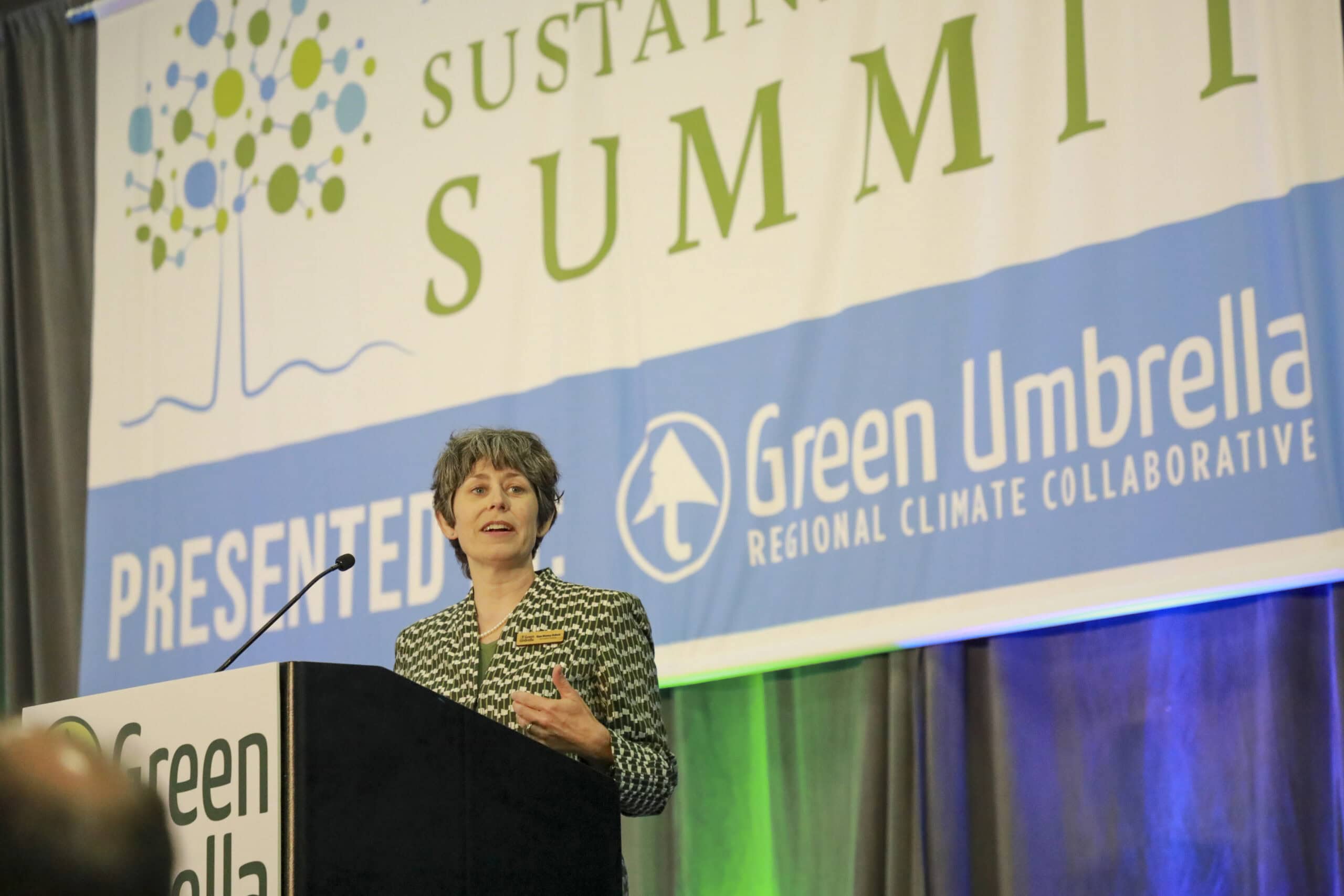
As climate impacts intensify – with more frequent extreme weather, environmental stress and uncertainty – communities across the United States face mounting challenges.

Source: Movers & Makers
As climate impacts intensify – with more frequent extreme weather, environmental stress and uncertainty – communities across the United States face mounting challenges. Funding cuts, political shifts and social complexities compound the strain.
For Ryan Mooney-Bullock, executive director of Green Umbrella, the Tristate’s regional climate collaborative, this year has been especially difficult. “The past five months have been harrowing for folks working in environmental justice, climate action and conservation,” she said, noting that governments and groups like hers have seen grants frozen or cut without explanation.
“They have lost critical staff capacity with the firing of AmeriCorps volunteers. They face more demands amid federal instability,” Mooney-Bullock added. “But they understand that now, more than ever, they need to be connected to and learning from others who are leading at the local level.”
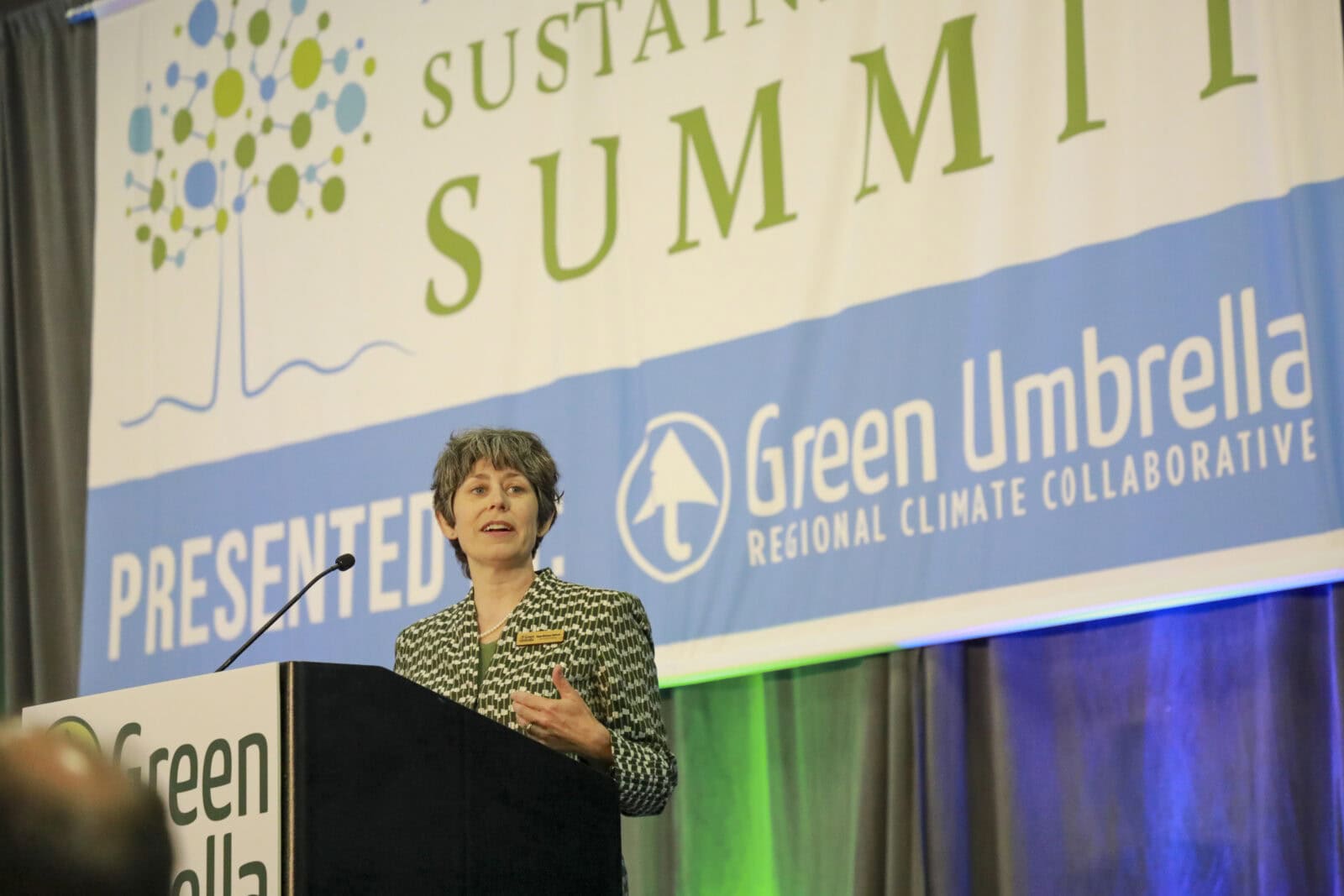
Amid those challenges, Green Umbrella again hosted its Midwest Regional Sustainability Summit to create a space for diverse voices to connect, share solutions and build momentum for a more resilient future.
In its 12th year, the summit drew hundreds of scientists, activists, artists, business leaders, students and policymakers from across the region. This year’s daylong conference in Sharonville featured 95 speakers, 46 exhibitors and 40 research displays. More than 600 people attended.
“It was inspiring to share the day with 600 others continuing this work, even when the path forward feels obstructed,” Mooney-Bullock said.
In recent years, the summit has expanded beyond panels to include art shows, poster sessions and performances, reflecting the broad, creative nature of sustainability work. The event also honored regional innovators with awards recognizing significant contributions.
“This summit isn’t just an event – it’s a catalyst for collaboration and collective action,” Mooney-Bullock said. “It brings together people from all sectors and backgrounds, creating a powerful space where stories inspire solutions and partnerships drive change.”
This year’s theme, “Sustainable Stories,” highlighted resilience and innovation, emphasizing the need to listen to diverse voices – especially Indigenous communities with generations of ecological knowledge.
The audience included participants from various backgrounds and perspectives, with notable representation from Indigenous people.
Several Indigenous leaders joined panels, and keynote speaker Lyla June Johnston – an Indigenous musician, scholar and community organizer of Diné (Navajo), Tsétsêhéstâhese (Cheyenne) and European descent – addressed the crowd. Johnston said she hoped to learn from the local Myaamia Nation.
“Events like the summit are important because they help us garden the mind,” Johnston said. “Our thoughts shape our reality, and when we cultivate our thinking – rooting it in generosity, humility, compassion and the intelligence to care for the Earth, we can go out into the world and create change.”
“I hope that they take away that Indigenous nations possess a wealth of ecological sciences that could truly benefit the sustainability movement today,” she continued. “It’s important to honor Indigenous sciences, to learn from them, and hopefully to integrate them into our future solutions.”
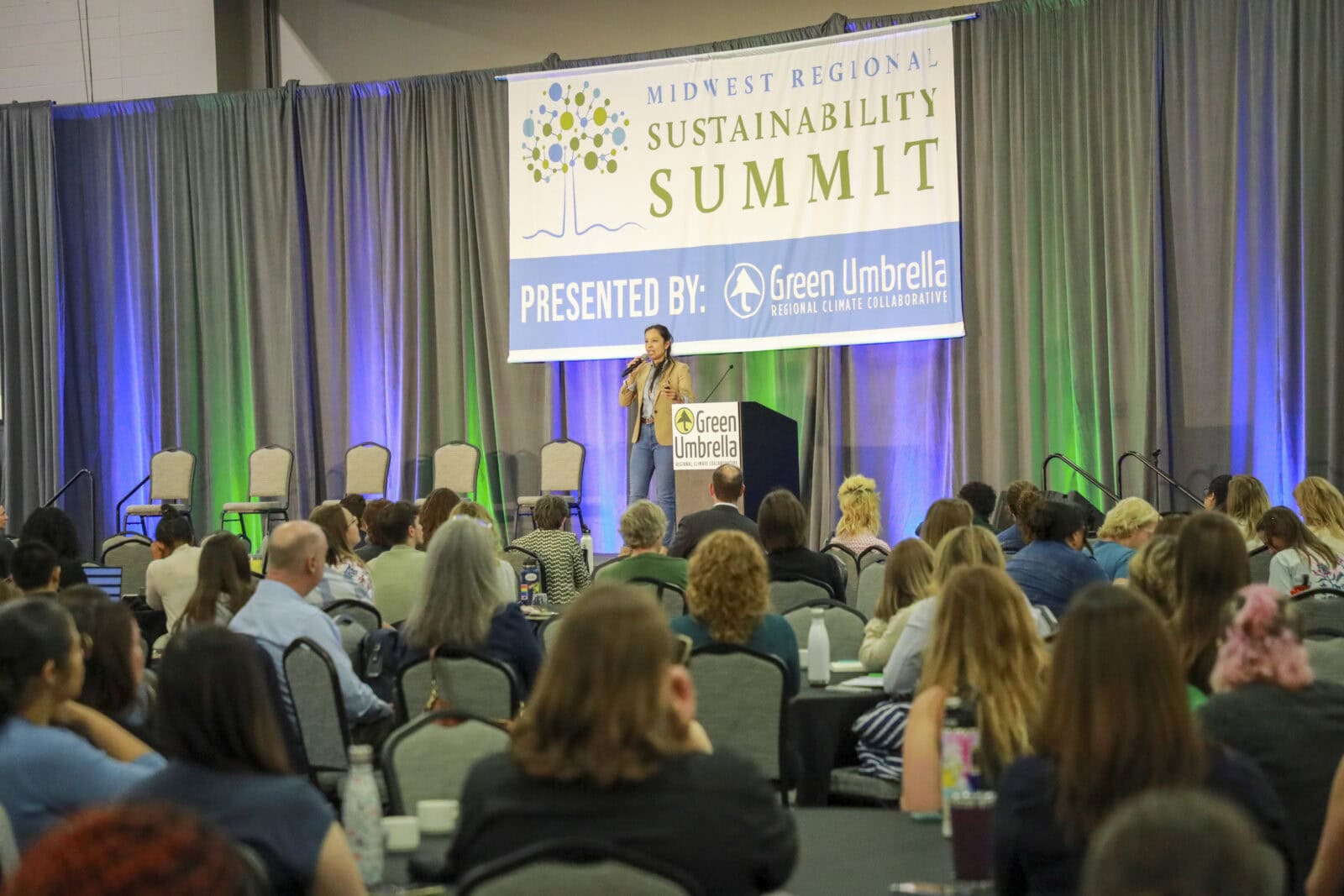
Johnston said sustainability means participating in ecosystems, not conquering them. That shift, she added, presents both a challenge and an opportunity.
The message resonated across generations. Adair McWilliams, a Ph.D. student at the University of Cincinnati, attended with students studying heat-related health impacts in older adults. They found the keynote “really inspirational,” especially its mix of Indigenous knowledge, history and optimism.
“It was informative about Indigenous practices and the history of agriculture and sustainability, but also really hopeful,” McWilliams said. “There’s always moments where we maybe regress or something goes wrong … but we always manage to persevere.”
One of those students was Jessea James, a summer researcher at UC’s Climate and Health Department. James appreciated how ancient practices connected to modern challenges. She also drew inspiration from a session on climate fiction, which gave her “new ideas on how storytelling can drive awareness and action.”
James plans to apply climate-smart ideas in her writing and studies in environmental law.
“For me as a young individual … it’s very important for people our age to know what’s going on in this country and in our generation,” she said.
Medical student Grace Roudebush focused on how climate impacts children. The future pediatrician said the summit helped her think more broadly about how her work could contribute to those efforts.
“It was interesting to hear how I, even just as a consumer, can make more sustainable choices,” Roudebush said. “So that was something that I know I can take back to my friends and family.”
The summit also spotlighted the role of business and policy in climate solutions, with local innovation on display, from textile sustainability to solar energy.
Maggie Herms and Lauren Thomas of Interface, a national flooring company, were struck by discussions on textile waste.
Reflecting on the keynote, Herms said, “Oh my gosh, the whole use of fire to restore soil … she mentioned how the bird rolls around in the ash because of the carbon it contains. It was just kind of like a full circle moment for us.”
After the speech, she began thinking about ways to collaborate with local nonprofit Sew Valley to educate local designers on alternatives to fast fashion, like mending or swapping clothes.
“Textiles are not recycled, only 1% are, we learned,” she said.
Christian Koch, Midwest policy manager for a sustainability nonprofit, spoke on the Ohio Business Energy Partnership and shared insights from his work with the Ohio Business Energy Coalition.
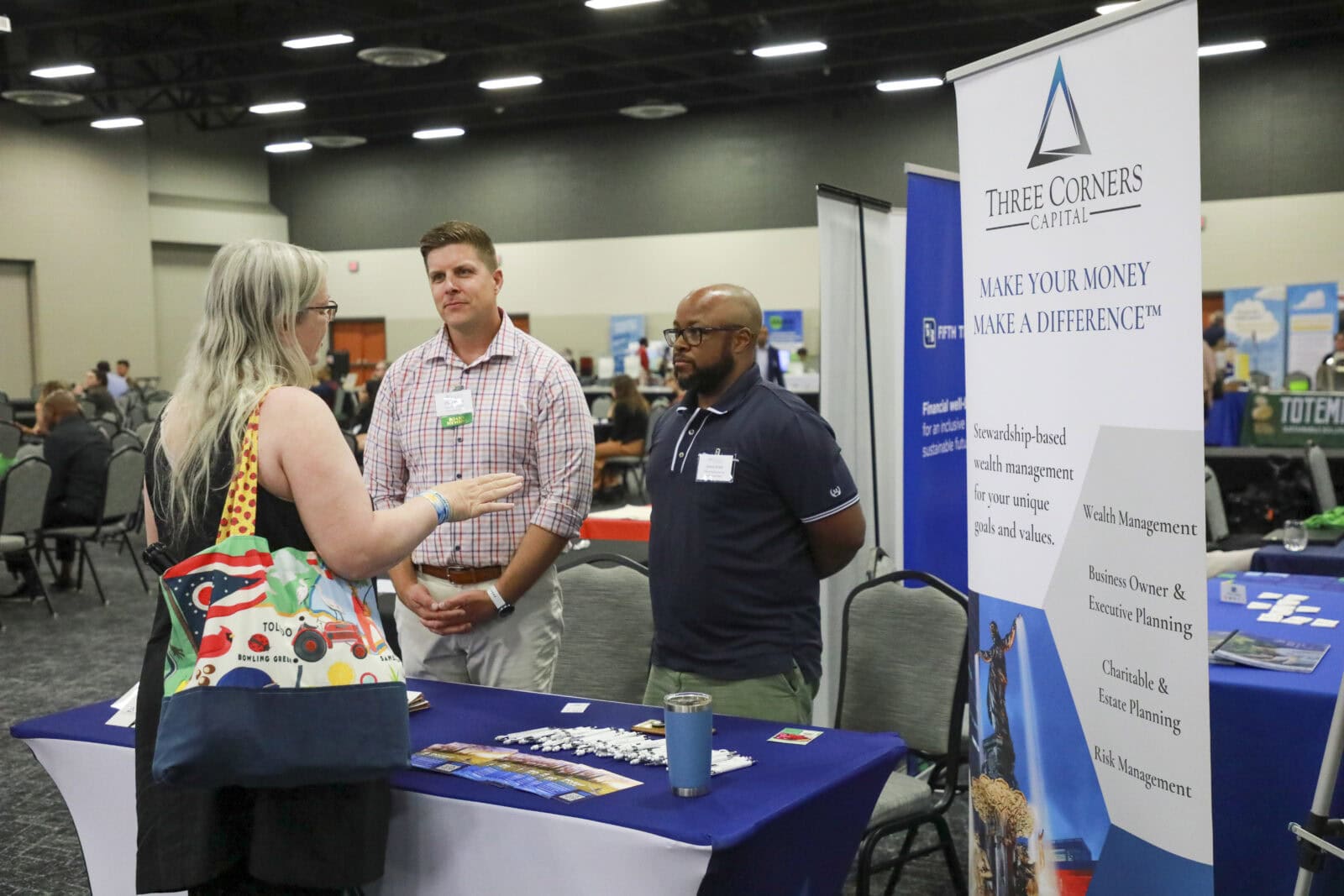
“I hope attendees took away the idea or understanding that businesses are still committed to sustainability and climate action – that they’re paying close attention to what’s happening in Ohio and across the Midwest,” Koch said.
He emphasized the need for cross-sector collaboration and said he wants to build stronger partnerships, especially with those working in environmental justice.
“We need to find opportunities, identify common ground, capitalize on those opportunities, and work together,” Koch said. “We all have more in common than we think.”
Despite the scale of climate threats, the summit offered a hopeful glimpse into grassroots innovation. Jacob Schwemien, a self-described concerned citizen, praised local solar initiatives and education efforts from organizations like Hamilton County ReSource, which promotes waste reduction and recycling.
“It’s really great to see the passion of all of these local leaders to attack those problems and improve the world around them,” he said. “Especially in a time when some of that work is either not well funded or politically challenging.”
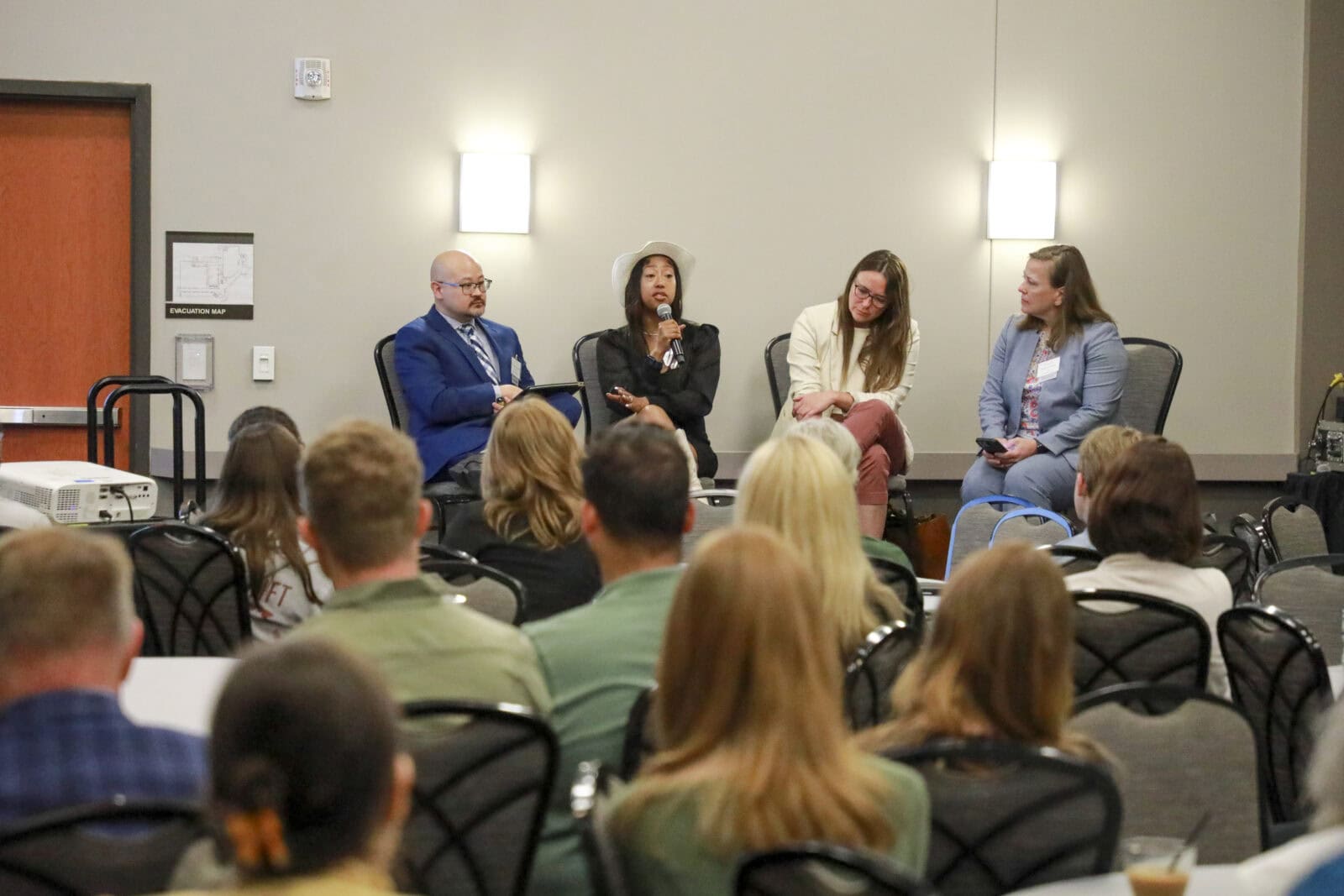
Green Umbrella’s Climate Action Fellows and partners shared updates on local plans and projects. The organization will also launch a 25-Communities cohort this summer to expand local government leadership on climate issues.
Mooney-Bullock called the initiative a way to “move beyond conversation” toward “concrete local leadership and climate resilience.”
“We’re building a network of empowered communities ready to face climate impacts head-on,” she said. “And as we welcome new residents displaced by climate change, we have the chance to redefine what it means to be a vibrant, inclusive region.”
Green Umbrella members also have access to our members-only newsletters and e-blasts. Join today to receive these perks!

By Green Umbrella
Published March 13, 2023

By Green Umbrella
Published May 28, 2025

By Green Umbrella
Published June 3, 2024