Meet the 2025-26 Climate Research Incubator Cohort
By Kelly Morton
Published November 5, 2025
Join us and act against climate change! Become a member today.

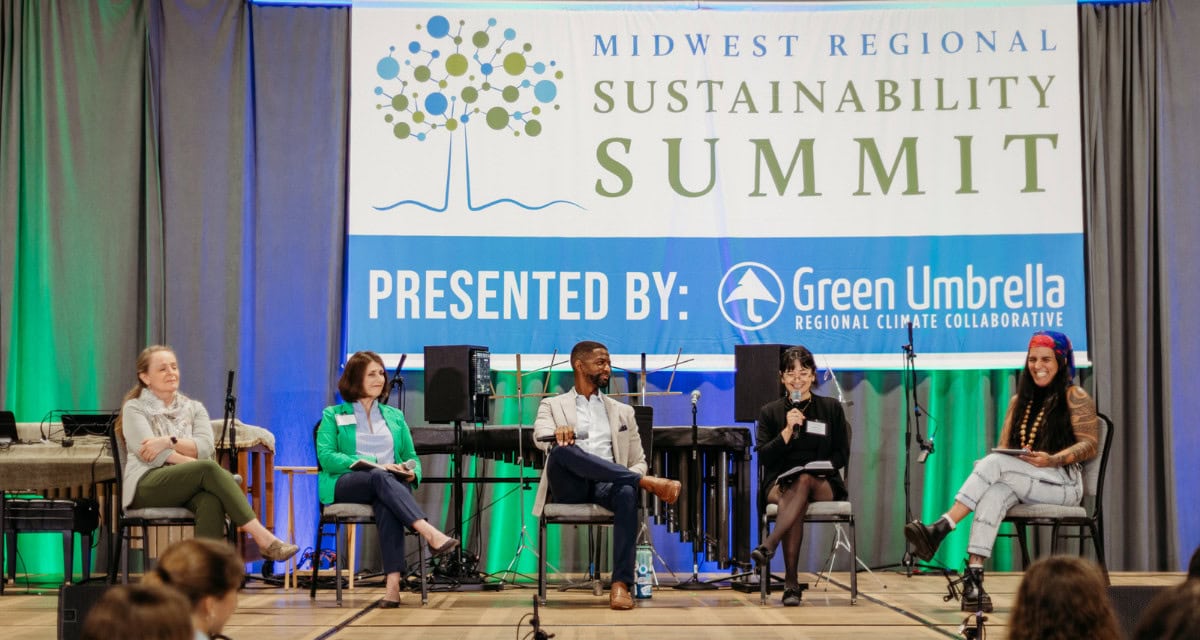
Having a sustainability conference at the beginning of summer feels appropriate. As we approach the hottest months of the year, it’s impossible to ignore the climate’s impact on our lives – or our lives’ impact on the climate.

Having a sustainability conference at the beginning of summer feels appropriate. As we approach the hottest months of the year, it’s impossible to ignore the climate’s impact on our lives – or our lives’ impact on the climate.
Green Umbrella, Greater Cincinnati’s Regional Climate Collaborative, just hosted their 13th annual Midwest Sustainability Summit on June 12 at the Sharonville Convention Center. The conference draws 600 people from across the region for 20 breakout sessions, exhibitor booths, live performances, academic poster displays, an electric vehicle showcase, and more.
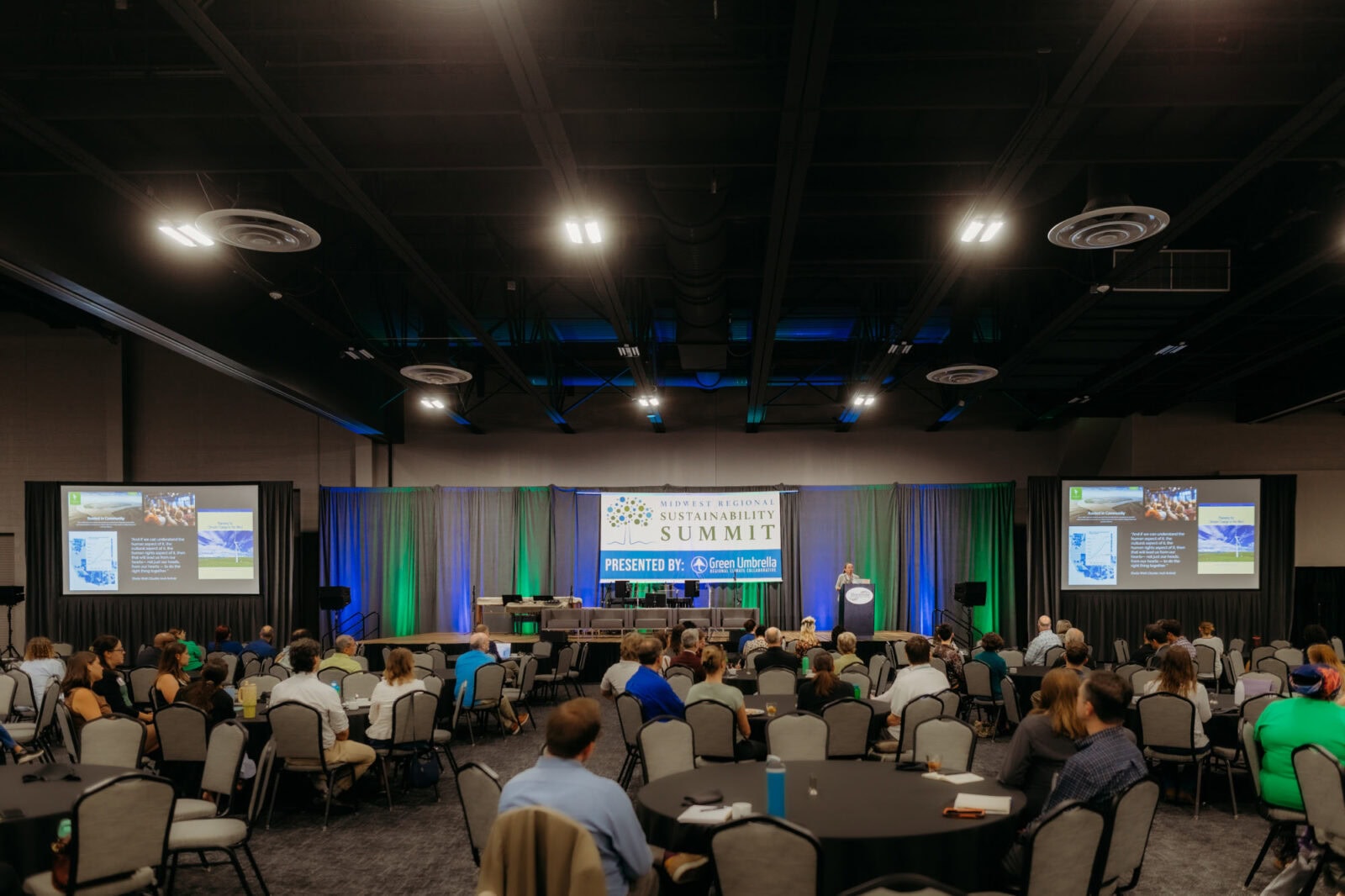
The theme for the Summit was Adapt Today, Thrive Tomorrow, an acknowledgement of the metaphorical and literal changing tides around climate change. This choice was intentional, says Summit lead organizer, Charlie Gonzalez, who is also the Director of Engagement and Strategic Partnerships for Green Umbrella. “Across the Midwest, communities are already dealing with extreme weather, shifting economies, and growing social and political divides,” says Gonzalez. “To thrive tomorrow, we must ignite real change. Working together is how we have an effective and lasting impact.”
Dr. Rebecca Carter, former Director of Climate Adaptation and Resilience at the World Resources Institute, was the Summit’s keynote speaker this year. Her morning keynote kicked off the day with a reminder that while climate change is a global problem, local action has a real impact on lives everyday. “What happens locally matters a great deal,” said Dr. Carter. “The work that’s being done in communities, and by individuals and organizations, is vitally important to helping us build the resilience we need.”
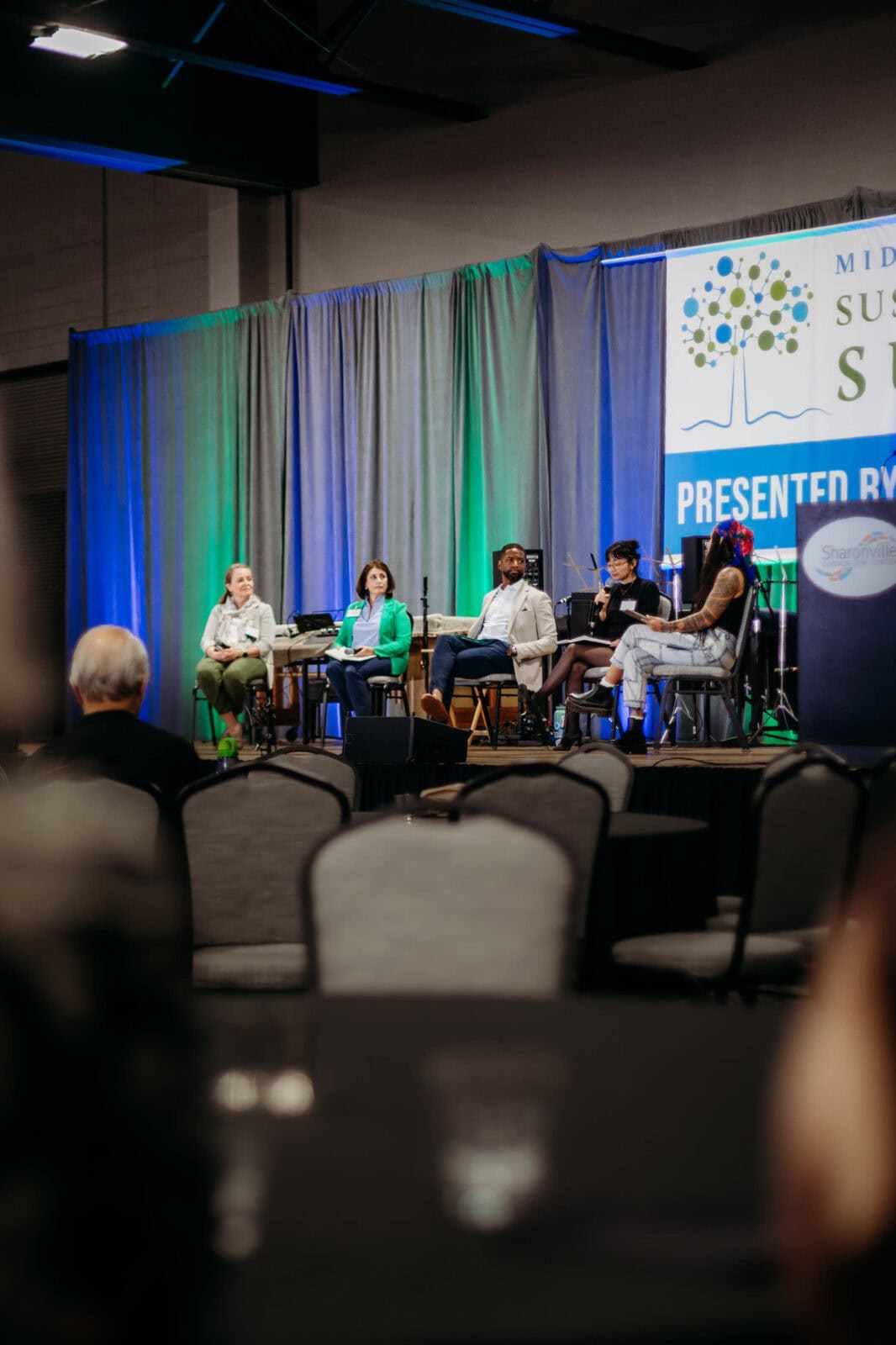
The plenary panel echoed this theme with a focus on the Midwest, discussing resilience and building thriving systems that endure. In addition to Dr. Carter, plenary speakers included Tremaine Phillips from Third Coast Strategies, Elizabeth Riggs from American Rivers, Gaby Roque from National Partnerships for New Americans, and Briana Mazzolini-Blanchard from the Urban Native Collective, who served as the panel’s moderator. “This conversation challenges attendees to think beyond surviving disruption,” Mazzolini-Blanchard said of the panel. “Instead, we invite you to imagine building systems designed to honor our shared well-being and the enduring vitality of the place we call home.”
Elizabeth Riggs’ work with American Rivers is part of what she called the “river movement”: protection and restoration of the country’s rivers.
“Our rivers – and the Great Lakes – are at risk from climate change, pollution, drought, flooding, large water users, and loss of natural habitat,” said Elizabeth Riggs during the panel. “Clean water isn’t a luxury, it’s a right that belongs to all of us. When we focus the public and decision-makers on our shared values, we can make sure our communities have enough clean water, and we can keep people safe in the face of violent weather – building a broad, nonpartisan river movement.” In 2023, American Rivers named the Ohio River the second most endangered river in the country, citing industrial pollution as the primary threat to the Ohio, which provides drinking water for over five million people.
Breakout sessions at the Summit narrowed the lens even further, with speakers on topics that are driving conversation and action in our region today, from affordable energy solutions and data center policy to brownfield revitalization and green workforce development. A session called “From Collaboration to Adaptation: Building a Thriving Future” highlighted hyperlocal case studies of partnerships and projects that have a big footprint: the Avondale Greenspace & Air Quality Initiative; community adaptation efforts in the West End neighborhood of Cincinnati; and Community Land Trust initiatives focused on equitable development and neighborhood stability.
Workshops were also offered throughout the day, a notable one being “Harnessing the Power of Storytelling to Build a Resilient and Welcoming Region” which focused on humanizing the hard realities of populations displaced by climate disaster and how communities can foster belonging for new and existing residents. “Climate action isn’t just about investing in infrastructure, but strengthening resilience through communication, social cohesion, and welcoming systems for current and future residents alike,” said Van Sullivan, Green Umbrella’s Interim Executive Director. “By hosting interactive, skill building sessions with attendees from across the Midwest, Green Umbrella is helping foster intentional investment in connection, preparedness, and equitable systems.”
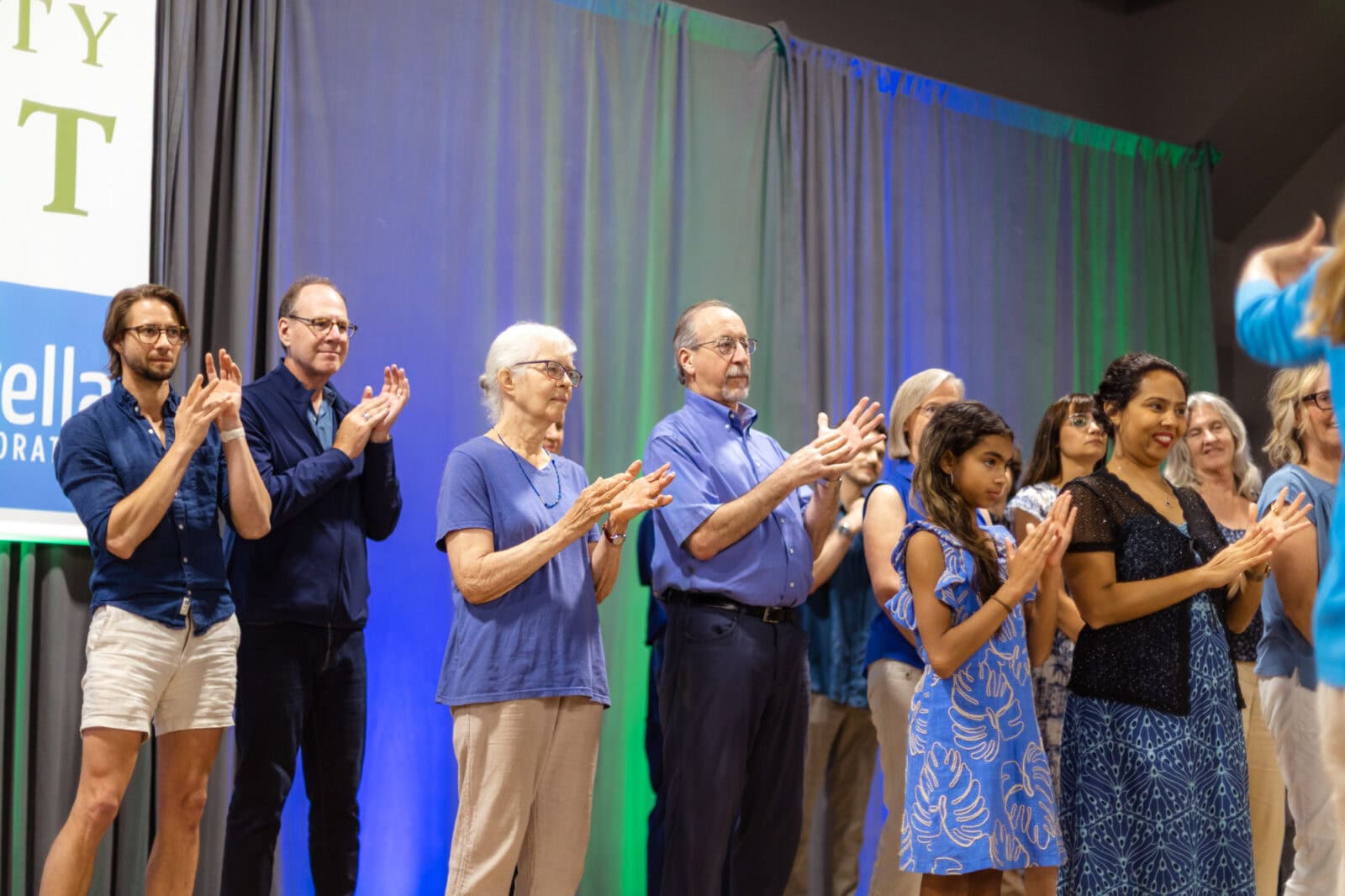
The Midwest Sustainability Summit has expanded its offerings year after year. In 2025, the addition of a meditative Grounding Space offered respite between sessions. This year, a storytelling booth was added to share attendees’ experiences at the Summit, throughout Cincinnati Climate Week, and of climate change in general. Its presence was a callback to the 2025 Summit theme of “Sustainable Stories”, which invited attendees to share their stories and successes for connection and celebration. “People asked to hear stories just as often as they wanted to share their own, which surprised me,” said Kelly St. Charles, the Summit storyteller and Green Umbrella’s Communications Manager. “We’re all hungry for connection. Stories are a way to build bridges and bring us together.”
Some of the stories told at the Summit storytelling booth include an artist who accidentally created a community in his neighborhood by sharing his garden’s bounty; an alternative energy enthusiast who helps neighbors during power outages with his home’s solar panels; and a farmer who, in his search for affordable refrigeration storage for his produce, accidentally creative an inexpensive, innovative refrigeration technique that is being replicated on farms in Senegal. The stories shared at the Summit storytelling booth are being used to build Greater Cincinnati’s first Climate Storybank, which will be available on Green Umbrella’s website later this year. (You can share your own story here.)
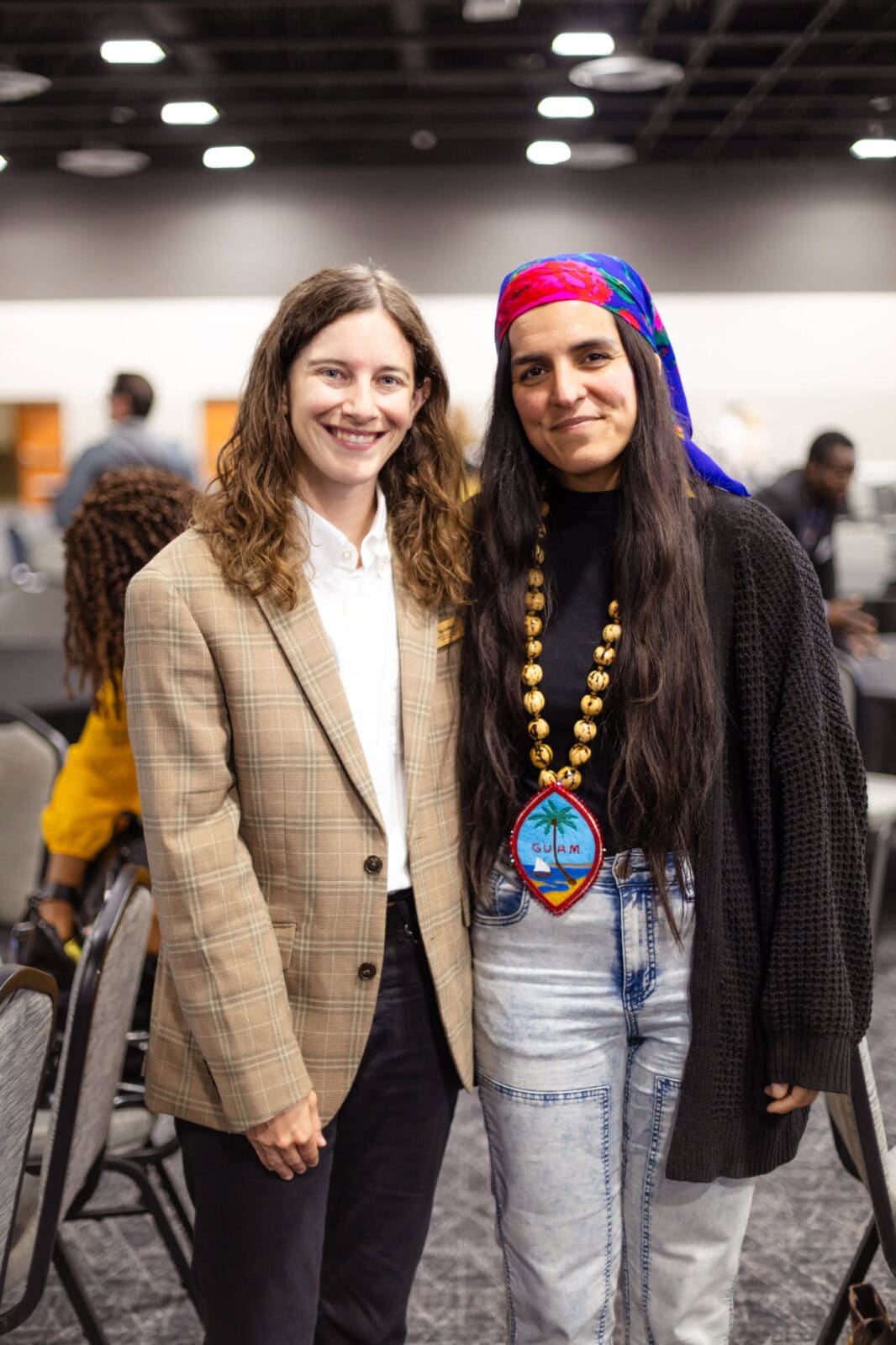
Angela Betancourt was a Summit presenter at the Short Talk Series breakout session, speaking on communication as climate infrastructure and how climate work can fail because the message doesn’t reach the people who need it. She was inspired by how the people and presenters at the Summit aren’t just talking about climate action – they’re already doing the work and sharing their results for an even bigger impact. “I was blown away,” she said. “These ideas are already in practice and it’s wonderful … I think the whole country needs to know about the Summit.”
Betancourt wasn’t the only one excited by local climate action leadership on full display at the Summit. It was Dr. Carter’s first time in Cincinnati, and she was impressed by the region’s deep climate work. “The Midwest has lessons to teach the world,” she said. “There is so much … leadership being shown, so much innovation, that I think the world would be missing out if they didn’t hear more about what’s going on in the Midwest.”
Urban Native Collective’s Briana Mazzolini-Blanchard summed up the message of the 2026 Midwest Sustainability Summit with her closing words at the plenary panel:
“What I’m taking from today is that resilience is not a single project, a single policy, a single grant, or a single sector. It’s a way of making decisions. It is what happens when energy systems, water systems, food systems, migration systems, land-use decisions, and community relationships are held together … We cannot afford to look only at our screens and our data points. We must look up, listen, and ensure that community wisdom truly shapes the path forward.”
Green Umbrella members also have access to our members-only newsletters and e-blasts. Join today to receive these perks!
By Green Umbrella
Published March 12, 2026

By Nobi Kennedy
Published August 30, 2024