Join us and act against climate change! Become a member today.

Better Compost Is Worth It
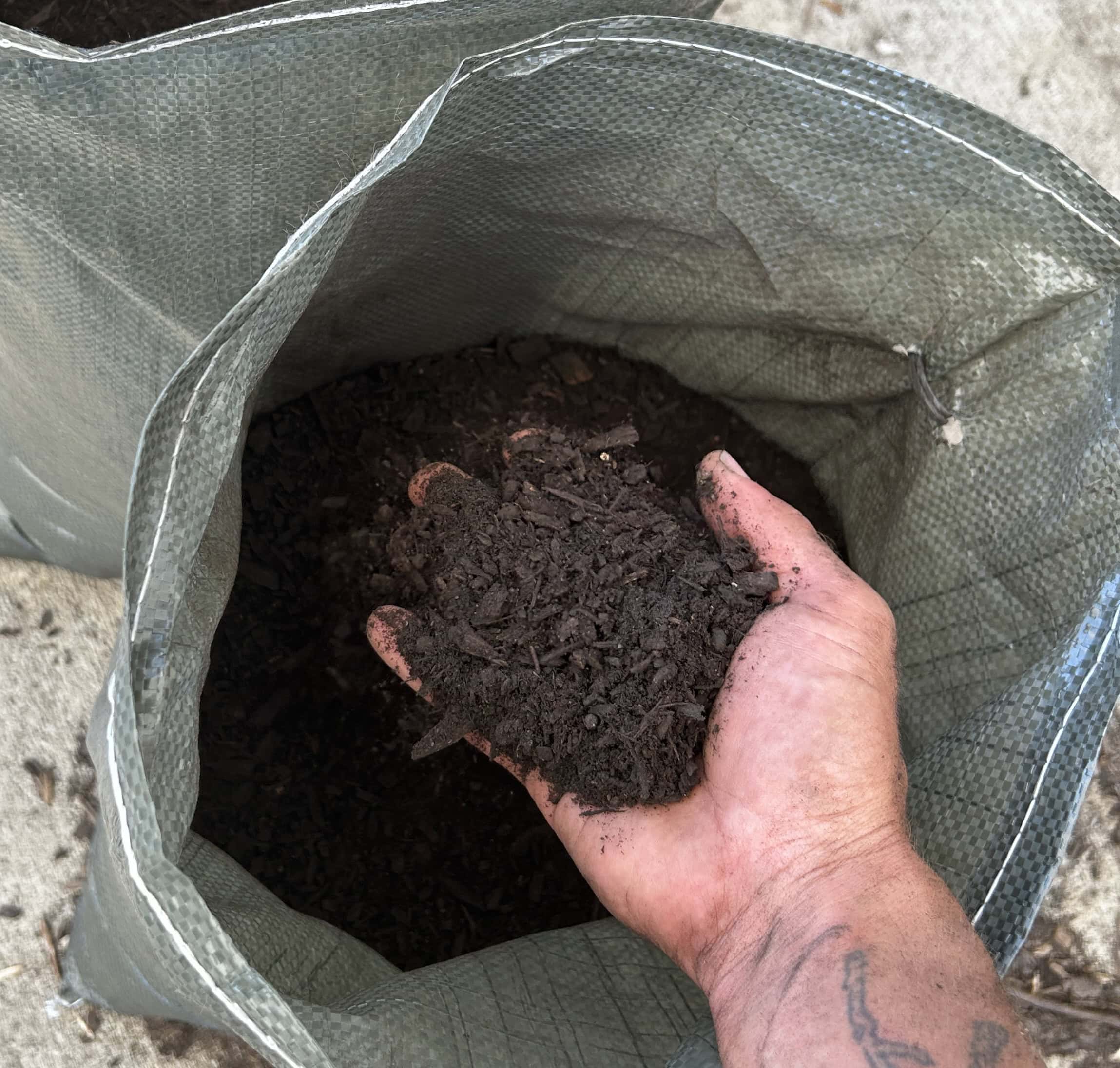
Supplementing your garden in the spring buoys plants’ natural growth cycle, jumpstarting your garden’s health for stronger, more resilient, and more lush plants. Common Orchard’s locally-produced compost is the perfect addition to your garden.
By Kelly Morton,
Published May 6, 2026

Share
Follow
The two best times of the year to add nutrients to your garden are fall and spring. Adding supplements like compost and natural fertilizers in the fall prepare the ground for winter rest as plants and creatures enter a dormant state. Supplementing in the spring buoys plants’ natural growth cycle, jumpstarting your garden’s health for stronger, more resilient, and more lush plants. That means now (May!) is a great time to load up those beds with Compost for the Commons – high-quality, locally-produced compost from the Common Orchard Project.
Where Does Compost for Commons Come From?
The Common Orchard Project is a program of Green Umbrella that installs free community orchards in neighborhoods around the region, prioritizing communities that have the most urgent need for the benefits that orchards provide: heat relief, fresh fruit, and accessible greenspace.
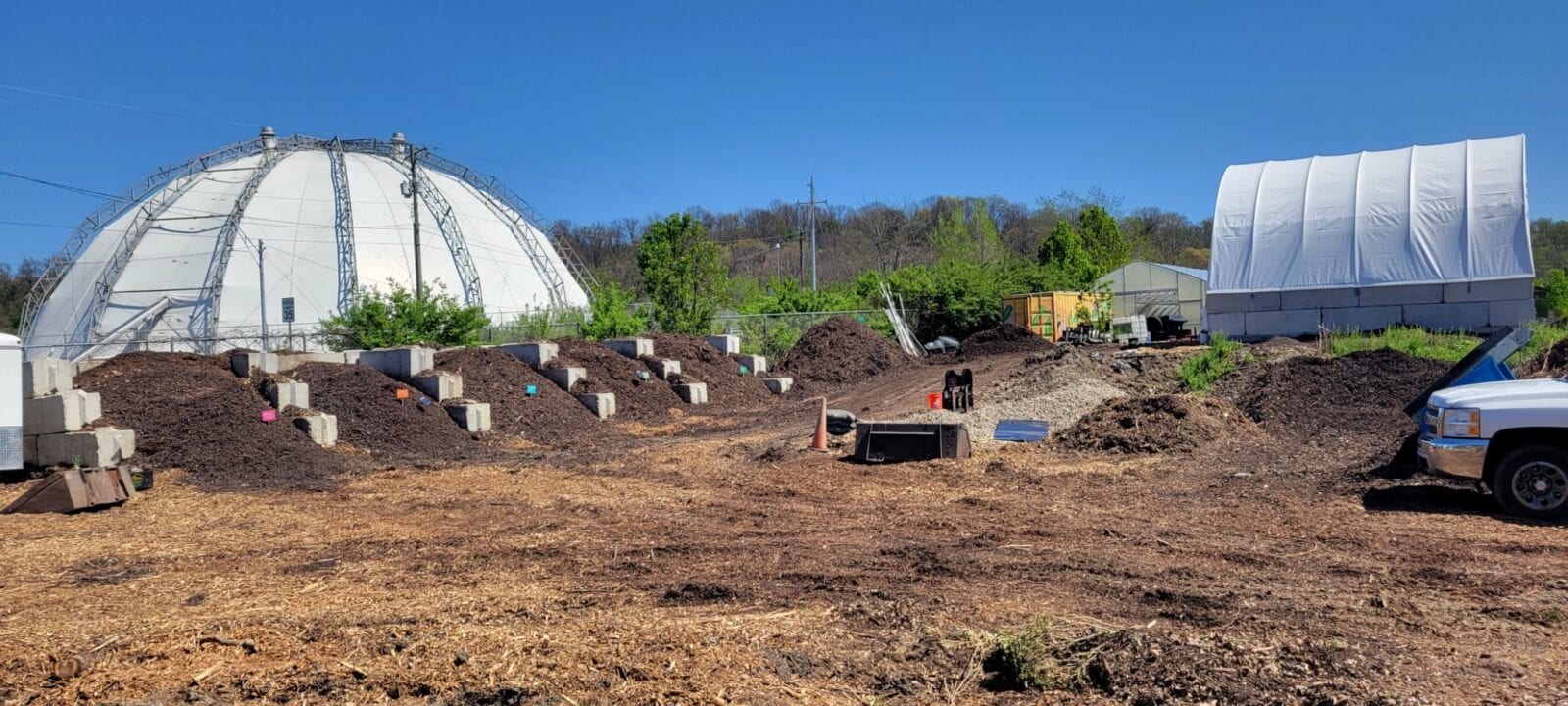
Camp Washington Perennial Farm is the home base of the Common Orchard Project. Besides being the growth hub for the trees, shrubs, and other plants for community orchards, the farm is also a demonstration site for large-scale composting. We work with local partners to collect food scraps from regular residents in neighborhoods across the city, diverting thousands of pounds of organic waste from landfill to create fresh compost that Common Orchard uses in our orchard installations. There’s plenty of compost to go around: the extra compost is available for sale in bags or in bulk as Compost for the Commons, generating revenue that helps strengthen the program. Buying Compost for the Commons supports a great local cause, but it’s not just about feeling good about your purchase. This is pretty fancy compost that you’ll be happy you bought.
How Can Compost Be Fancy?
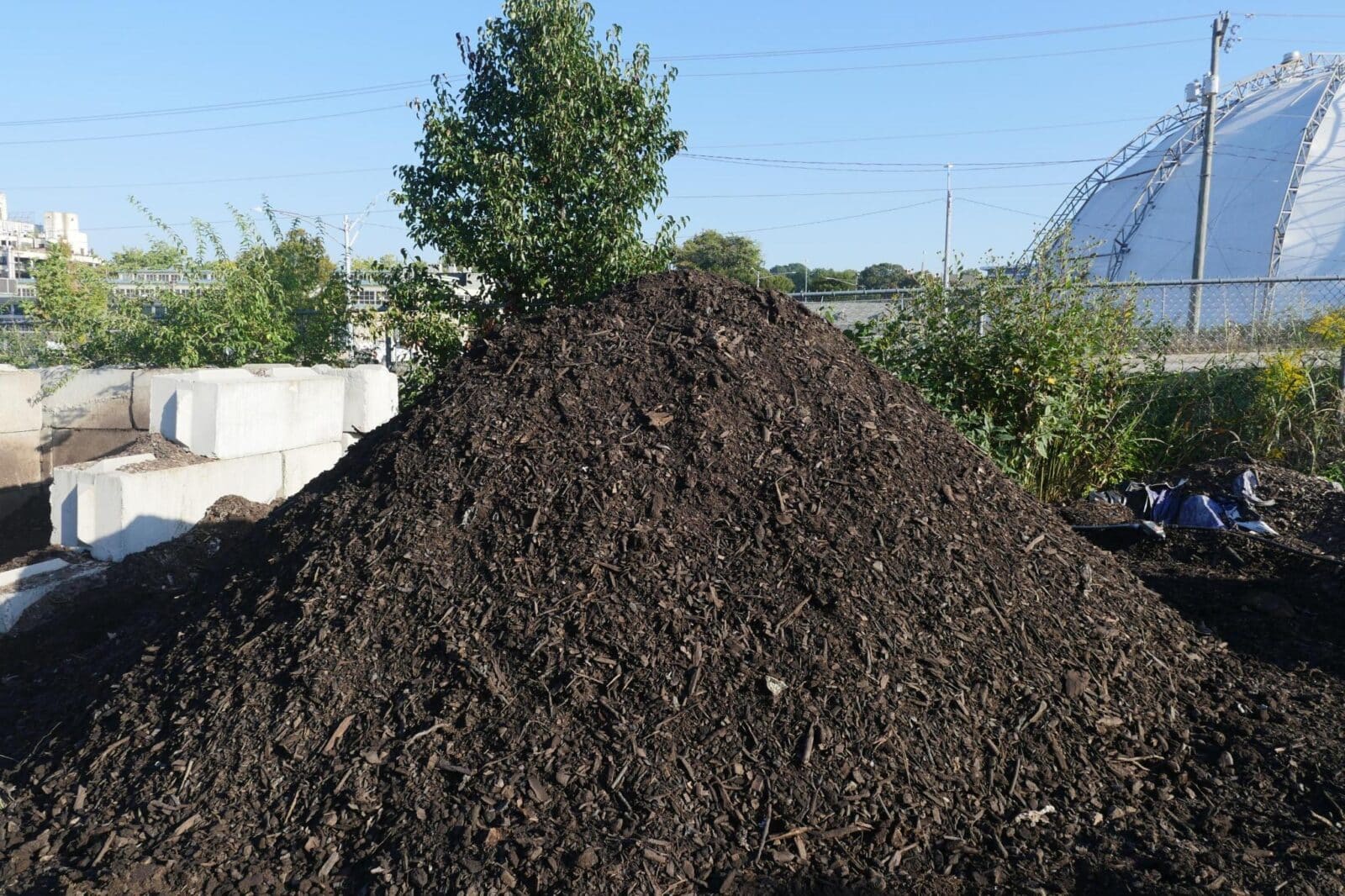
You might think all compost is the same. Think again! Compost for the Commons is manure-free, screened, and weed-seed-less, making it miles above the basic box store compost mix.
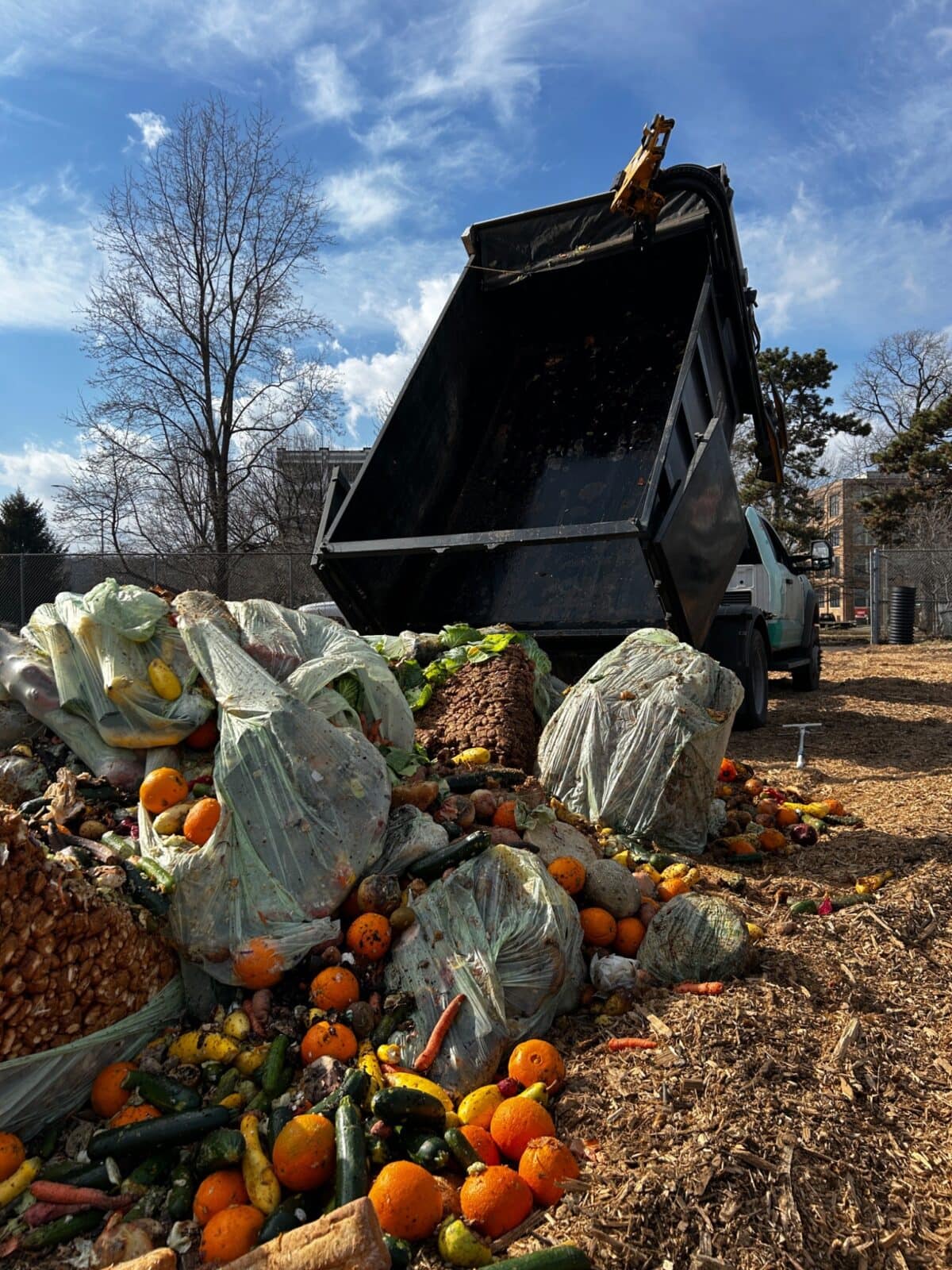
Compost is made from decomposing organic material. It needs a combination of green mix (high in nitrogen – banana peels, apple cores, grass clippings) and brown mix (high in carbon – dry leaves, shredded paper, wood chips) to heat up and break down the material. The Common Orchard Project uses locally-collected food scraps as the primary green mix and wood chips as the primary brown. Other composts might be made with cow or horse manure as green mix (despite being brown; manure is high in nitrogen). Manure compost is functional and creates a nutrient-rich soil, but it can expose gardeners to more illnesses as opposed to manure-free compost (and it does have a distinct smell. Not necessarily bad, just distinct).
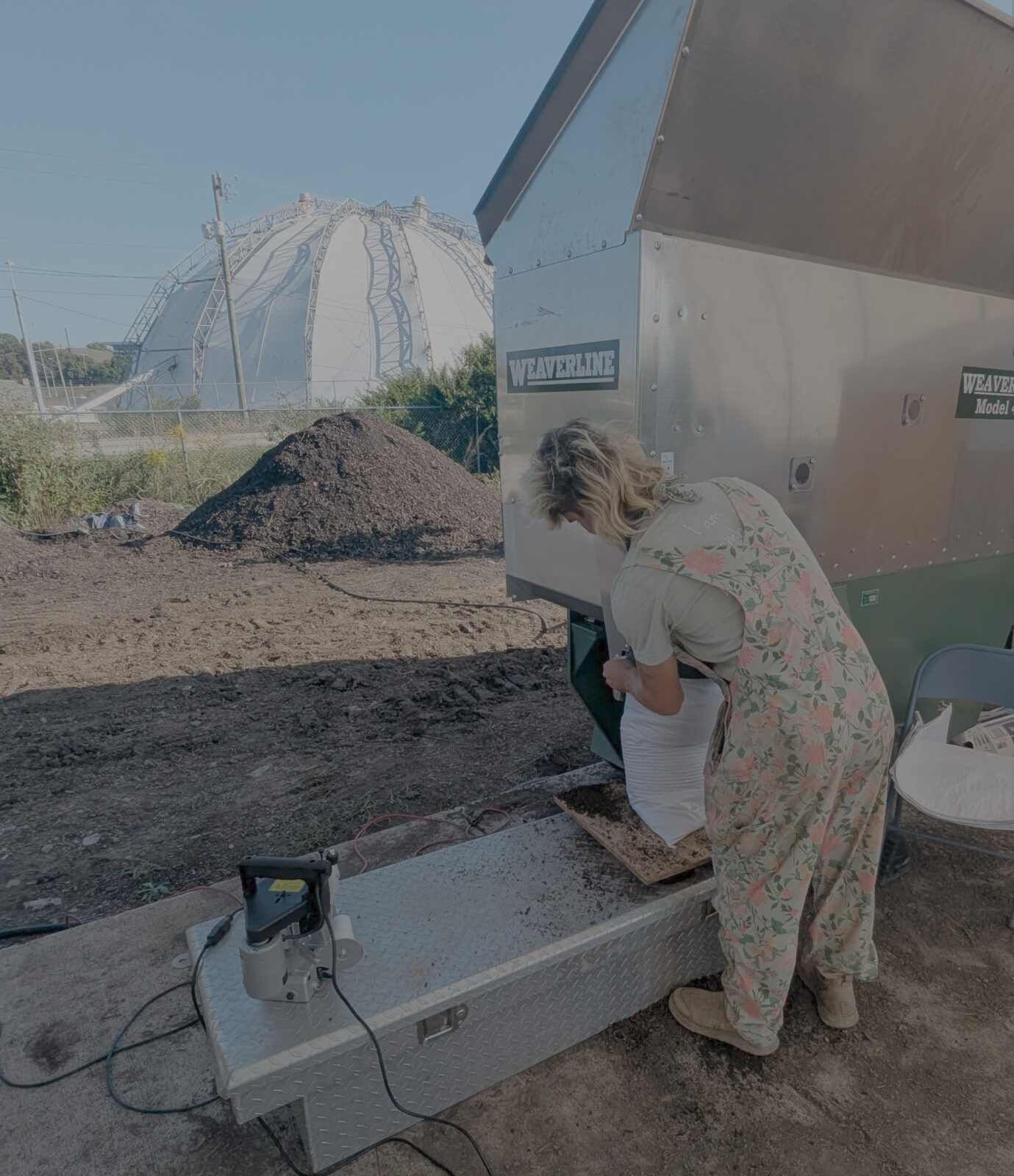
Ever buy a bag of compost and find a hunk of wood the size of your fist? That means the producer didn’t screen the material – sifting finished compost to catch and remove those large pieces of wood that clod up your gardens. The Common Orchard Project always screens finished compost, meaning the resulting compost is a finer texture for your plants (and you get more per bag!).
Shredded plants and weeds are common additions for commercial compost producers. It’s an effective green mix, but adding it means that seeds can linger in the compost. You never know what weeds are hiding in your compost bags until they start to sprout in your garden beds. Because we use food scraps as the primary source of green mix, rogue seeds are much less likely to pop up, giving you easier-to-manage gardens.
This Sounds Great
You’re right, it does! You can purchase Compost for the Commons in bulk or by bag. Each bag is one cubic foot (about 45 lbs) and costs $10 – a steal, since similar compost is $13-$30 per bag at big box stores.
Order Compost for the Commons online here for pickup at Camp Washington Perennial Farm. You can also find bagged Compost for the Commons at these select places while supplies last: the Civic Garden Center, Green Living by Design, and Wildwood Flora.
Choose Common Orchard Compost when you want the best food for your plants – and the lowest-maintenance compost for you.
Sign Up for Our Newsletter
Choose the newsletters you want to get.
Green Umbrella members also have access to our members-only newsletters and e-blasts. Join today to receive these perks!
Related posts
Sorry, we couldn't find any news. Please try a different search.