On School Wellness from Cynthia: |
|
|
This is the last installment of the Your Role in School Wellness Newsletter! I hope the series of newsletters, in conjunction with the release of the Local School Wellness Tool Kit, serves as inspiration and ignites new partnerships, builds equity, and amplifies student roles in the decision making process. Internal and external partners and organizations are now, more than ever, in a position to fill gaps and overcome barriers created by loss of programming and reduction of staff who have been committed to support every student. Let’s continue the momentum at the local level by implementing policy and partner programming that is customized to meet the needs of the school community. Consider staying in the wellness loop with updates and resources available from the Alliance for Healthier Generation in addition to the tools presented in the previous Your Role in School Wellness newsletters:
|
I look forward to hearing from individuals, school districts, and partner organizations who are dedicated to grassroots action at the local level and/or are engaging in Policy, Systems, and Environmental (PSE) change. We want to lift up your voice to use your ideas and stories by centering the health and wellness of students in the 2026-27 version of the Local School Wellness Tool Kit. Please take a few moments to share your insights in the Local School Wellness Policy Tool Kit: Make the Connection form.
|
|
|
Wellness Story Spotlight on City and County Health Departments |
|
|
The roles of City and County Health Departments are crucial to the success of a customized school district wellness plan (tool kit, page 40). Health departments create systems and policy changes to implement preventative measures for improving the health and well-being of their communities. Health department staff supply the local community’s health indicators and provide programming at no cost to the school district. When school administrators struggle with the capacity to cater a wellness plan to meet the needs of the school community, health departments have existing structures to address gaps to support and implement school district wellness policy.
|
| |
|
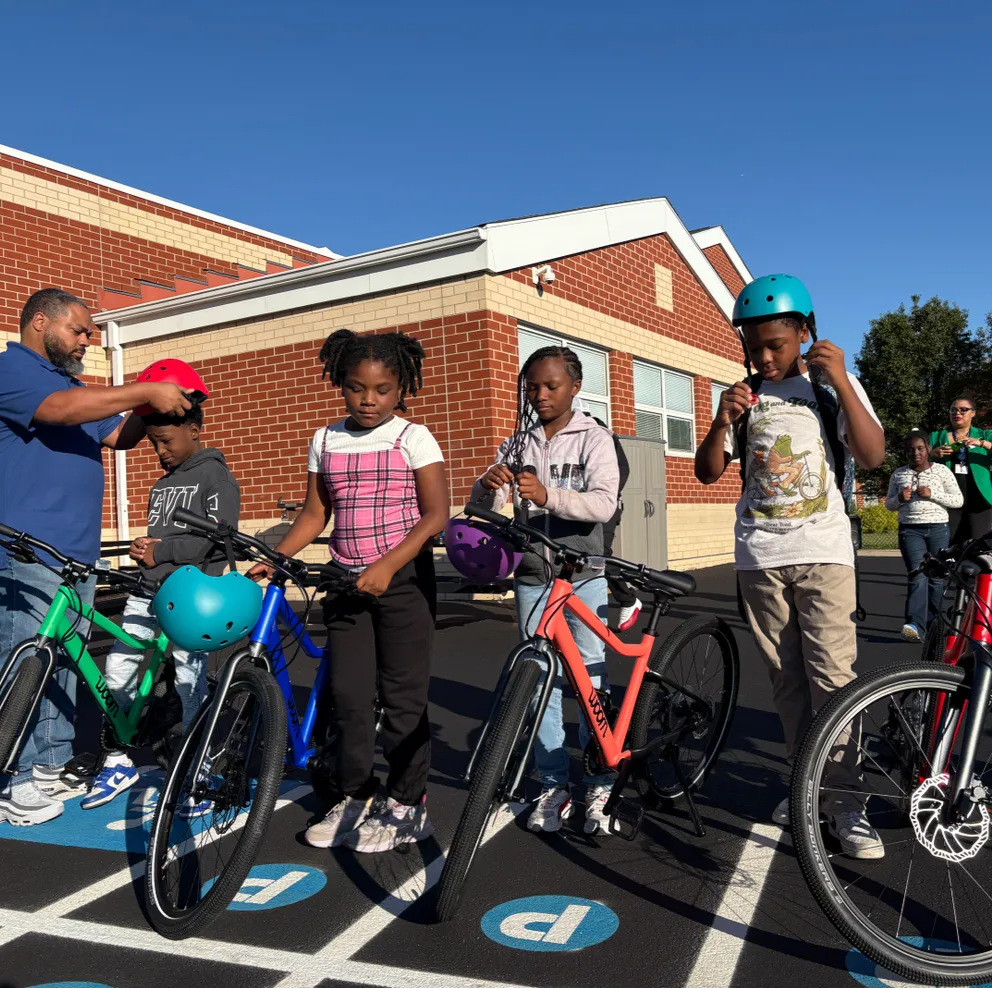
I am excited about the partnership with the Cincinnati City Health Department to install the Traffic Garden project in Cincinnati Public Schools, which promotes pedestrian safety. If you would like to know more about this partnership and traffic gardens, email me at cynthia@greenumbrella.org.
|
|
|
| With gratitude and hope,
Cynthia Walters Green & Healthy Schools Director Green Schoolyards Action Network |
| |
The focus of this final edition is establishing a school-year plan for activating a district wellness network. Specific committees, sub committees, and student engagement are outlined over the course of a school year in this Table. The information provided in the table is based on the following assumptions: |
- Updating policy is based on meeting specific needs and current issues plaguing the district and not solely on whether it is due to be revised based on USDA requirements.
-
Each school year is a new opportunity to address such initiatives as equity, inclusion of students, and measure success since it is likely there have been changes in staffing, partnerships, and programming.
|
The Wellness Tool Kit provides guidance on the actionable items and are listed below: |
- Aligning, page 16
- Funding, page 32
- Recruiting essential committee members, page 36
- Student participation, page 37
- Writing and updating policy, page 48
- Assessing, page 51
|
|
|
As individuals and families brace for the impacts of the uncertainty of SNAP benefits, students face increased food insecurity that affects their ability to perform at their full potential at school and ward off illnesses that cause absenteeism. Legislation such as the No Shame at School Act of 2025 (House (H.R. 5655) and Senate (S.2944) seeks to amend the Richard B. Russell National School Lunch Act to require mandatory certification for certain students and reduce stigma associated with unpaid school meal fees becomes increasingly important.
Stay informed with the National Farm to School Policy page by becoming a partner here. The following is curated from the most recent update: |
-
New Jersey Secures State Funds to Continue Local Food for Schools and Local Food Purchasing Assistance Program
-
During a recent tour of Hungry Work Organic Farm in Central Jersey, New Jersey Speaker Craig J. Coughlin and Assemblyman Anthony Verrelli announced $6.8 million in funding, secured in the current State budget, to bolster two vital programs for farmers – the federal Local Food Purchase Assistance Program (LFPA) and the Local Food for Schools Cooperative Agreement Program (LFS). Read the full press release here.
- SNAP-Ed Termination
- New Bicameral Legislation Seeks to Expand Pilot Program for Schools to Purchase Local Produce with Entitlement Funds
-
Earlier this month, U.S. Senators Ron Wyden, D-Ore., Peter Welch, D-Vt., and Michael Bennet, D-Colo., and U.S. Representative Pramila Jayapal, D-Wash., reintroduced the Local Foods Expansion Act of 2025 (H.R. 5234 / S. 2778). This legislation seeks to expand USDA’s Pilot Project: Unprocessed Fruits & Vegetables Program, which currently supports school food authorities in seven states to purchase locally-grown foods using entitlement funds. This Act would expand this pilot program to 14 states.Read the full press release here.
|
|
|
Reminder: Tell Your Representatives to Support Local Food Security! Two bills are being considered in Congress to connect local farmers with regional markets. |
|
|
Experts believe a feeling of purposelessness can lead to suicidal ideation in young people. As experiential real-life learning via school gardens and as agricultural education pathways expand, students become environmental stewards by caring for the planet and each other. I recently heard from a student ambassador during a visit to West Cermont High Schools in southwest Ohio about Sources of Strength (SOS), which is a student-led suicide prevention and behavioral health-related program. Check your state’s department of behavioral health website such as this one in Ohio. I was also reminded that schools who share this model with the rest of the school district increase the opportunity for the entire school community to benefit.
Another resource is from Children & Nature Network: Nature as a Healer: Building a movement for children’s mental health in nature and includes this policy update.
The Food Research and Action Center (FRAC) released a new guide to build a State Healthy School Meals for All Campaign. Nine states have already shown the country what’s possible by passing Healthy School Meals for All policies. FRAC’s new Healthy School Meals for All State Advocacy Guide is a comprehensive resource designed to support advocates in launching and advancing campaigns in their own states. Explore key strategies, tools, and lessons learned from successful efforts across the country in this step-by-step guide (thank you to the National Farm to School Network for sharing this relevant and timely guide in your newsletter).
|
Conferences & Events Related to Wellness in Schools |
|
|
Green Umbrella leads cross-sector collaboration to accelerate climate action across Greater Cincinnati. |
| |
|
|