On School Wellness from Cynthia: |
|
|
It has been inspirational hearing from so many educators, school district leaders, and partner organizations over the past few weeks as they prepare for the new school year. I was encouraged by a meeting with the Director of Operations from a large school district, who shared his vision for a district-wide sustainability plan. From rooftop solar use, to replacing invasive plants, to devising a plan for maintaining school gardens over the summer months, his approach to embed whole-district systems has the potential to produce better outcomes for the entire school community. It became clear that wellness policy, when aimed at specific outcomes related to the needs of the district, drives accountability for sustainability efforts. In the end, we concluded that policy implemented through partnerships could ensure the equitable distribution of resources and infrastructure across the district.
I share this story to illustrate how the Wellness Tool Kit can serve as a catalyst to spark collaboration and partnerships between all stakeholders. If we build school district wellness networks exponentially across the nation, imagine the impact it will have on public education, the environment, and food systems! I have also been inspired by the wellness stories you have been sending including this one: |
|
|
Wellness Story Spotlight on Padma Chebrolu |
|
|
“As a certified Ohio teacher with a Master’s in Education, I have spent over 30 years using arts, culture, and nature to support student wellness and learning. I am the founder of the Cultural Centre of India and author of the Nature’s Basket children’s book series—Picnic at the River and the upcoming Sage & Basil – Our Herbal Roots—designed to meet curriculum and national education policy standards. My award-winning film Passage of the River, honored in 14 countries, teaches children about planting more trees and protecting cleaner rivers. I’ve received the Ohio Governor’s Award for Arts Education and the Midwest Sustainability Leadership Award for work connecting youth with heritage and the environment. Through partnerships with schools, I distribute free trees, lead garden-based wellness programs, and promote holistic well-being through cultural storytelling, movement, and nature. Let’s grow a healthier future together.”
|
| |
|
Share Your School Wellness Story by emailing me a brief overview (140 words or less) and a photo that will be considered for inclusion in an upcoming edition of this newsletter. |
|
|
| In collaboration, Cynthia Walters Green Schoolyards Action Network Manager |
|
|
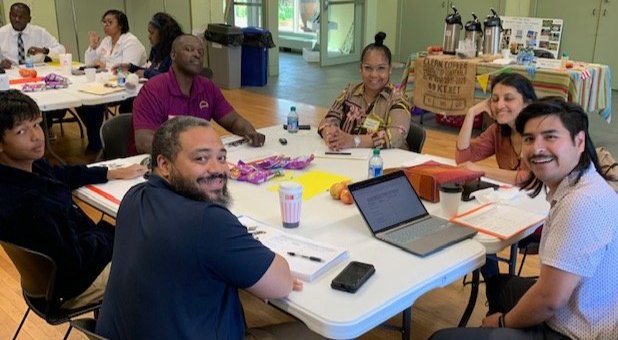
In this edition of the wellness newsletter series, we’re focusing on Chapter 2 of the Wellness Policy Tool Kit: The Local School Wellness Committee, from the perspectives of external and internal stakeholders. |
| |
|
How can you determine if you are a good candidate for a wellness committee position? To answer this question, first consider the “Who Can be a Member” section on page 32 of the tool kit which relies on the Whole School, Whole Community, Whole Child (WSCC) model and the Diversity, Equity, Inclusion, and Justice (DEIJ) framework included in the tool kit. If you represent a category in the WSCC (page 14), your voice will be essential in planning, writing, and implementing wellness policies. By adding a DEIJ lens, the student population can be fully represented. If you have questions about the use of DEIJ, check out this podcast episode from School Me, A Lawyer Explains: “DEI” and Anti-Equity Policies in Schools.
|
Wellness Committee Leader |
Guidance for inviting members to join a wellness committee begins on page 36 of the tool kit. Each new school year is an opportunity to create a more diverse and inclusive wellness committee. Furthermore, additional sub committees can be formed to reduce the burden of one group and expand the capacity of meeting the needs of the student population and staff members. A breakdown of a wellness committee is found on page 46. Are you a wellness committee leader? If you are willing to share best practices for recruiting and retaining members, please email me at cynthia@greenumbrella.org. We are currently seeking additional content in the updated Wellness Tool Kit for 2026-27.
Wellness policy experts present more about the wellness committee in the “Your Role as a Partner in School Wellness” webinar. View the webinar link here. The webinar, “Transforming Communities with Wellness - Slow Food USA Tool Kit Walkthrough Session” is a good resource for developing a wellness network with important stakeholders - including the students themselves! View it at the link here.
|
|
|
Questions have been surfacing about the relationship between student mental wellness and the use of cell phones during the school day. Research has shown that phone use during the school day negatively impacts student learning, and a reduction in student phone use contributes to more classroom engagement and fewer discipline challenges. This is evidence that including phone use restrictions into a wellness policy can contribute to students’ well-being. You can find research and recommendations for supporting cell phone policies here.
|
| |
|
-
Procure more local, regional, and values-aligned ingredients
- Use cleaner ingredients
- Reduce ultra-processed foods
- Serve more plant-forward meals
- Diversify and demystify federal school food purchasing
- Reduce food and packaging waste
|
|
|
Reminder: Ask your Representatives to Support Local Food Security! |
Two new bills are being considered in Congress to connect local farmers with regional markets: |
Update to the Living Schoolyards Act |
In the U.S., nearly 50 million children attend school on millions of acres of public land that is largely paved in asphalt. This land is a vital public resource that could do more to support the health and education of the students who use it. U.S. Senator Heinrich (NM) will introduce the Revitalizing America’s Schoolyards Act (RSYA) to begin to address this need. This legislation is an updated version of the Living Schoolyards Act, which aims to provide funding and support for the creation of green and living schoolyards.
You can include your organization on a list of groups who support revitalizing schoolyards across the country. Use the form below to add your organization to the list of groups supporting the Revitalizing America's Schoolyards Act. Please complete the form by 9/5 end of day if possible. |
Conferences & Events Related to Wellness in Schools |
|
|
Green Umbrella leads cross-sector
collaboration to accelerate climate action across Greater Cincinnati. |
| |
|
|