On School Wellness from Cynthia: |
|
|
As Manager for Green Umbrella’s Green Schoolyards Action Network (GSAN), I work with regional school districts, municipalities, and partner organizations on an ambitious but achievable goal: that all students in our city’s public school system have equitable access to safe outdoor learning spaces. A part of this goal is improving the overall health and wellness of students, staff, and the entire school community. Through the GSAN Green & Healthy Schools Initiative, our mission is to activate local school communities in creating and implementing policies to support student well-being in the areas of nutrition, physical, and mental wellness. The expected outcomes include increased attendance, graduation rates, academic performance, and more students trained to enter the green workforce.
We are witnessing federal and state funding cuts to public schools and legislation that will directly affect school meal programs across the nation. The defunding of public schools is resulting in a reduction of staff members and the capacity of school communities. Partner organizations, City officials, and community members have the potential to fill the gaps left by the freezing or elimination of funding and personnel. The time is now to take action towards creating a robust wellness network in your local community and beyond!
We’re starting a short series of email newsletters that we’re calling “Your Role in School Wellness”. Monthly through October, we’ll send out an email that will feature a deeper dive into the new Local School Wellness Policy Tool Kit and ways that you can ignite action, regardless of where you fit in the school community. If you missed the latest webinar in May on how to navigate the Local School Wellness Policy Tool Kit, view it at the link here.
There’s a lot of work to do and many hills to climb, but we can do it together. |
|
|
| In collaboration, Cynthia Walters Green Schoolyards Action Network Manager |
|
|
In preparation for the upcoming school year, the focus of this newsletter will be on establishing a district-wide wellness network. Whether you represent a large urban school district or a smaller school community (rural or suburban), wellness networks can customize policies and facilitate implementation to meet the needs of students and staff at the local level. The following themes will be covered in the upcoming months: |
- July: Activation, Resources, and Policy Watch
- August: Recruiting and Retaining Wellness Committee Members
- September: Activating Partnership for Policy Implementation
- October: School District Wellness Policy Year-at-a-Glance
|
|
|
Share Your School Wellness Story |
|
|
Have you utilized the Local School Wellness Policy Tool Kit in a workshop, during a training session, or in the development of a wellness committee? Is there a wellness story you would like to share that is related to building networks to support the health and well-being of students? Email Cynthia a brief overview (140 words or less) and a photo that will be considered for being included in an upcoming edition of this newsletter.
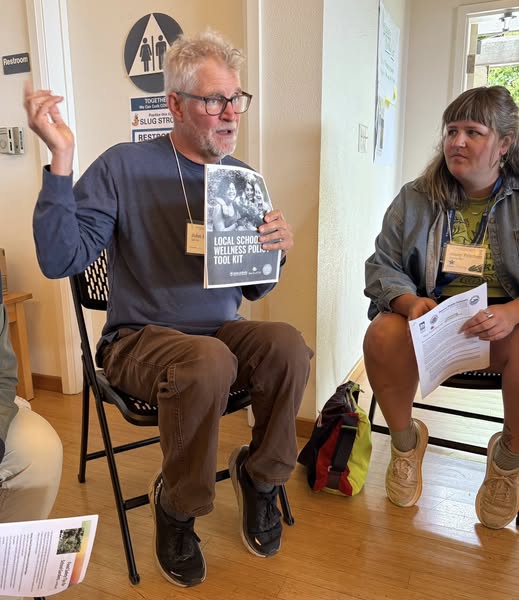
Recently, the Wellness Tool Kit was spotted in Santa Cruz at the School Garden Support Organization Leadership Institute in June! Thank you Whole Kids for your support in creating the Toolkit and for sharing it with school gardens leaders across the nation. We are excited to hear how policy can be leveraged and implemented to sustain school garden programs for many generations to come!
|
| School Garden Support Organization Leadership Institute, Santa Cruz, CA |
|
|
As you are most likely aware, the Budget Reconciliation Bill (also known as the "Big Beautiful Bill") was signed by the President just a few days ago. Once enacted, there will be astronomical implications for students, families, and direct impacts on school food service operations. Along with sudden cuts to federal and state education budgets and immigration threats taking place during the school day, school districts and staff will be looking for ways to support the increase in students experiencing loss of services, mental health challenges, and hunger. Public schools will need to rely heavily on external support systems, networking, and the community at large. The National Farm to School Network and the School Garden Support Organization have online forums for sharing strategies, resources, and success stories.
The Food Research & Action Center reports that the legislation includes cuts to SNAP and Medicaid, which are also cuts to school meals. Impacts include: |
-
Cuts to SNAP or Medicaid cause children to lose access to these programs, they will also lose their direct connection to free or reduced-price school meals and will have to complete a school meal application. Additional paperwork burdens families and school nutrition staff. Some eligible children will fall through the cracks.
-
There will be a reduction in the number of schools able to offer free meals to all students through the Community Eligibility Program (CEP). Fewer schools will be eligible for CEP, and it will be less financially viable for those schools that remain eligible because reimbursements are primarily determined by the number of students who are directly certified.
-
The budget package eliminates funding for SNAP-Ed, the largest nutrition education program in the country. SNAP-Ed supports cooking classes and other nutrition programs targeted at low-income families.
|
By staying current with the ever-changing landscape of food-related legislation and school nutrition programs, school district wellness networks will have relevant information to guide wellness policy. Partnering with city and state officials to align policies leads to successful implementation and ensures positive outcomes for the school community. Watch for this email in the coming months to help school wellness networks plan for what lies ahead. |
|
|
What can you do in July to prepare for the new school year: Partner Organizations |
-
Work with a youth group to create a Children’s Outdoor Bill of Rights (see an example here).
- Identify how your organization can help implement the Local School Wellness Policy and create a plan to contact wellness committee leadership during the beginning of the upcoming school year.
|
Wellness Committee Leadership |
School Garden Coordinators
|
- Write 2-3 policy statements about the garden program that you can share with the leader of the wellness committee (example policies for school gardens are found on page 64 of the Local School Wellness Policy Toolkit).
|
|
|
Green Umbrella leads cross-sector collaboration to accelerate climate action across Greater Cincinnati. |
| |
|
|