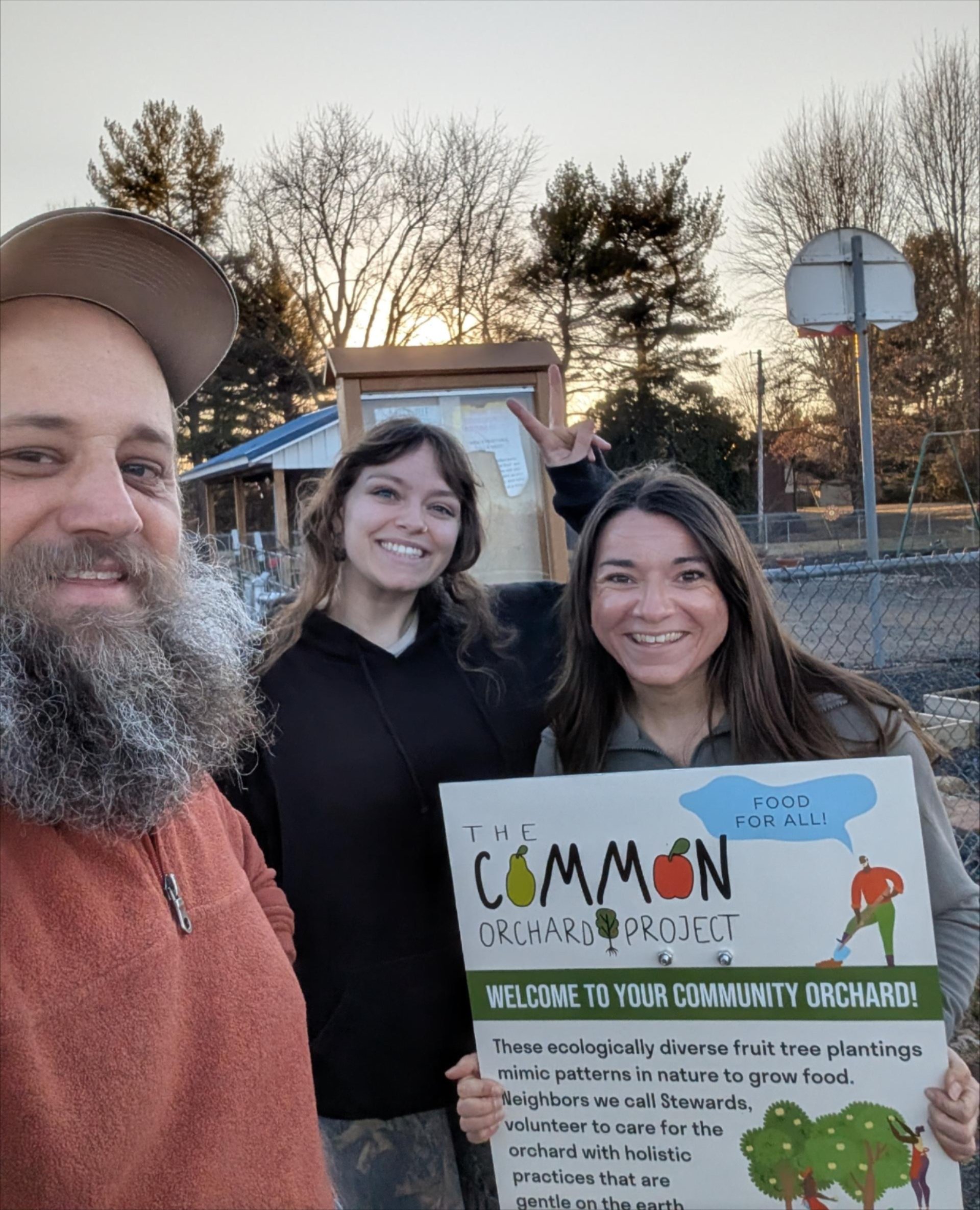
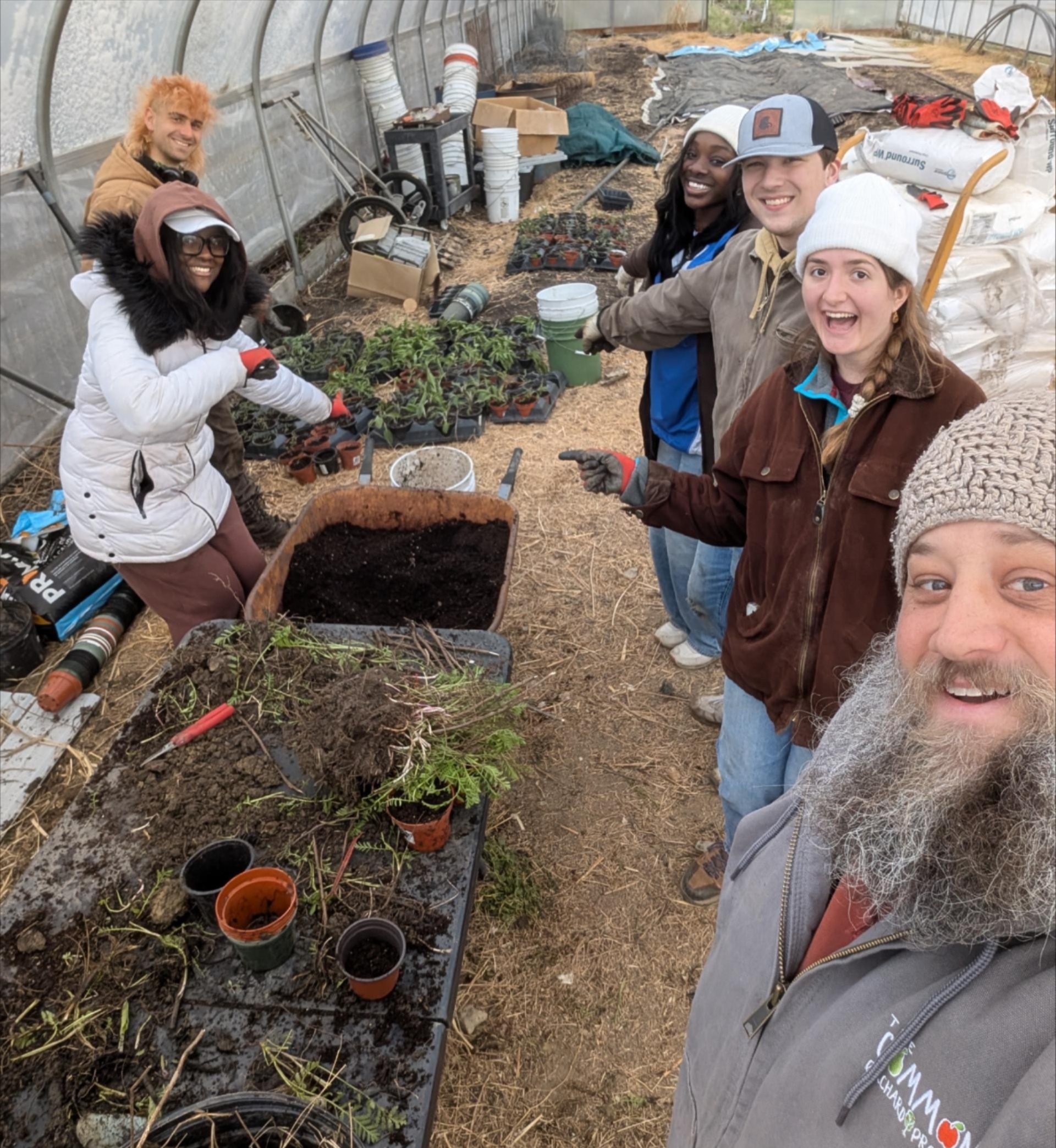
A Message From Our Director, Chris: |
|
|
Happy post-Spring Equinox, and with it comes the satisfying and sometimes humbling work of tending what we have already planted.
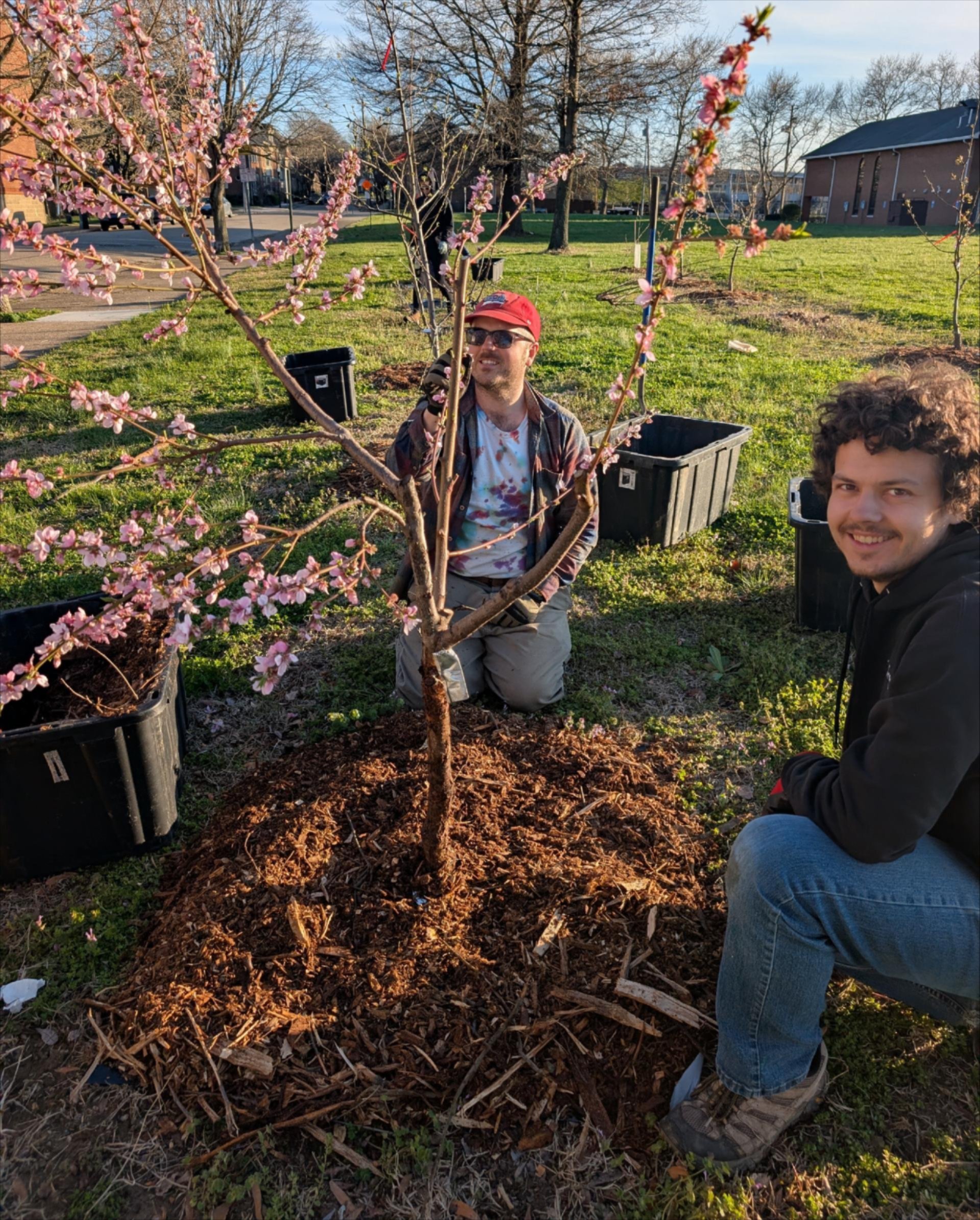
We are in maintenance mode this Spring! For years now, the Common Orchard Project has been adding trees across the Greater Cincinnati Region, over 600 fruit and nut trees across 40+ community orchards. Each of those trees has its own story, and many of them have needed corrections along the way. A wire tag that has grown into the bark and needs to come off before it girdles the tree, but carefully, because we still need to know the variety. A little lean of a tree, a replanting where a tree didn't take, a pruning cut that makes sure the rootstock doesn’t overtake the tree.
|
| |
|
None of this is dramatic work. But it is the difference between a mature apple tree that the whole neighborhood wants to harvest from and a tree that quietly fell off the rails while nobody was paying close attention.
This year, we have been doing site visits across the network. We are really getting into the orchards, understanding what is troubling stewards, and removing the small barriers that stand between healthy fruit and the people who want to grow it. What we keep finding is that the problems are fixable, and that the people caring for these spaces are hungry for support. When we show up, the relief is immediate.
That attention to existing orchards does not slow our growth. We have two new orchards coming this spring—including a planting this Saturday at Clifton Recreation Center, which you are welcome to join—and six more slated for the fall. But we are just as proud of the quieter work: going back to what we planted, making it right, and handing off something healthy to the next steward.
That is what food sovereignty actually looks like. Not just a planting day. An evolving process with the people and plants of a place. |
|
|
| Look up at the sky, get out in the sun, Chris Smyth Common Orchard Project Director |
|
|
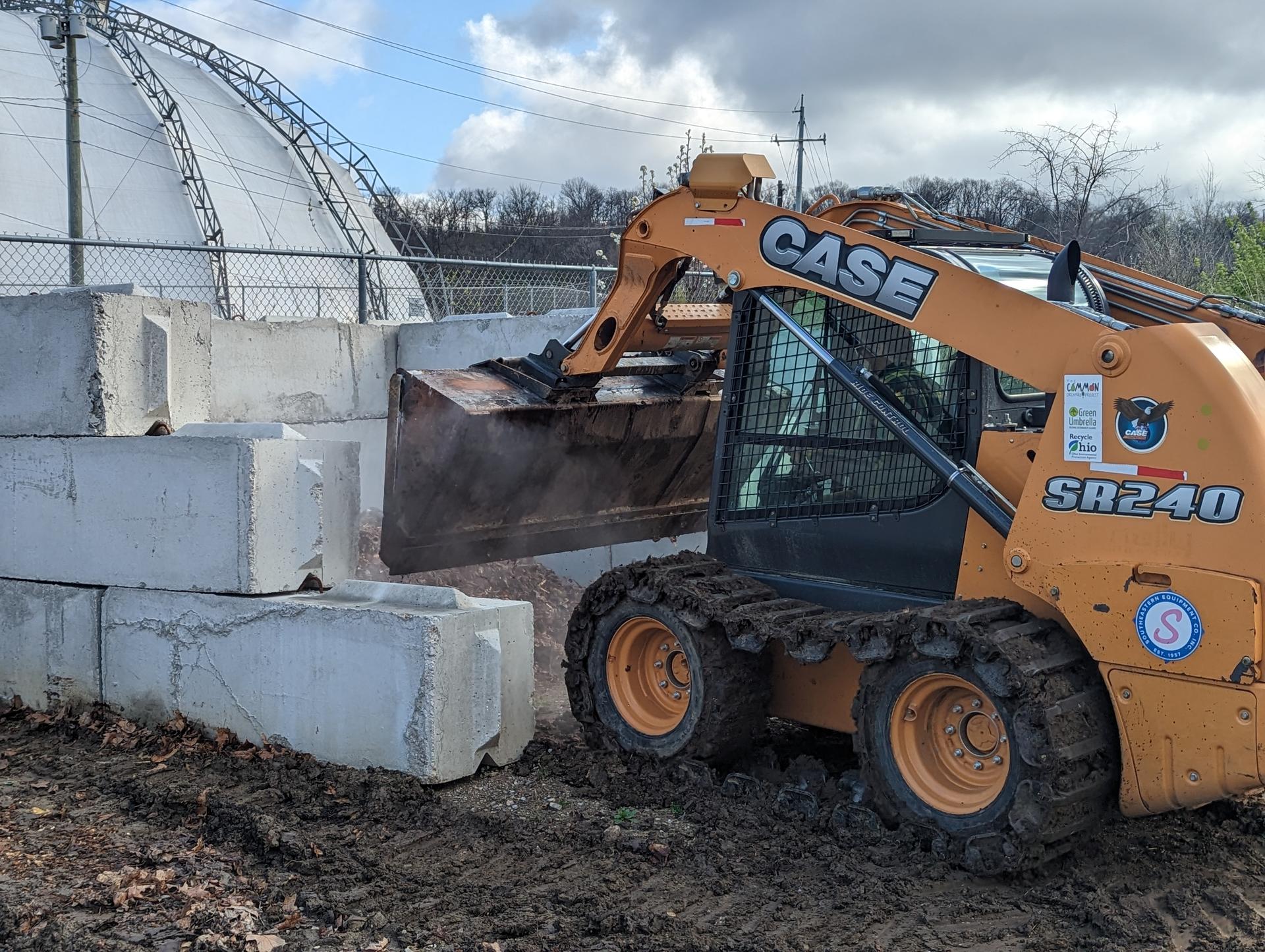
Hamilton County is providing a large grant to transform Camp Washington Perennial Farm into a full-scale aerated static pile demonstration site. The upgrades include new composting bays, a concrete pad, an electrical subpanel, and water hookups. This is the kind of infrastructure that takes a composting operation from functional to robust and replicable. |
| |
|
The demonstration site will test multiple methodologies for aerating piles, monitoring temperature and moisture, and accelerating the breakdown process to produce higher-quality compost in less time. When fully operational, our upgraded system will have the capacity to process up to nearly one million pounds of food scraps per year.
This matters beyond our own program. Hamilton County is actively funding farmers and operators across the region to expand composting operations, and Camp Washington will serve as a living demonstration of what these systems can look like at scale. We are building something people can visit, learn from, and replicate. |
|
|
Featured Orchard/Steward Stories |
Batesville: What Showing Up Looks Like
|
|
|
Earlier this year, we made a site visit to the Batesville, Indiana, school orchard. We pruned the trees, assessed the site, and found a few trees that had not survived a period when stewardship lapsed after a teacher retired. That kind of transition happens. People move on, attention shifts, and young orchards can go without care for a season or two.
We also found a group of gardeners who were ready and eager to step in as the next wave of caretakers. When they heard we were coming for this site visit, one of them said they breathed a huge sigh of relief and said, "Thank God." That moment captures something essential about this work. The trees need more than a planting day. They need someone to come back, assess what happened, fix what can be fixed, and hand the knowledge to whoever is there now. |
| | |
Steward transitions are not failures; they are part of how a community orchard works over time. Our job is to make sure the orchard survives the transition and that the next steward has everything they need to hit the ground running. |
|
|
Third Saturdays at Camp Washington |
Looking to get involved beyond a single installation? We have regular volunteer days on the third Saturday of each month at Camp Washington Perennial Farm throughout the growing season. Whether you want to learn composting, help with nursery work, or just get outside and do something useful, this is the place. No experience necessary. |
| |
|
Clifton Recreation Center Planting - This Saturday, March 28 @ 10:00 AM |
We are planting fruit trees at Clifton Recreation Center this Saturday, and we would love your help. This is one of two new orchards going in this spring, with six more planned for the fall. Come get your hands in the soil and help us build something that will be feeding this community for years. |
|
|
Robin Greenfield Event - This Saturday, March 28 @ 6:00 PM |
We will be tabling at the Robin Greenfield foraging event this Saturday evening. We are always looking for people who genuinely want to care for the land and the food systems in their neighborhood. Come find us if you are interested in volunteering, becoming an orchard steward, or picking up some locally produced compost. Say hi to Mel at our table! |
|
|
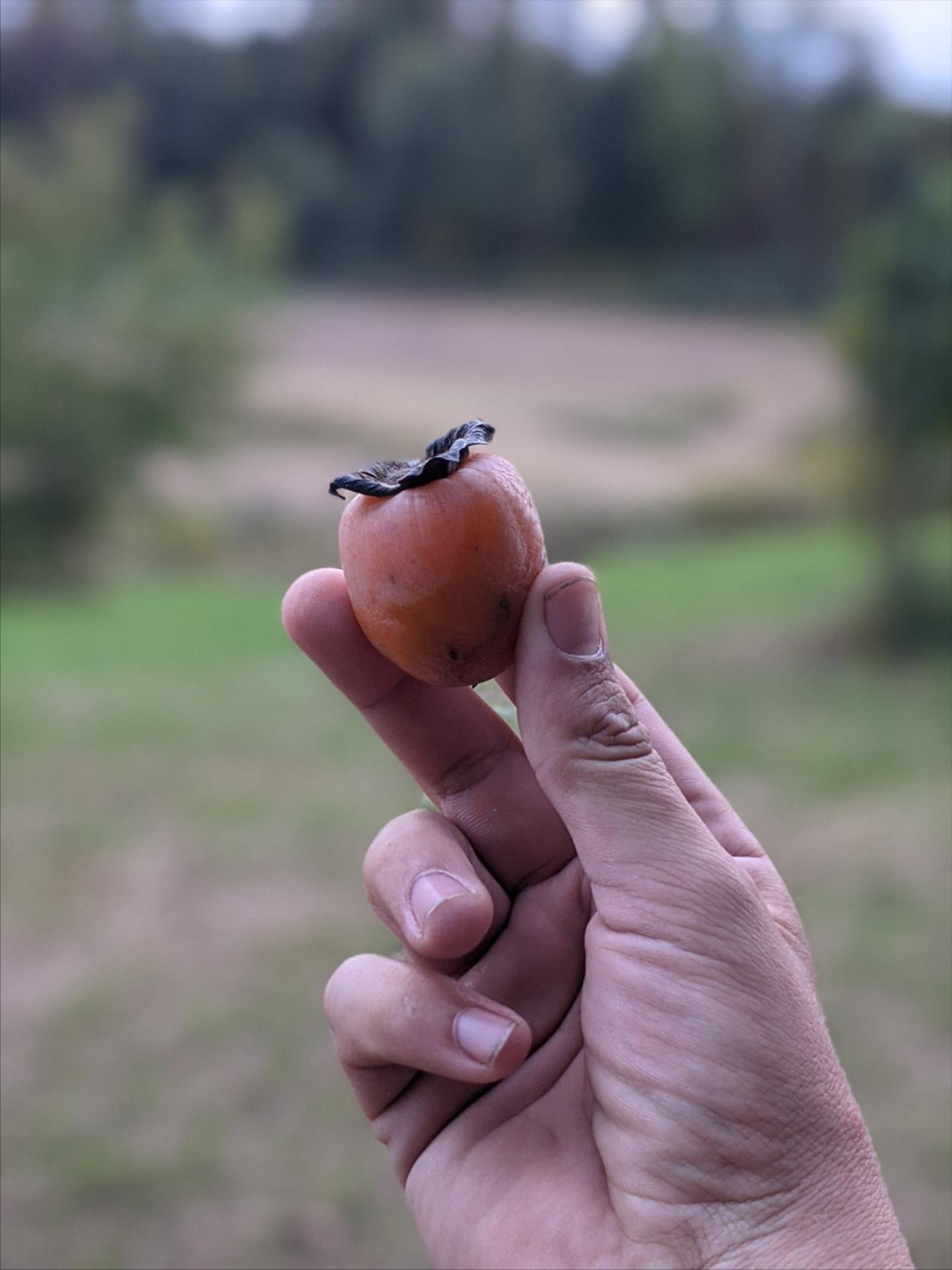
The persimmon is one of our favorite trees to plant, and one of the most underappreciated fruits in the region. It is native to eastern North America, extraordinarily low-maintenance once established, and produces fruit that only gets better as the season turns cold. |
|
|
Persimmons reach their peak flavor after a frost. The freeze breaks down the astringency in the flesh, leaving a fruit that tastes something like a cross between a date and an apricot; rich, sweet, and almost custardy. If you have ever bitten into an unripe persimmon and had your mouth pucker, that is the tannin talking. Wait for the freeze, and it is a completely different fruit. Some of our best eating happens in December, standing in an orchard that most people assume is done for the year.
At maturity, a persimmon tree can produce 25 to 75 pounds of fruit annually and will continue doing so reliably for decades with almost no intervention. |
| |
|
One thing to know: if you plant a single persimmon, there will likely be no other trees nearby to cross-pollinate, which means very little seed in the fruit. We address this by grafting named cultivars onto our trees. Our favorites are Prok, Yates, and Nikita's Gift. Persimmons take 3 to 5 years to begin fruiting and reach full production around years 7 to 10. Worth every year of the wait. |
|
|
Get in touch with the Common Orchard Project |
Reply to this email to reach Chris directly at chris@greenumbrella.org. For questions about membership, email membership@greenumbrella.org.
Ready to get your hands dirty? Sign up for volunteer opportunities at commonorchard.com. Want to support our work? Ask about orchard sponsorships, compost purchases, or how to host an orchard site at your location. |
|
|
The Common Orchard Project Is Sponsored By: |
|
|
Green Umbrella leads cross-sector collaboration to accelerate climate action across Greater Cincinnati. |
| |
|
|